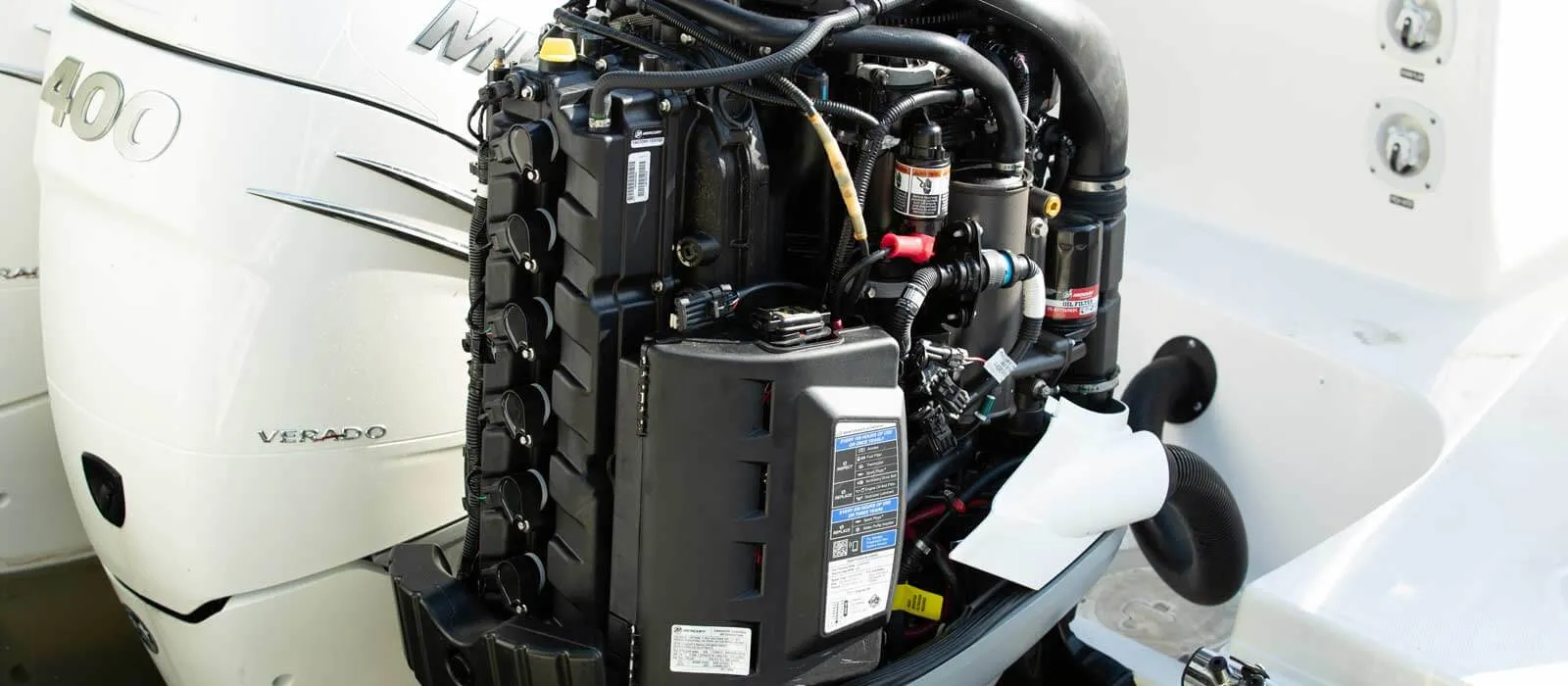
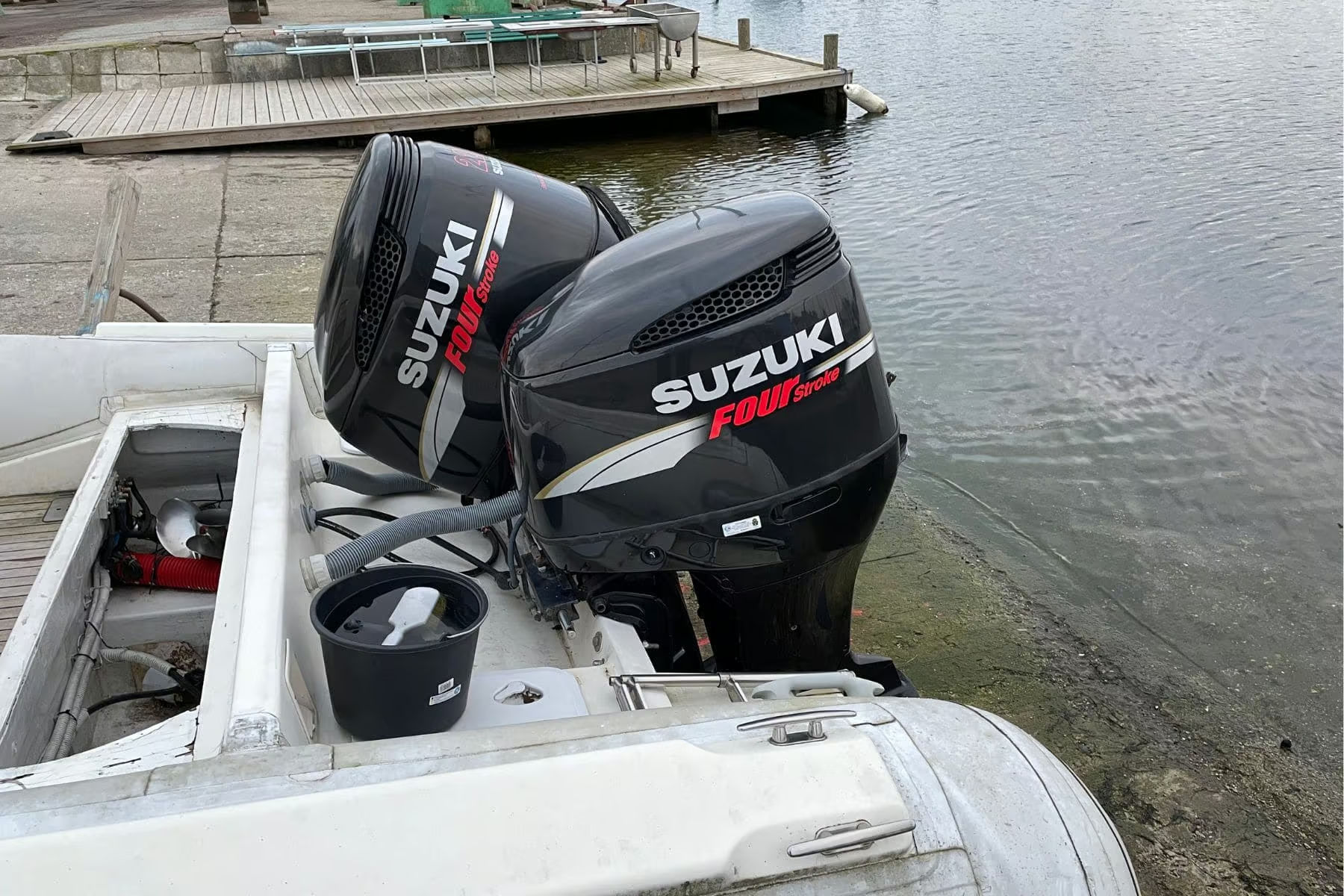
One of the most significant advantages of electric outboard motors is their environmental impact. Unlike traditional internal combustion engines, electric motors produce zero emissions during operation. This makes them an excellent choice for eco-conscious boaters who want to reduce their carbon footprint. Additionally, electric motors operate much more quietly, minimizing noise pollution, which is particularly important in sensitive marine environments.
$8,000.00 Original price was: $8,000.00.$7,500.00Current price is: $7,500.00.
The Yamaha 85HP outboard motor is a durable three-cylinder two-stroke engine from Yamaha’s long-running 85A family. It uses a 1,140cc powerhead, three carburetors and CDI ignition to produce 85HP at approximately 5,000 RPM. Yamaha describes the 85A as a long-selling two-stroke outboard used in both recreational and commercial applications, with particular emphasis on durability, serviceability and sustained use.
The existing Performance Engines listing identifies this product as a Yamaha 85HP 2-stroke and gives the 85A-family specifications of 1,140cc, 82 x 72mm bore and stroke, 85HP at 5,000 RPM, carburetion, electric starting, remote or tiller control depending on configuration, and multiple shaft-length options. The listing also states that the engine is in good condition and comes with equipment needed for installation; the exact condition and included equipment should be confirmed for the individual engine before purchase.
| Specification | Details |
|---|---|
| Manufacturer | Yamaha |
| Engine Family | 85A |
| Horsepower | 85 HP / 62.5 kW |
| Engine Type | 2-stroke, inline 3-cylinder |
| Displacement | 1,140cc |
| Bore x Stroke | 82.0 x 72.0 mm |
| Fuel Induction | 3 carburetors |
| Ignition | CDI |
| Full-Throttle RPM | 4,500–5,500 RPM |
| Rated Power Speed | 5,000 RPM |
| Starting | Electric start |
| Controls | Remote control or tiller depending on model |
| Shaft Options | 20.5-inch L, 22.5-inch Y, or 25.5-inch X depending on model |
| Gear Ratio | 2.00:1 (26/13) |
| Gear Positions | Forward, Neutral, Reverse |
| Trim/Tilt | Power trim & tilt or hydro tilt depending on model |
| Lubrication | Premixed fuel and two-stroke oil |
| Fuel | Regular unleaded gasoline |
| Alternator | 10A on documented 85A configurations |
| Dry Weight | Approximately 113–124 kg depending on shaft and configuration |
The Yamaha 85A is built around a 1,140cc inline-three-cylinder two-stroke powerhead. The 82.0mm bore and 72.0mm stroke give the engine a relatively large displacement for an 85HP outboard and contribute to the strong torque characteristics for which the 85A family is known.
Yamaha’s own historical description emphasizes the 85A’s rigid three-cylinder block and crankshaft construction and its 120-degree crank arrangement. Yamaha states that this design was intended to reduce torque fluctuation and vibration while supporting durability during demanding use.
The documented 85A produces a maximum propeller-shaft output of 62.5 kW (85 PS) at approximately 5,000 RPM. Its full-throttle operating range is approximately 4,500–5,500 RPM.
Propeller selection should therefore be based on the actual boat, load and engine configuration. The goal is to allow the engine to reach Yamaha’s recommended RPM range at wide-open throttle under normal operating conditions. A propeller with excessive pitch can overload the engine, while an unsuitable low-pitch propeller can allow the engine to exceed its recommended operating range.
The Yamaha 85A uses three individual carburetors, with one carburetor serving each cylinder. Yamaha specifically highlights the separate carburetors as part of the 85A’s design and notes their role alongside the CDI ignition system in stable power development.
Unlike a modern fuel-injected four-stroke, this is a mechanically carbureted two-stroke engine. That distinction matters when comparing it with newer outboards because fuel-system maintenance, synchronization, starting procedures and storage practices are different.
The 85A uses capacitor-discharge ignition (CDI). Yamaha designed the ignition and three-carburetor arrangement around a straightforward two-stroke power system intended to remain serviceable in demanding marine environments.
The documented spark plug specification for the 85A family includes NGK B8HS-10 or the applicable resistor equivalent, with a specified gap of approximately 0.9–1.0mm. Always confirm the exact plug specification against the engine’s model-year service documentation before replacing components.
The documented 85A lubrication system uses premixed gasoline and two-stroke oil. Yamaha documentation identifies a 50:1 fuel-to-oil mixing ratio for applicable 85A configurations and recommends Yamaha two-stroke marine oil or an equivalent TC-W3-certified outboard oil.
Correct mixing is important on a premix two-stroke. Too little oil can reduce lubrication protection, while excessive oil can affect combustion and increase smoke and deposits. Follow the exact owner’s manual for the model and market of the engine being purchased.
Documented 85A configurations use an electric starter. The starting system requires an appropriately sized marine battery and properly maintained electrical connections.
Because the 85A is an older two-stroke platform, buyers purchasing a used engine should inspect the starter motor, battery cables, terminals, charging circuit and ignition system rather than assuming that an engine that cranks will necessarily have a healthy electrical system.
Yamaha produced 85A-family configurations with remote control or tiller control depending on the specific model. The exact control system therefore needs to be confirmed from the engine’s model code before purchase.
A remote-control installation normally requires steering hardware, throttle and shift controls and the appropriate cables or control system. A tiller configuration is arranged differently and should not be assumed to be interchangeable without checking the exact model.
The 85A family was offered with several transom-height configurations. Published Yamaha data identifies approximately 521mm (20.5 inches) for L, 572mm (22.5 inches) for Y and 647mm (25.5 inches) for X, depending on the model.
This is an important repower consideration. Measure the boat’s transom and confirm the engine model before ordering. The correct shaft places the anti-ventilation plate and propeller at the appropriate depth relative to the hull. A shaft that is too short or too long can negatively affect performance, cooling-water pickup and handling.
The documented Yamaha 85A uses a 2.00:1 gear ratio, with 26 teeth driving 13 teeth in the referenced specification. The lower unit provides Forward, Neutral and Reverse.
Yamaha also designed the 85A lower unit to accommodate propellers up to approximately 14 inches in diameter, allowing the engine to be adapted to a range of boat applications from lighter, faster boats to heavier working craft.
Trim and tilt equipment varies by 85A configuration. Published specifications identify power trim and tilt or hydro tilt depending on the model.
Because the Performance Engines listing does not provide the exact model suffix, buyers should verify whether the individual engine has power trim and tilt, hydro tilt or another arrangement before purchase. This is particularly important when replacing an existing engine with a different mounting and control configuration.
The Yamaha 85A uses a raw-water cooling system with thermostatic control. Cooling water is drawn from the surrounding water and circulated through the engine to control operating temperature.
On a used 85HP two-stroke, inspect the water pump, impeller, thermostat and cooling passages as part of a pre-purchase inspection. A strong cooling-water telltale and stable operating temperature are important indicators, but they should not replace a complete mechanical inspection.
Published 85A specifications identify a 10-amp alternator on documented configurations.
This output is considerably more modest than many modern four-stroke outboards. If the engine will be used with multiple electronics, trolling equipment, lighting or other electrical accessories, check the actual charging output and battery requirements for the exact model.
The 85A is unusual among older outboards because Yamaha continued the basic model for a very long period. Yamaha’s own historical account says the 85A was introduced in 1978 and continued to be sold in numerous countries, particularly for commercial applications. Yamaha credits its robust power unit, serviceability and ability to handle a broad range of propeller sizes as major reasons for its long service life in the market.
That heritage makes the 85A relevant for owners looking for a straightforward carbureted two-stroke that can be serviced without the electronic fuel-injection systems found on newer outboards.
The original Performance Engines listing contains a “2006–2019” reference, but the Yamaha 85A family itself has a much longer documented history. Yamaha states that the 85A was introduced in 1978 and remained in production in many markets for decades.
For that reason, the 2006–2019 range should not be treated as a universal production-date statement for every Yamaha 85A. The exact model code and serial number on the individual engine should be used to establish its actual model year and parts compatibility.
For a used 85A, a thorough inspection is more useful than relying on the horsepower rating alone. Before purchase, consider checking:
A compression test, gearcase inspection and water test can provide substantially more useful information about a used two-stroke than cosmetic condition alone.
The Yamaha 85A can be considered for repowering a boat that is correctly rated for 85HP and can accommodate the engine’s actual weight and shaft length. Because documented configurations range from approximately 113 to 124kg, the exact model matters when checking transom capacity.
Also confirm whether the replacement engine uses remote or tiller control, the required shaft length, the trim/tilt system, fuel arrangement and electrical connections. The fact that another 85HP engine fits the horsepower rating does not automatically mean its rigging or mounting dimensions are interchangeable.
The existing listing states that the Yamaha 85HP engine is in good condition and comes equipped with everything needed to install it. Because used-engine packages can vary, the exact contents should be confirmed before purchase, including propeller, controls, cables, fuel system components, wiring, battery requirements and any mounting hardware.
Do not assume that a generic “ready to install” description means every boat-specific rigging component is included. Confirm the package against your boat and the exact model code.
The 85A’s combination of 85HP, 1,140cc displacement, carbureted fuel delivery and multiple shaft/control configurations makes it suitable for a broad range of compatible boats. It can be relevant to fishing boats, utility boats, commercial craft and recreational boats that are rated for its power.
It is particularly relevant to buyers who prefer a mechanically straightforward two-stroke and are comfortable maintaining a carbureted engine and premix fuel system.
If you are comparing the Yamaha 85HP with other engines, Performance Engines also has listings across different Yamaha horsepower ranges. See the 2024 Yamaha T60LB 60HP High Thrust, Yamaha 50HP 4-stroke EFI, Yamaha F250 4-stroke V6 and Yamaha 300HP HPDI listings for different boat and repower requirements.
The Yamaha 85A is rated at 85HP / 62.5kW at approximately 5,000 RPM.
Yes. The 85A is a 2-stroke, inline-three-cylinder outboard.
The 85A has 1,140cc of displacement.
The documented bore is 82.0mm and the stroke is 72.0mm.
Yes. The engine uses three carburetors, one for each cylinder.
The Yamaha 85A uses a CDI ignition system.
The documented full-throttle operating range is approximately 4,500–5,500 RPM.
Depending on the exact model, published specifications identify approximately 20.5-inch L, 22.5-inch Y and 25.5-inch X transom-height configurations.
Yes. Documented 85A configurations use electric starting.
Both configurations exist within the 85A family. The exact model code must be checked to determine whether an individual engine is remote-controlled or tiller-controlled.
Depending on the model, the 85A was offered with power trim and tilt or hydro tilt.
The documented 85A gear ratio is 2.00:1.
The 85A uses regular unleaded gasoline and a premixed two-stroke oil system.
Published Yamaha documentation identifies a 50:1 gasoline-to-oil ratio for applicable 85A configurations. Confirm the exact ratio in the engine’s owner’s manual before operation.
Published specifications show approximately 113–124kg depending on shaft length and configuration.
Documented 85A specifications identify a 10A alternator.
The 85A has a long history and Yamaha specifically describes its design as durable and serviceable. For a used engine, however, condition, compression, cooling, lower-unit condition, fuel system and exact model configuration should be evaluated before purchase.
Check compression, cold starting, carburetor condition, cooling-water flow, gearcase oil, shifting, propeller condition, trim/tilt operation, electrical charging, steering, corrosion and the model/serial number.
Yamaha’s own history of the 85A notes substantial use in commercial markets, where its durable three-cylinder power unit and serviceability were important characteristics. The boat and engine must still be maintained and operated according to applicable requirements.
Looking for a Yamaha 85HP 2-stroke outboard? The 85A combines 85HP, a 1,140cc three-cylinder powerhead, three carburetors, CDI ignition and a 2.00:1 gear ratio in a long-running Yamaha platform. Confirm the exact model code, shaft length, controls, trim system, condition and included equipment before purchasing a used engine.
Explore more outboard engines at Performance Engines.