$5,000.00 Original price was: $5,000.00.$3,500.00Current price is: $3,500.00.
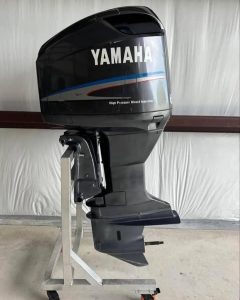
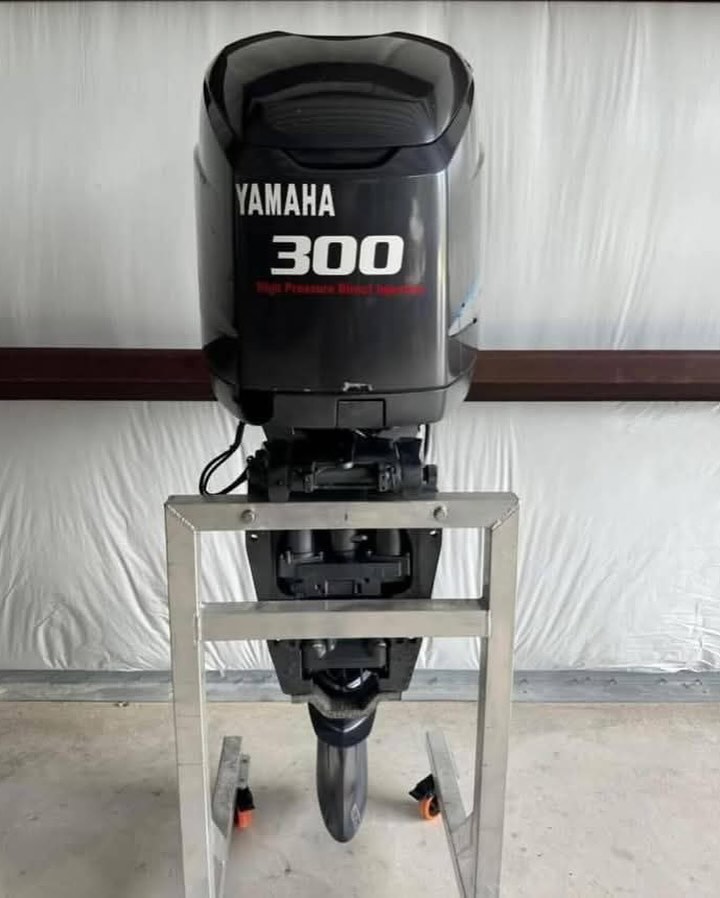
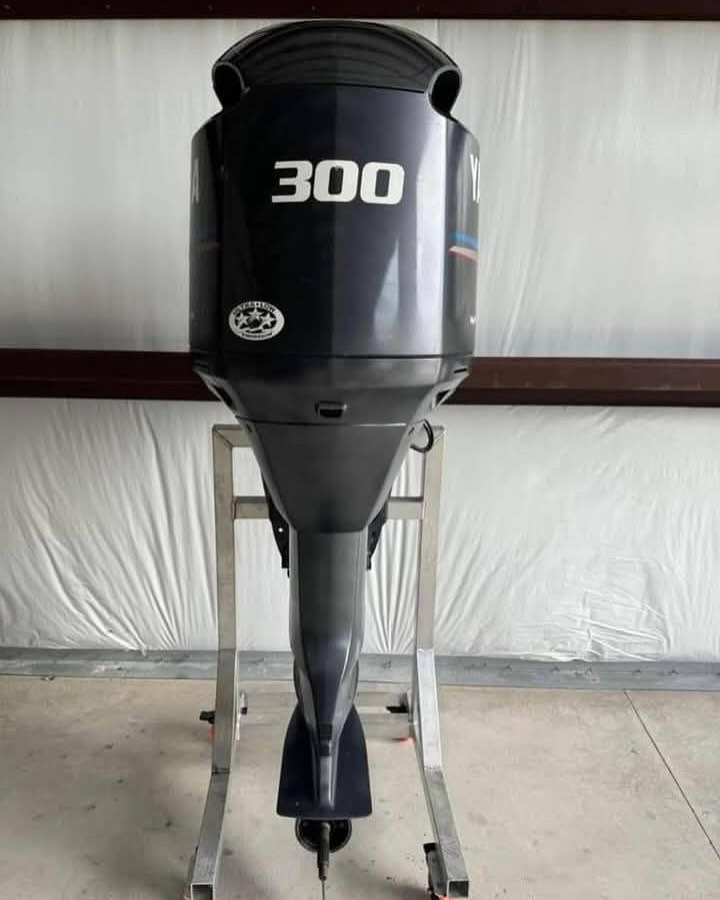
This Yamaha 300HP HPDI outboard is a high-output two-stroke direct-injection marine engine built around Yamaha’s 3.3-liter, 76-degree V6 HPDI platform. Yamaha introduced the Z300/VZ300 family as 300HP high-pressure direct-injection two-stroke outboards, using a 3,342cc V6 powerhead and 300HP output at 5,000 rpm.
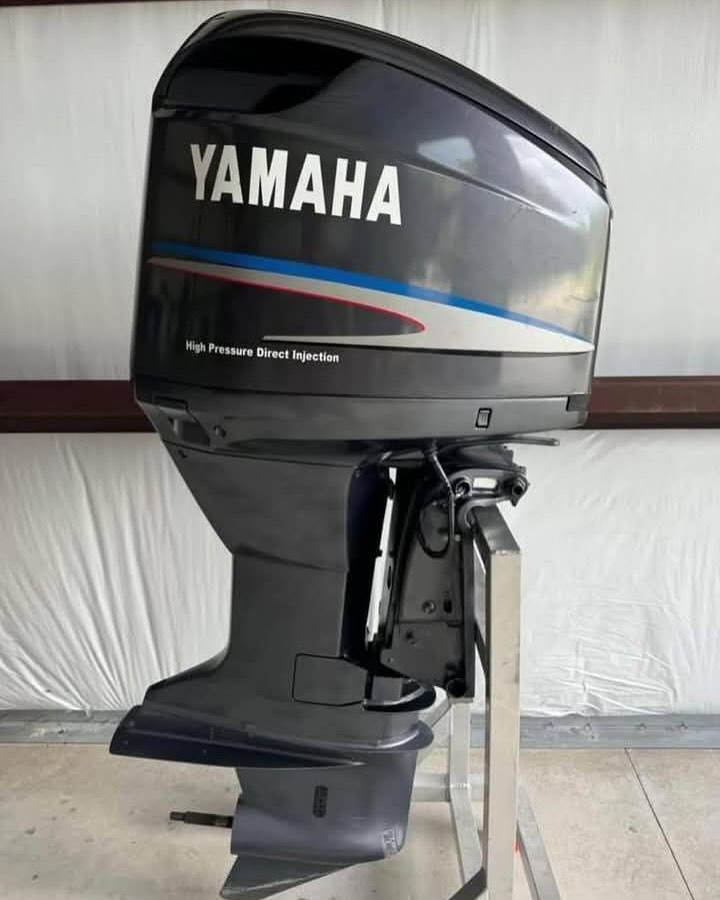
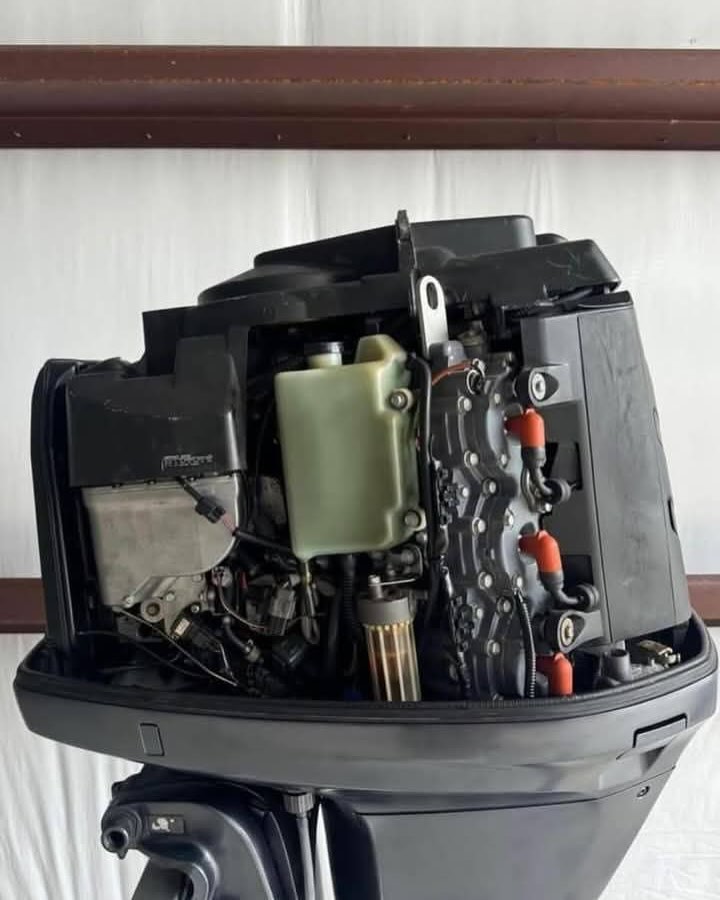
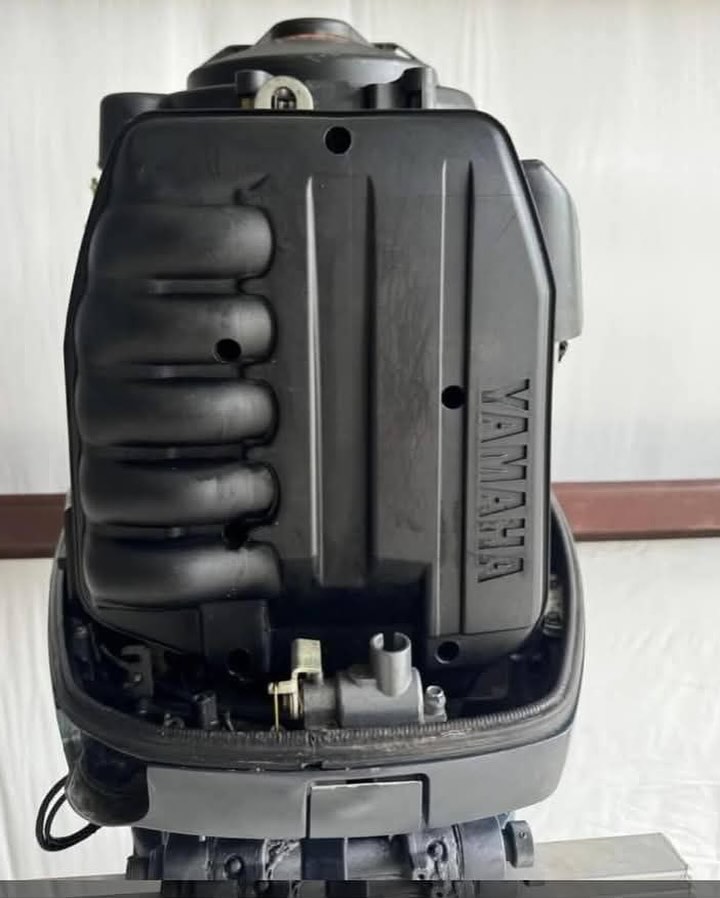
Listing-specific condition and equipment: the original listing reports approximately 782 hours, a 25-inch shaft, controls and a stainless-steel propeller. It also states that the engine starts on the first crank, trim and tilt operate, shifting is smooth and the steering arm is free of rust/corrosion. The cowling is described as having some scratches and small cracks. These are condition claims for this particular used engine and should be confirmed before purchase.
| Specification | Yamaha 300HP HPDI |
|---|---|
| Rated power | 300HP / 220.7kW |
| Engine type | 2-stroke, 76-degree V6, HPDI |
| Displacement | 3,342cc / 203.9 cu in |
| Bore x stroke | 93.0 x 82.0mm |
| Maximum rated output speed | 5,000 rpm |
| Full-throttle operating range | 4,500–5,500 rpm |
| Fuel system | High Pressure Direct Injection (HPDI) |
| Fuel injection pressure | Approximately 7MPa / 1,000 psi |
| Ignition/control | Yamaha TCI / ECU-controlled system |
| Starting system | Electric start |
| Control | Remote control |
| Lubrication | Oil injection |
| Cooling | Water cooled |
| Alternator | 50A maximum output |
| Transom configuration | 25-inch shaft reported for this listing |
| Listed engine hours | Approximately 782 hours |
| Listed equipment | Controls and stainless-steel propeller |
Yamaha’s published Z300 specifications identify a 3,342cc 76-degree V6 two-stroke HPDI engine producing 300PS at 5,000 rpm, with a 4,500–5,500 rpm full-throttle range, 93 x 82mm bore and stroke, electric starting, remote control, fuel injection, TCI ignition, oil injection and a 50A alternator.
The heart of the Yamaha 300HP HPDI is a 3.3-liter 76-degree V6. Yamaha developed the 300HP HPDI from its earlier HPDI architecture and increased injection pressure, improved intake cooling, tuned the exhaust and increased intake-air volume to produce 300PS from the 3.3-liter V6 platform.
The 93mm bore and 82mm stroke give the engine 3,342cc of displacement. With six cylinders and direct fuel injection, the engine is designed for high-output applications where strong acceleration and substantial propeller thrust are required.
HPDI stands for High Pressure Direct Injection. Instead of using a conventional carburetor or port fuel-injection arrangement, Yamaha’s HPDI system injects fuel directly into the combustion chamber at very high pressure. Yamaha’s technical material identifies an injection pressure of approximately 7MPa, while contemporary technical coverage describes the system as operating at roughly 1,000 psi.
Yamaha developed HPDI to combine the compactness and power-to-weight characteristics of a two-stroke engine with more precise fuel delivery. Yamaha’s original Z300 announcement specifically describes HPDI as a high-pressure direct-injection system and identifies the Z300 and VZ300 as 300HP two-stroke models.
The Yamaha 300HP HPDI is rated for 300HP at 5,000 rpm, with a documented full-throttle operating range of approximately 4,500–5,500 rpm.
Propeller selection is critical on an engine of this size. The correct propeller depends on hull design, loaded displacement, gearcase configuration, mounting height and the boat’s intended operating conditions. The goal is to allow the engine to reach the manufacturer’s recommended operating range at wide-open throttle under the normal loaded condition.
The product listing identifies this particular Yamaha 300HP HPDI as having a 25-inch shaft. Shaft length should be confirmed against the actual model identification plate and measured boat transom before installation. Yamaha produced multiple transom configurations within its large-outboard range, so the exact model suffix matters when ordering parts or confirming fitment.
A correct shaft-to-transom match helps maintain appropriate gearcase depth, cooling-water pickup and propeller position. Mounting height should also be considered if the engine will be installed on a bracket or jack plate.
The Z300 HPDI configuration uses electric starting and remote control. Yamaha’s published specifications identify electric start and remote control for the Z300 family.
The original listing also states that the controls are included and that the trim and tilt system cycles up and down without reported problems. Because this is a used engine, buyers should test the complete control system before purchase, including starting, throttle response, gear selection, steering, trim and tilt.
The Yamaha 300HP HPDI uses a charging system rated at up to 50 amps. Yamaha’s technical specifications identify the maximum alternator output as 50A. This is useful on boats running multiple electrical loads, but the actual charging performance should be verified on a used engine rather than assumed from the model specification alone.
Unlike a simple carbureted premix two-stroke, the Yamaha HPDI system uses an oil-injection system. Yamaha’s specifications identify oil injection as the lubrication system. The oil reservoir, oil pump, lines, sensors and associated warning system therefore deserve particular attention during a used-engine inspection.
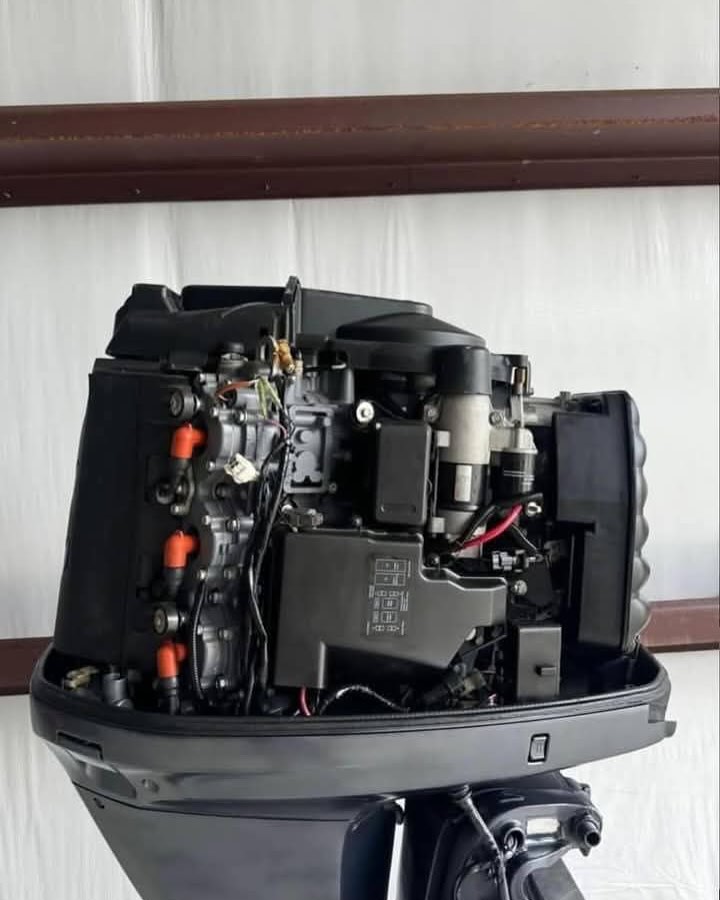
HPDI engines also contain more electronic and fuel-system components than a conventional carbureted two-stroke. A proper inspection should include the high-pressure fuel system, injectors, fuel pumps, ECU/diagnostic system, sensors, ignition components, cooling system and oiling system.
The listing reports approximately 782 hours. Engine hours alone do not establish the remaining service life of a marine engine. The most useful evaluation combines the hour reading with service history, compression results, running condition, diagnostic information and inspection of the fuel, cooling, lubrication and lower-unit systems.
The original listing states that the cowling has a few scratches and small cracks. This does not describe the condition of the internal engine components, but the cowling should still be inspected carefully before purchase. Check that the cowling latches securely, seals correctly and does not allow water to reach components that should remain protected.
The listing states that a stainless-steel propeller and controls are included. Confirm the exact propeller diameter, pitch, number of blades and condition before installation. A propeller supplied with a used engine is not automatically the correct propeller for every boat.
The 300HP HPDI was developed for high-performance marine applications where substantial horsepower and strong acceleration are required. Yamaha introduced both the offshore-oriented Z300 and freshwater bass-oriented VZ300 versions.
For a used engine, application suitability should be based on the boat manufacturer’s horsepower rating, transom configuration, steering and control system, loaded weight and the exact Yamaha model suffix.
This engine should not be compared with a modern Yamaha F300 as though they were the same powerhead. The HPDI is a 3,342cc 76-degree V6 two-stroke direct-injection engine, while Yamaha’s current F300 family uses a 4,169cc DOHC 24-valve V6 four-stroke with electronic fuel injection.
The difference affects engine architecture, weight, fuel system, lubrication, controls and maintenance. Buyers replacing an older HPDI should verify rigging compatibility and not assume that a modern four-stroke 300HP will use the same controls, wiring or mounting arrangement.
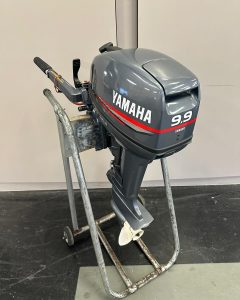
If you are comparing this large Yamaha with other engines in the Performance Engines catalog, see the 2010 Yamaha F250 4-stroke V6 for another high-horsepower Yamaha option, or the 2021 Yamaha F200 4-stroke for a lower-output four-stroke platform. For a much smaller portable engine, compare the Yamaha 9.9HP 2-stroke.
Yes. Yamaha’s Z300 and VZ300 HPDI models are 76-degree V6 two-stroke outboards using high-pressure direct fuel injection.
The Z300/VZ300 HPDI uses a 3,342cc, or approximately 3.3-liter, V6 powerhead.
It uses six cylinders arranged as a 76-degree V6.
The published specifications identify a 93mm bore and 82mm stroke.
The Z300 is rated at 300PS at 5,000 rpm, with a published full-throttle range of 4,500–5,500 rpm.
HPDI means High Pressure Direct Injection. Yamaha developed the system to inject fuel directly into the combustion chamber at high pressure rather than relying on a conventional carburetor fuel system.
Yes. Yamaha’s specifications identify oil injection as the lubrication system.
The published maximum alternator output is 50A.
The product listing identifies the engine being sold as having a 25-inch shaft. Confirm the model identification plate and actual measurement before installation.
The original listing reports approximately 782 hours. The current hour reading should be independently verified through the engine’s diagnostic system where possible.
Yes. The original listing states that controls are included with this particular engine. Confirm the exact controls, harnesses and accessories supplied with the sale.
Yes. The original listing states that a stainless-steel propeller is included. Confirm its pitch, diameter and condition before selecting it for the final boat installation.
The listing reports a few scratches and small cracks in the cowling. The cowling should be inspected in person or through current photographs before purchase.
Check compression, HPDI fuel pressure, injectors and pumps, oil injection, cooling, charging, diagnostic history, gearcase oil, propeller, trim and tilt, steering, controls and overall corrosion. For a 782-hour engine, documented maintenance history and a proper running inspection are particularly valuable.
Explore more outboard engines at Performance Engines.