$3,000.00 Original price was: $3,000.00.$2,500.00Current price is: $2,500.00.
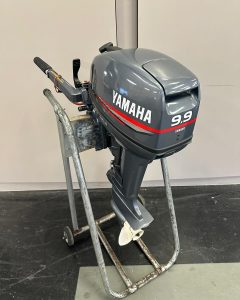
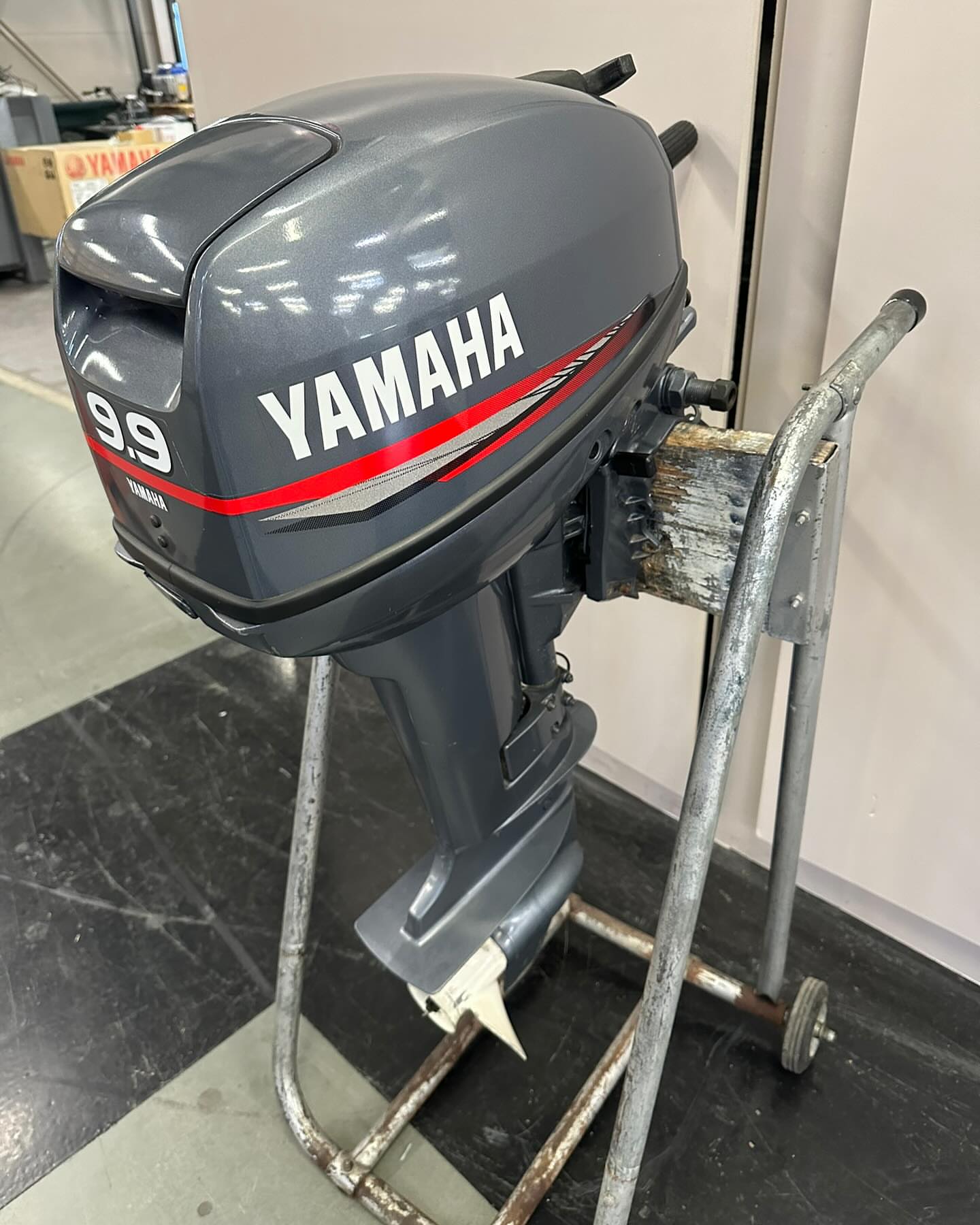
The Yamaha 9.9HP 2-stroke outboard is a compact, mechanically simple portable marine engine designed for smaller fishing boats, utility boats, inflatables, tenders, jon boats and other applications that benefit from a lightweight two-cylinder powerhead. Unlike Yamaha’s later F9.9 four-stroke models, the 2-stroke 9.9F/9.9FMH family uses a 246cc inline two-cylinder engine, carburetor fuel induction, CDI ignition and premixed fuel-and-oil lubrication.
Important specification clarification: the original description for this listing contained the 212cc, 4-stroke specifications associated with Yamaha’s F9.9 four-stroke platform. Those figures should not be used to identify a Yamaha 9.9HP 2-stroke. Yamaha documentation for the 9.9FMH identifies the engine as a 246cc two-stroke L2 with a 56 x 50mm bore and stroke, 9.9HP output at 5,000 rpm and a 4,500–5,500 rpm full-throttle operating range.
| Specification | Yamaha 9.9HP 2-Stroke |
|---|---|
| Power | 9.9HP / 7.3kW |
| Engine type | 2-stroke inline 2-cylinder |
| Displacement | 246cc / 15.01 cu in |
| Bore x stroke | 56 x 50mm |
| Rated output speed | 5,000 rpm |
| Full-throttle operating range | 4,500–5,500 rpm |
| Fuel system | Carburetor |
| Ignition | CDI |
| Starting system | Manual |
| Control | Tiller handle |
| Gear positions | Forward / Neutral / Reverse |
| Gear ratio | 2.08:1 |
| Trim and tilt | Manual |
| Short-shaft transom height | Approximately 17.3 inches / 440mm |
| Long-shaft transom height | Approximately 22.3 inches / 567mm |
| Weight | Approximately 79lb S / 83lb L |
| Fuel and lubrication | Premixed gasoline and 2-stroke oil |
| Specified fuel/oil ratio | 100:1 for the documented 9.9FMH specification |
| Alternator output | 80W |
| Fuel tank capacity | Approximately 24–25L, depending on specification/market |
The documented Yamaha 9.9FMH specifications list 79lb for the short-shaft version and 83lb for the long-shaft version, with a 440mm short transom height and 567mm long transom height. The same documentation lists a 2.08:1 gear ratio, manual trim, forward-neutral-reverse shifting, 80W alternator output and premixed lubrication.
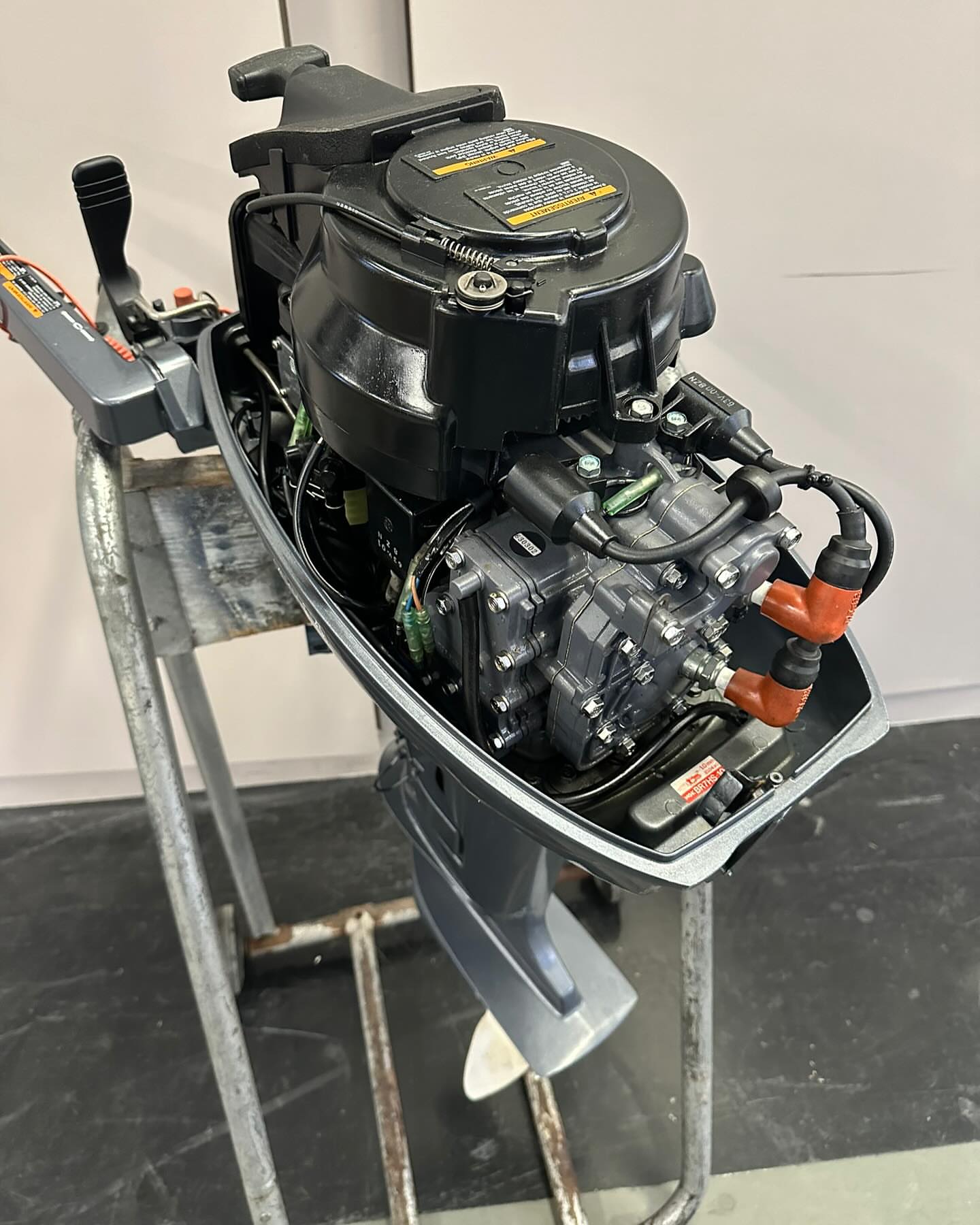
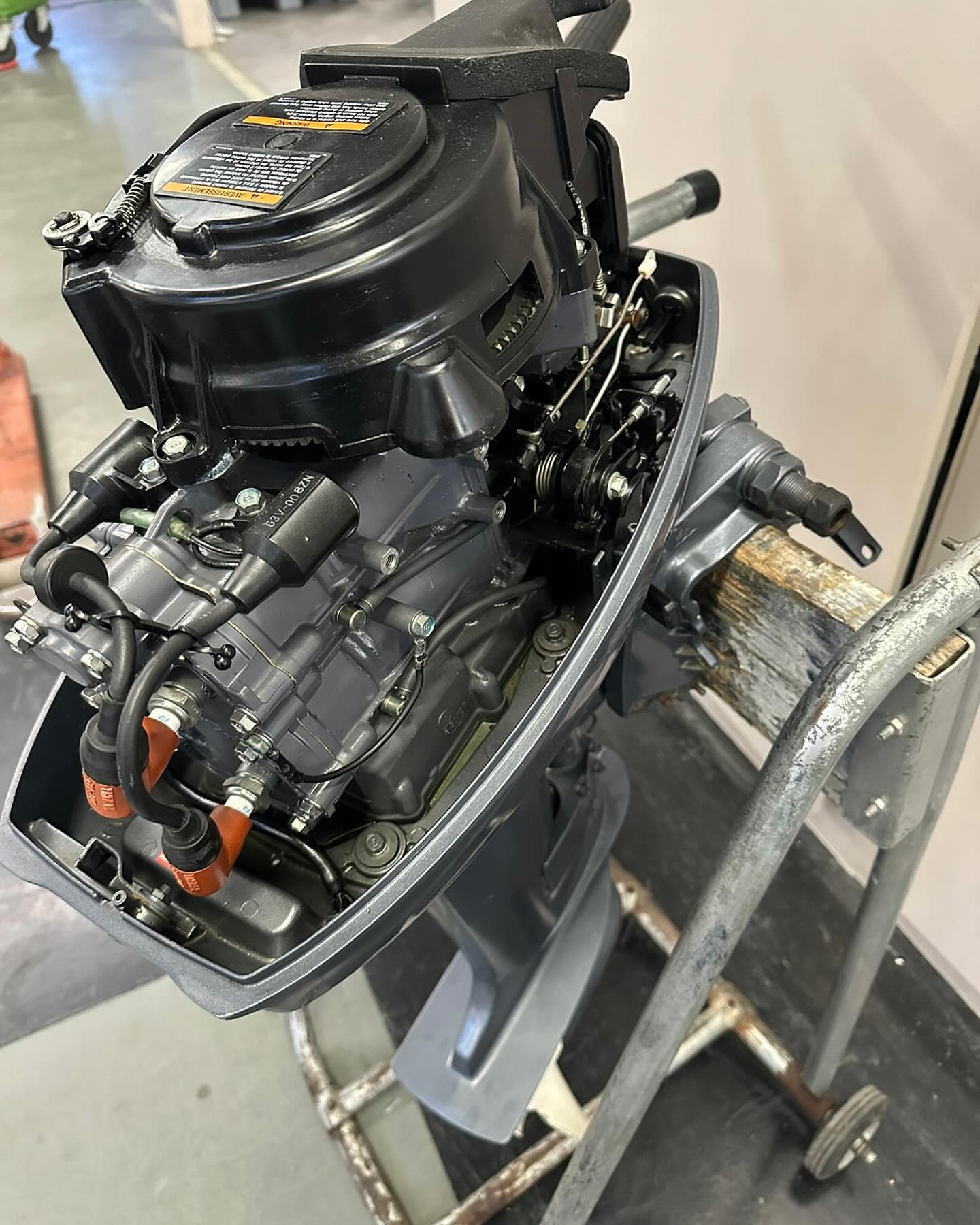
The defining feature of this Yamaha 9.9HP 2-stroke is its 246cc inline twin-cylinder powerhead. The 56mm bore and 50mm stroke provide the displacement used to produce 9.9HP at 5,000 rpm. Its two-stroke design is mechanically less complex than a four-stroke engine because it does not use a conventional four-stroke valve train, making it a practical choice where low weight, straightforward mechanical construction and easy servicing are priorities.
The engine uses a carburetor and CDI ignition rather than electronic fuel injection. That makes the fuel system relatively straightforward to inspect and service, but condition is particularly important on a used engine: carburetor cleanliness, fuel-system condition, spark, compression, cooling-water flow and ignition components should all be checked before putting the motor into regular service.
Weight is one of the main advantages of the Yamaha 9.9HP 2-stroke. The documented 9.9FMH specification is approximately 79lb with the short shaft and approximately 83lb with the long shaft. This makes it substantially easier to handle than many larger four-stroke outboards and well suited to boats where an engine may need to be removed for transport, storage or servicing.
Typical applications include small aluminum fishing boats, jon boats, utility boats, tenders, inflatables and other lightweight hulls. Actual performance depends on hull design, loaded weight, propeller selection, water conditions and the condition of the engine.
Choosing the correct shaft length is essential when installing a Yamaha 9.9HP outboard. The documented 9.9FMH specification provides approximately 440mm (17.3 inches) of transom height for the short-shaft version and approximately 567mm (22.3 inches) for the long-shaft version.
In practical boat terminology, these are commonly associated with short- and long-shaft installations. Do not select a shaft solely from a product photograph. Measure the boat’s transom and confirm the exact Yamaha model designation before installation. An incorrectly matched shaft can place the propeller at the wrong depth and negatively affect cooling-water pickup, handling and propulsion efficiency.
This Yamaha 9.9HP 2-stroke uses a carburetor and premixed fuel-and-oil lubrication. Yamaha documentation for the 9.9FMH specifies regular unleaded gasoline and Yamaha two-stroke marine oil or an equivalent TC-W3-certified outboard oil, with a documented 100:1 fuel-to-oil ratio for the listed 9.9FMH specification.
Because two-stroke fuel preparation is part of the lubrication system, the correct oil type and mixing procedure matter. The owner’s manual should be followed for the exact model and market rather than applying a generic ratio from another Yamaha two-stroke model.
The 9.9FMH specification uses CDI ignition and a manual starter with choke-assisted starting. This keeps the engine’s electrical and starting system relatively simple and avoids the battery and starter-motor requirements associated with many electric-start outboards.
For a used Yamaha 9.9HP 2-stroke, starting performance should be evaluated with the engine cold as well as warm. Difficult starting, inconsistent idle, poor throttle response or excessive smoking can indicate issues involving fuel delivery, carburetion, ignition, compression, oil mixture or engine condition.
The documented Yamaha 9.9FMH uses a 2.08:1 gear ratio with forward, neutral and reverse. Propeller selection should be matched to the boat and operating load rather than choosing a propeller based only on diameter or appearance.
The goal is to allow the engine to operate within its specified 4,500–5,500 rpm full-throttle range under normal loaded conditions. A propeller that is too heavily loaded can prevent the engine from reaching its intended operating range, while an unsuitable low-load propeller can allow excessive engine speed.
If this engine is being purchased as a used outboard, condition is more important than the age printed on the cowling. A proper inspection should include compression testing, spark-plug inspection, carburetor and fuel-system condition, cooling-water flow, gearcase oil, propeller and propeller shaft condition, shift operation, throttle operation and the general condition of the lower unit.
It is important not to confuse this product with the later Yamaha 9.9HP 4-stroke listing on this site. The four-stroke F9.9 family uses a 212cc two-cylinder powerhead, while the documented 9.9FMH two-stroke uses a 246cc two-cylinder engine. Yamaha’s published specifications therefore make the displacement and engine-cycle distinction clear.
The two designs serve different priorities. The 2-stroke version is lighter and mechanically simpler, while a modern four-stroke design generally emphasizes different characteristics such as four-stroke combustion, quieter operation and fuel economy. Buyers should identify the exact engine model before comparing specifications, parts or maintenance requirements.
If you are comparing portable and midrange Yamaha outboards, you can also review our Yamaha 9.9HP 4-stroke, the 2020 Yamaha F2.5 4-stroke, and the 2005 Yamaha 50HP 4-stroke EFI. These comparisons can help determine whether a lightweight portable motor or a larger four-stroke engine better matches your boat and intended use.
Yes. This listing is being treated as the Yamaha 9.9HP 2-stroke family. The documented 9.9FMH specification is a 246cc inline two-cylinder two-stroke engine.
The documented Yamaha 9.9FMH has 246cc of displacement with a 56 x 50mm bore and stroke.
The documented 9.9FMH is approximately 79lb with the short shaft and 83lb with the long shaft when specified with the aluminum propeller.
The documented full-throttle operating range is 4,500–5,500 rpm, with maximum rated output of 9.9HP at 5,000 rpm.
No. The 9.9FMH specification uses a carburetor and CDI ignition.
The documented 9.9FMH configuration uses manual starting with a choke system. Other Yamaha 9.9 variants and markets may differ, so the exact model code should be confirmed before purchase.
Yamaha documentation specifies regular unleaded gasoline together with Yamaha two-stroke marine oil or an equivalent TC-W3-certified outboard oil. The documented 9.9FMH fuel-to-oil ratio is 100:1.
The documented gear ratio is 2.08:1, with forward, neutral and reverse.
The 9.9FMH documentation identifies short and long shaft configurations with transom heights of approximately 440mm and 567mm respectively. Confirm the exact model code and boat transom measurement before installation.
It can be suitable for appropriately sized fishing and utility boats, jon boats, tenders and other small craft. The correct application depends on the boat manufacturer’s maximum horsepower rating, transom height, loaded weight and propeller setup.
Check compression, ignition, carburetion, cooling-water flow, gearcase oil, propeller condition, shifting, throttle operation, fuel-system condition and overall corrosion or damage. A running test and inspection by a qualified marine technician are recommended for a used engine.
The 212cc figure belongs to Yamaha’s F9.9 four-stroke platform, not the documented 246cc 9.9FMH two-stroke specification. The two model families should not be mixed when publishing technical specifications.
Explore more outboard engines at Performance Engines.