
$3,000.00 Original price was: $3,000.00.$2,800.00Current price is: $2,800.00.
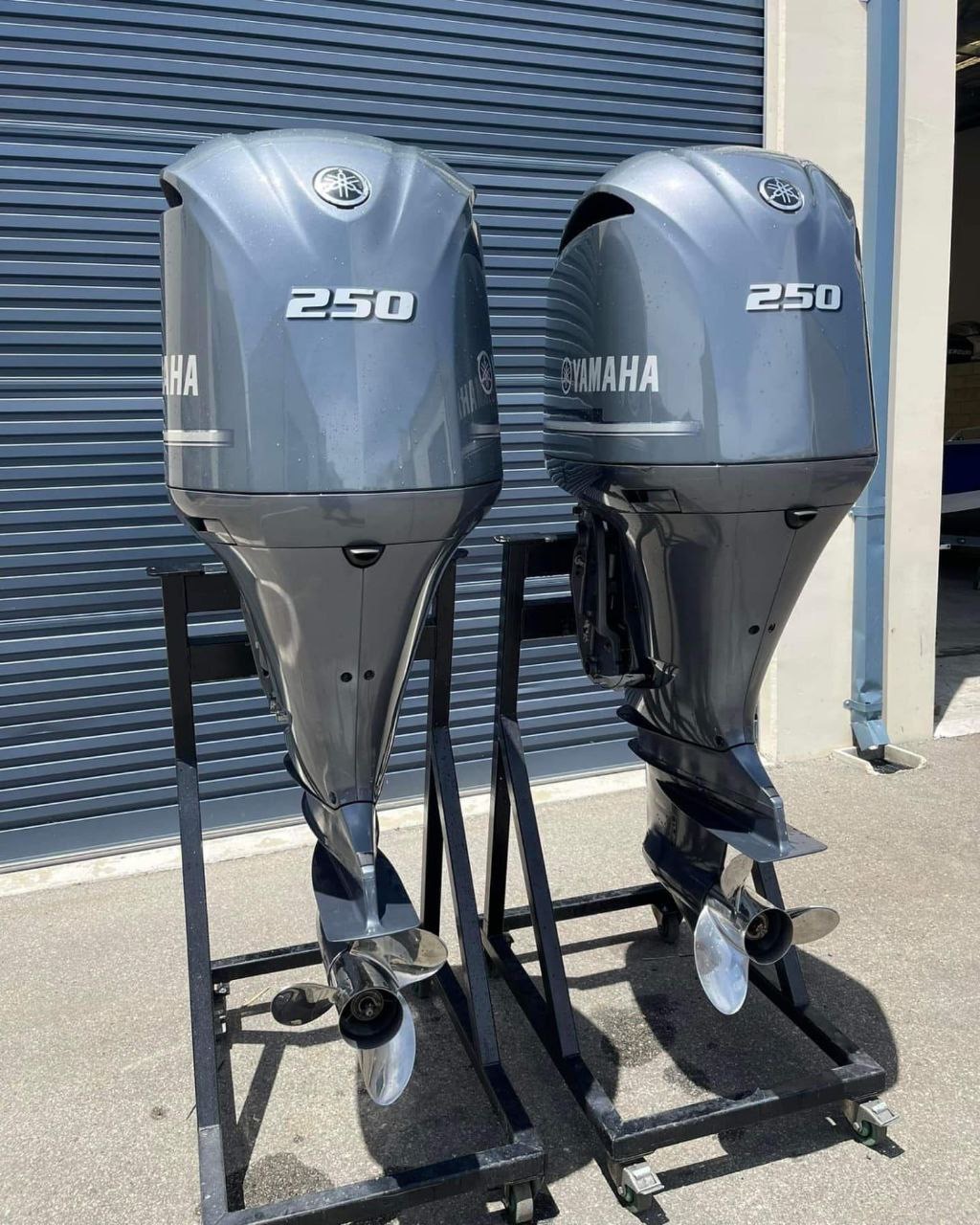
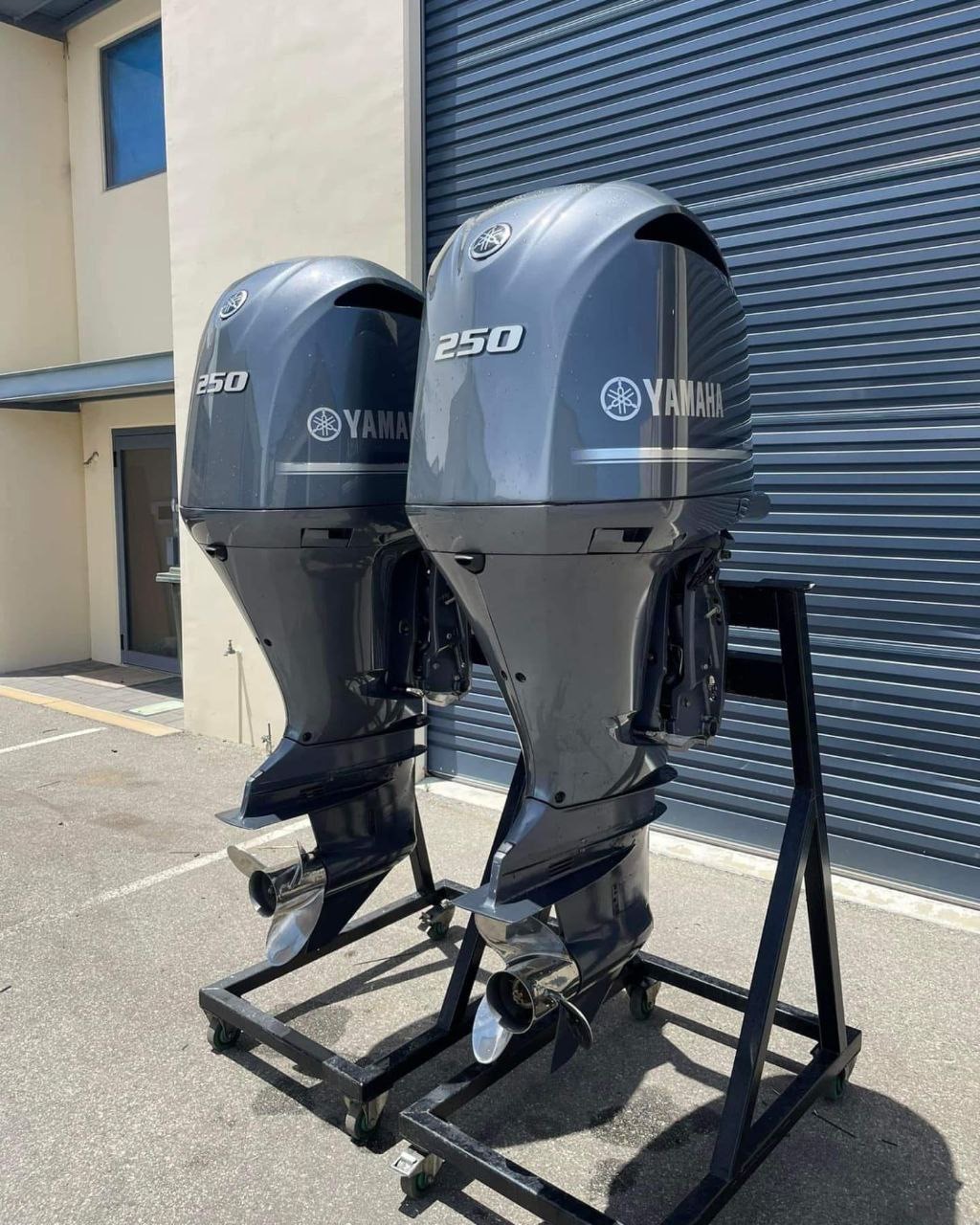
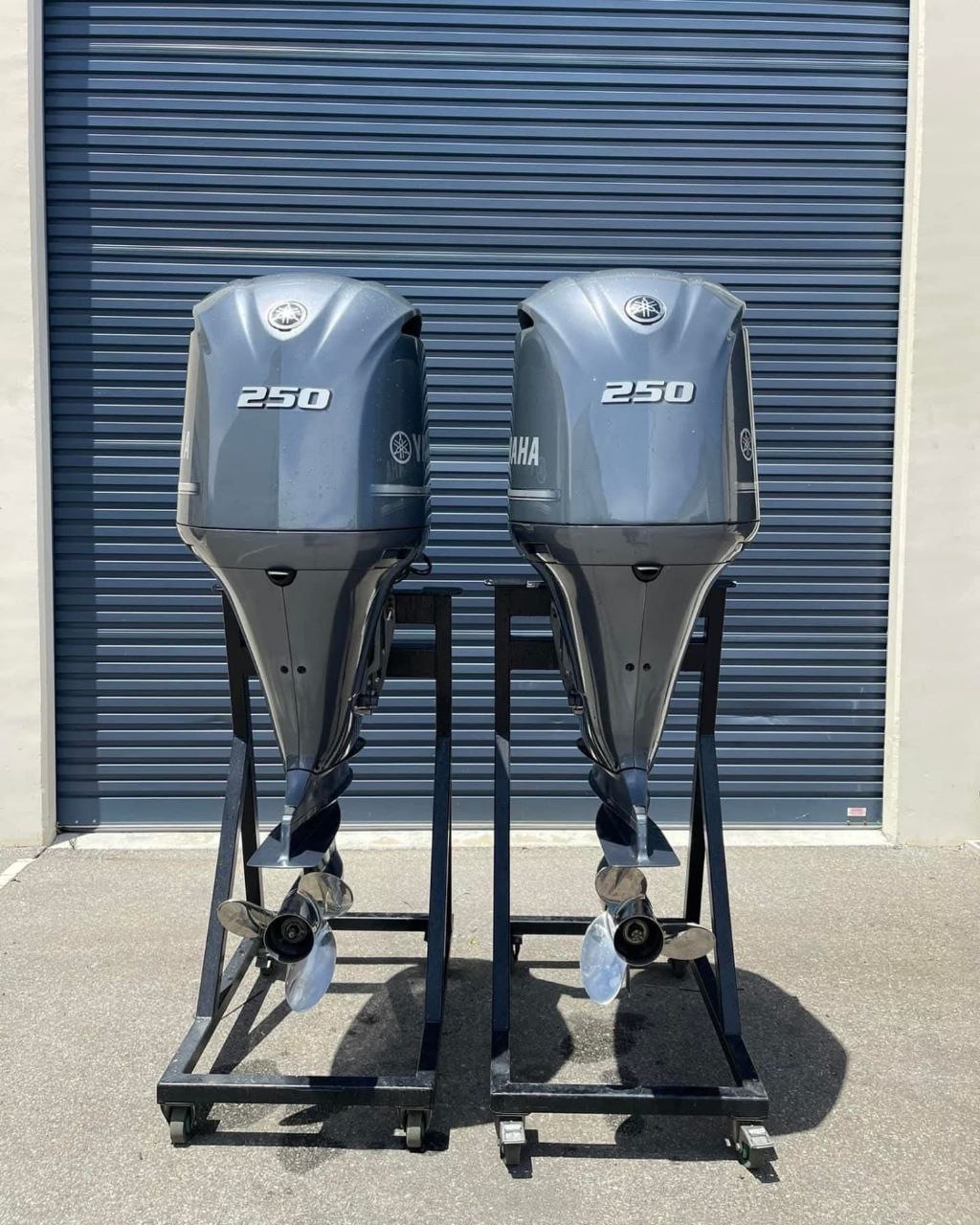
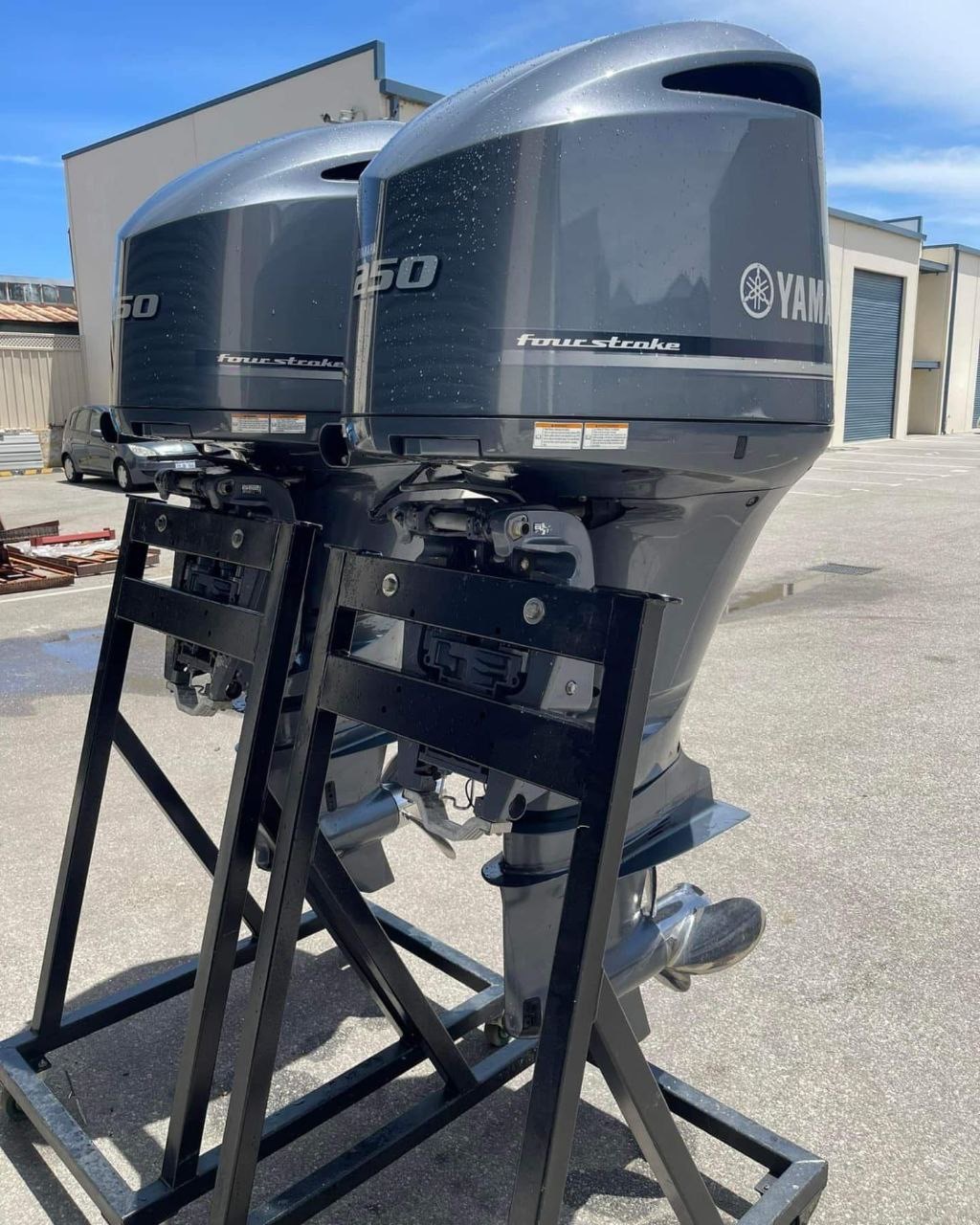
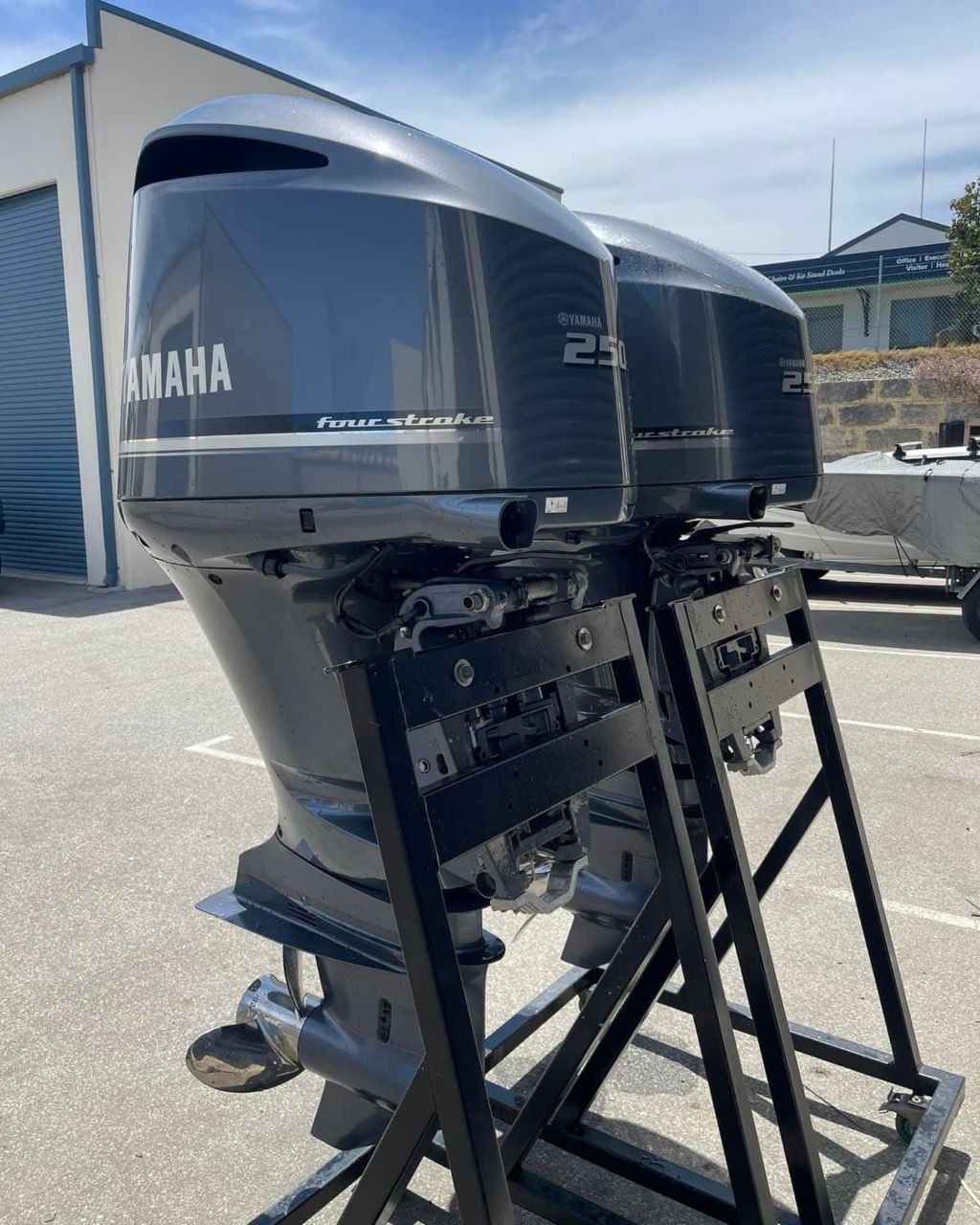
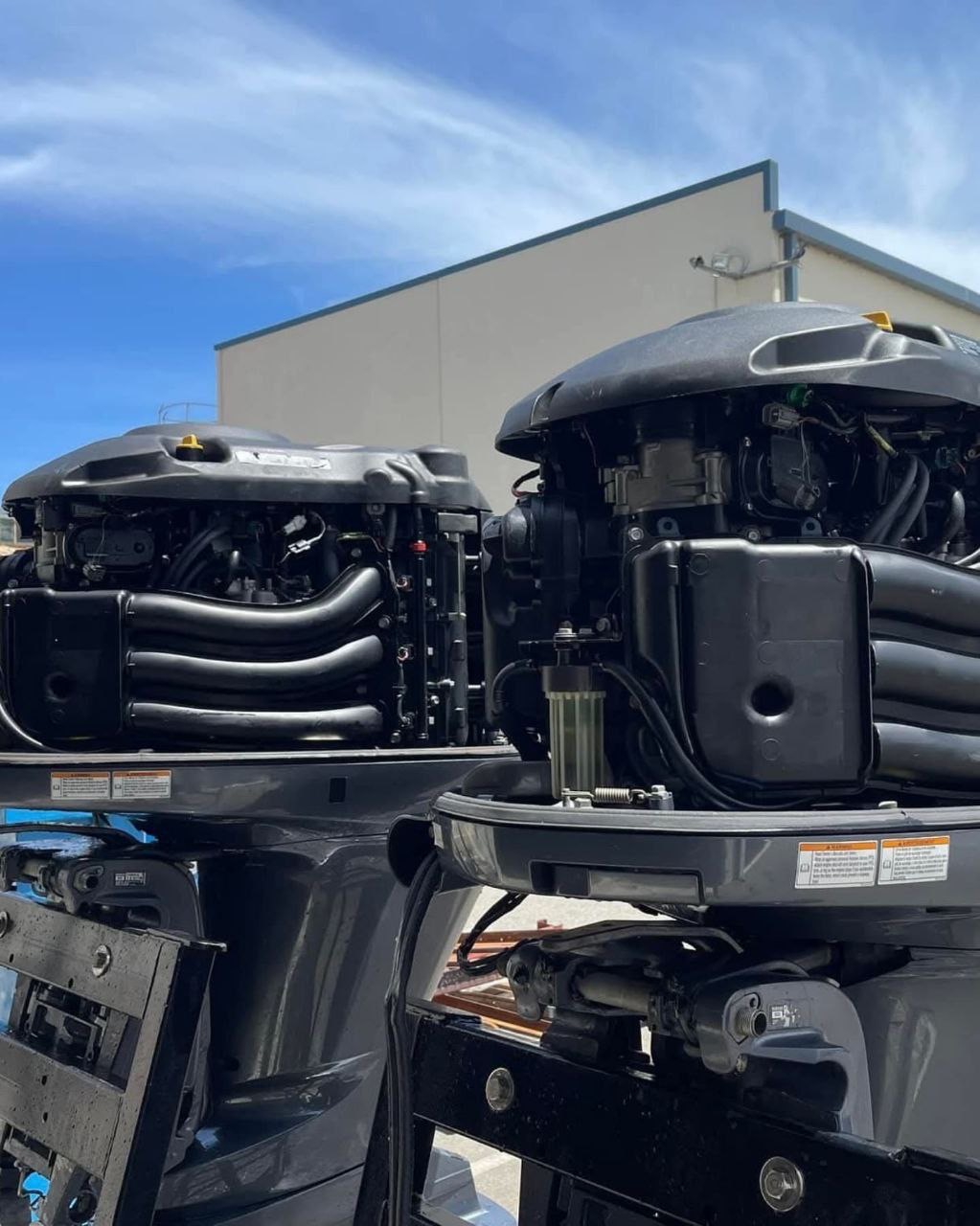
The 2010 Yamaha F250 4-Stroke V6 Outboard is a 250-horsepower four-stroke marine engine built around Yamaha’s 4.2-liter V6 platform. Designed for boats that need substantial offshore and recreational power, the F250 combines electronic fuel injection, a 24-valve DOHC configuration, electric starting and a 5,000–6,000 RPM full-throttle operating range. This listing is for the 2010-era F250 configuration, so buyers should verify the exact model code, shaft length, rigging and equipment supplied with the individual engine before completing a repower.
The Yamaha F250 was developed as a high-output four-stroke outboard for larger recreational and offshore boats. If you are comparing this engine with other outboard options, you can also review the 2005 Yamaha 50 Four Stroke EFI for a lower-horsepower Yamaha four-stroke reference. Its V6 architecture and approximately 4.2-liter displacement provide the power required for applications such as center consoles, offshore fishing boats, walkarounds and other hulls designed for a 250 HP outboard. The engine uses electronic fuel injection and Yamaha’s TCI microcomputer ignition system, with a wet-sump lubrication system and thermostatically controlled cooling.
The F250’s V6 architecture provides 250 horsepower at the propeller shaft at 5,500 RPM. With 4,169cc of displacement, the engine is intended for boats requiring significantly more power than Yamaha’s smaller four-cylinder outboards. The 5,000–6,000 RPM operating range is also an important reference when checking propeller selection and the final installation on a specific hull.
The Yamaha F250 uses electronic fuel injection for fuel delivery and a TCI microcomputer ignition system for engine management. The documented 2010 configuration uses a 10.3:1 compression ratio, thermostatic cooling and wet-sump lubrication. These specifications should be considered when evaluating an engine for a replacement or repower project.
For additional Yamaha options, see the Yamaha 15HP 2-Stroke Enduro if you are evaluating a smaller outboard for a different hull and duty cycle. These engines are intended for very different applications, so compare horsepower, shaft length, boat rating and intended use rather than treating them as direct replacements for the F250.
A 2010 Yamaha F250 can be appropriate for larger center-console boats, offshore fishing boats, walkarounds, runabouts and other vessels whose manufacturer-approved maximum horsepower accommodates a 250 HP outboard. Suitability depends on the specific hull, transom, intended load and boat manufacturer’s rating. For a repower, compare the existing engine’s shaft length, mounting arrangement, steering system, controls, fuel system, battery requirements and propeller setup before ordering.
The documented 2010 F250 specification uses a 25-inch shaft configuration. Shaft length is a critical installation measurement because the outboard must match the boat’s transom height and mounting requirements. Do not select a replacement engine based on horsepower alone; confirm the boat manufacturer’s recommended shaft length and mounting specifications first.
The 2010 specification lists a 50-amp alternator output. This provides charging capacity for the boat’s electrical system while the engine is operating, although actual electrical-system requirements vary by vessel and onboard equipment. Battery capacity, wiring, gauges and accessories should be checked as part of a repower inspection.
The Yamaha F250 is rated at 250 horsepower at the propeller shaft at 5,500 RPM.
The documented 2010 F250 has 4,169cc of displacement, commonly described as a 4.2-liter V6.
The F250 uses electronic fuel injection (EFI) and a TCI Microcomputer ignition system.
The documented 2010 specification gives a full-throttle operating range of 5,000–6,000 RPM. Propeller selection and boat loading should be checked so the installed engine operates within the recommended range.
The documented 2010 F250 specification identifies a 25-inch shaft configuration. Buyers should still verify the exact model code and shaft length of the individual engine before installation.
It can be suitable when the boat is rated for 250 horsepower and the engine’s shaft length, mounting, steering, controls, fuel system and electrical requirements match the vessel. A qualified marine technician or the boat manufacturer should be consulted when compatibility is uncertain.
Explore more outboard engines at Performance Engines.
marcus delaney –
I’ve had this F250 on my 24-foot center console for three seasons now and it has been absolutely bulletproof. Starts on the first crank every single time, even on cold mornings in November. The torque down low is incredible for getting up on plane with a full load of gear and passengers. Best outboard purchase I’ve ever made.
Linda Hargrove –
My husband and I repowered our Grady-White with this Yamaha and the difference is night and day compared to our old two-stroke. It’s whisper quiet at idle and the fuel economy at cruise speed is remarkable. We went from burning 18 GPH to about 13 GPH at 3500 RPM. Worth every penny.
Trent Whitfield –
Solid motor overall. I’ve put roughly 600 hours on it and the only issue was a minor thermostat replacement around the 400-hour mark. Power delivery is smooth and linear. My only gripe is that the cowling is a bit heavy to remove by yourself for routine maintenance, but that’s a small complaint for an otherwise fantastic engine.
Carla Jimenez –
I was skeptical about buying a 2010 model, but Pace Performance had it inspected and serviced before delivery. The engine arrived in pristine condition and runs like it just left the factory. The V6 configuration gives it a throaty growl when you open it up that I absolutely love. Highly recommend this seller and this motor.
Dwayne Kowalski –
Good reliable engine for offshore fishing. I run it hard 40 miles out to the Gulf Stream and back every weekend during the season. It handles rough seas and heavy chop without missing a beat. I took one star off because the shift actuator was a little stiff when I first got it, but it loosened up after a few outings.
Samantha O’Brien –
As a female boat owner who does most of my own maintenance, I appreciate how straightforward this engine is to work on. Oil changes are simple, the fuel filter is easy to access, and the diagnostic port is right where you’d expect it. The F250 is a workhorse that doesn’t demand constant babysitting.
Roberto Fuentes –
I’m a charter captain out of Key West and I put this engine through its paces six days a week. Over 1,200 hours and counting with nothing but scheduled maintenance. My passengers always comment on how quiet it is compared to the old Mercury we used to run. The F250 pays for itself in fuel savings alone.
Heather Langston –
We installed this on our 26-foot pontoon for family lake cruising. The power is more than adequate — honestly almost too much for a pontoon, but we love the ability to pull tubes and wakeboarders effortlessly. Fuel economy could be slightly better at WOT, but at cruising speeds it’s very reasonable.
Victor Castellano –
Repowered my Contender 25 with this F250 and it transformed the boat. Top speed went from 42 mph to 51 mph and the hole shot is dramatically improved. The variable camshaft timing on this V6 really makes a difference in the mid-range. I couldn’t be happier with the performance.
Naomi Prescott –
Great engine but I wish the included gauges were more informative. I ended up upgrading to the Yamaha Command Link digital gauges which made a world of difference. The engine itself is flawless — smooth, powerful, and dependable. Just budget a little extra for better instrumentation.
Gregory Thornton –
Third Yamaha outboard I’ve owned and they just keep getting better. This F250 replaced a 2005 F225 and the extra 25 horses are very noticeable. The engine is also noticeably lighter than I expected for a V6, which helped with the stern weight on my 22-foot bay boat.
Michelle Tanaka –
Running this motor in the Pacific Northwest where conditions can change in minutes. The F250 has never let me down through heavy rain, cold temps, and choppy straits. The corrosion resistance is outstanding — I flush it after every trip and the powerhead looks brand new under the cowling.
Calvin Drummond –
The engine runs well and has good power, but I had a frustrating experience with the initial break-in period. The dealer told me one thing, the manual said another, and I ended up with some carbon buildup that required an early service. Once that was sorted, it’s been fine. Three stars for the confusion, five stars for the actual performance.
Brittany Shelton –
My dad and I rebuilt our 28-foot sportfisher and dropped this F250 on the transom. The integration with our Garmin electronics via the NMEA 2000 network was seamless. We can monitor engine data right on the chartplotter. Modern, powerful, and incredibly well-engineered.
Franklin Okafor –
Very strong mid-range torque which is exactly what I need for pulling divers out of the current. The engine handles sustained high-RPM runs without overheating, even in 90-degree Florida water. Docked one star because the trim pump started getting noisy around 500 hours, but it still functions fine.
Angela Moretti –
I bought this engine used from Pace Performance and was blown away by the condition. Low hours, clean compression numbers, and it fired right up on the trailer. The F250 gives my 23-foot walkaround the speed and reliability I need for family trips to the Bahamas.
Angela Moretti –
I bought this engine used from Pace Performance and was blown away by the condition. Low hours, clean compression numbers, and it fired right up on the trailer. The F250 gives my 23-foot walkaround the speed and reliability I need for family trips to the Bahamas.
Derek Johansson –
Swedish-born, Florida-raised, and I know my outboards. This Yamaha F250 is the gold standard for V6 four-strokes in this horsepower class. The 60-degree V6 block is inherently balanced, which means less vibration at all RPM ranges. My hands don’t go numb after a long day at the helm anymore.
Patricia Voss –
We use this on our cabin cruiser on Lake Michigan. It’s a fantastic engine for fresh water. Cruising at 4000 RPM we get about 2.1 MPG which is excellent for a boat this size. Only four stars because I wish it came with a longer warranty from the reseller, but the engine itself is top-notch.
Jamal Washington –
I fish tournaments on the Chesapeake Bay and reliability is everything. This F250 has started every single tournament morning without hesitation for two years straight. The power-to-weight ratio is excellent and the fuel efficiency lets me carry less fuel, which means more speed. A tournament angler’s dream.
Elena Kowalczyk –
As a marine mechanic, I see a lot of outboards come through my shop. The Yamaha F250 V6 is one of the easiest engines to service and one of the least likely to end up on my lift for major repairs. I recommend it to all my customers who ask for a 250-hp repower. Outstanding engineering.
Russell Hensley –
Good power, good economy, good reliability. Not much more to say. It does exactly what a 250-horse outboard should do. I’d like to see Yamaha improve the cowling latch design — it can be finicky when your hands are wet and you’re trying to check the oil on the water.
Tanya Blackwell –
I was upgrading from a 150 and the jump to 250 horsepower is exhilarating. My 21-foot center console now runs low 60s at WOT. The F250 is smooth, quiet, and the throttle response is instantaneous thanks to the electronic fuel injection. Best upgrade I’ve made to my boat in 15 years of ownership.
Owen Gallagher –
Bought this for my commercial shrimping operation and it’s been a workhorse. I run it 8-10 hours a day during the season and it just keeps purring. The saltwater corrosion protection is second to none. I pressure wash the entire powerhead weekly and there’s zero corrosion after 18 months.
Keisha Randolph –
The engine is fantastic but I had a minor issue with the idle speed being slightly high when I first received it. A quick adjustment by my local Yamaha dealer fixed it in ten minutes. Since then, it’s been absolutely perfect. Smooth idle, smooth acceleration, smooth everything.
Phillip Nakamura –
Running this F250 on my 26-foot Pro-Line here in Hawaiian waters. The ocean conditions here are brutal — big swells, strong currents, and intense sun. This engine handles all of it without complaint. The UV-resistant cowling hasn’t faded at all after two years in tropical sun.
Stephanie Varga –
I’m a marine biology researcher and I need a quiet engine that won’t disturb marine life during surveys. The F250 at low RPM is nearly silent — I can idle through mangrove estuaries and the manatees don’t even flinch. Plus, the low emissions meet all EPA and CARB standards, which matters for our research permits.
Howard Sinclair –
I’m 72 years old and this is the fifth outboard I’ve owned in my lifetime. The F250 is by far the most refined. Electric start is instant, power trim is smooth, and the shift is clunk-free. I only wish the maintenance schedule didn’t require valve adjustments at 500 hours — that’s a job I leave to the dealer.
Mariana Gutierrez –
We run sportfishing trips out of Cabo San Lucas and our clients are always impressed by the Yamaha’s quiet operation and smooth ride. The F250 pushes our 28-foot panga to 45 knots fully loaded. When you’re chasing marlin, that speed matters. Outstanding motor for commercial use.
Clayton Beaumont –
Great engine with one caveat: make sure your transom can handle the weight. At around 560 pounds, this V6 is heavier than some competing 250s. I had to reinforce the transom on my older boat before mounting it. Once installed properly, though, the performance is unmatched.
Yvonne Chatterjee –
I use this as auxiliary power on my 36-foot sailboat for those days when the wind dies. It pushes the boat at hull speed effortlessly and sips fuel at about 2 GPH. The tilt mechanism is robust and holds the motor securely when sailing. A perfect companion for a cruising sailboat.
Travis McAllister –
I’ve been a Yamaha loyalist since the early ’90s and the F250 is their best V6 yet. The DOHC 24-valve head breathes beautifully at high RPM and the engine never feels strained even at wide open throttle for extended runs. I tow my boat from Texas to the Florida Keys every winter and it starts right up after the long drive.
Diane Kowalski –
My husband installed this on our 25-foot Sea Hunt. The power is incredible and we can finally pull the kids on a kneeboard without bogging down. Four stars because the exhaust note at WOT is a bit loud for my taste, but the kids love it so I guess that balances out.
Andre Beauchamp –
Running this in the Louisiana marshes where the water is shallow and full of debris. The F250’s water intake design seems to resist clogging better than my previous outboard. I’ve hit mud and grass at speed and the engine never overheated. Tough as nails.
Rachel Whitmore –
I manage a fleet of rental boats at a resort in the Outer Banks and we have four of these F250s on our larger vessels. Across all four engines, we’ve had zero breakdowns in two seasons. Our guests love the smooth, quiet ride. The F250 is the backbone of our rental fleet.
Marcus Thibodeaux –
Excellent engine for the price. I compared it against the Mercury Verado 250 and the Suzuki DF250 before choosing the Yamaha. The F250 won on reliability reputation and resale value. It’s not the lightest in its class, but it’s the one I trust most when I’m 30 miles offshore alone.
Ingrid Svensson –
I moved from Sweden to the US East Coast and brought my love of boating with me. This F250 is a masterpiece of Japanese engineering. The attention to detail — from the stainless steel fasteners to the multi-layer anti-corrosion paint — is remarkable. It reminds me of the precision I grew up appreciating.
Darnell Jackson –
I run a dive charter in the Florida Keys and this motor gets me to the reef sites fast and safely. The F250 handles the Gulf Stream current like it’s nothing. My divers appreciate the quiet idle while they’re gearing up on the swim platform. No exhaust fumes at the stern either, thanks to the through-prop exhaust design.
Olivia Chen –
Solid four-stroke with great fuel economy. I average about 2.5 MPG at cruise on my 23-foot center console, which lets me fish all day on a single tank. The only reason I’m not giving five stars is that the engine alarm went off once due to a faulty sensor, which turned out to be a false alarm. Scared me half to death though.
Warren Hutchins –
Forty years on the water and this is the smoothest outboard I’ve ever run. The counter-rotating option for twin setups eliminates torque steer completely. I run twin F250s on my 31-foot sportfisher and the boat tracks straight as an arrow even in a beam sea. Yamaha nailed it.
Sofia Petrov –
I bought this engine to repower my late father’s 24-foot Mako. The installation was straightforward and the engine bolted right up to the existing rigging. The first time I opened it up on Biscayne Bay, I felt like my dad was smiling down on me. Powerful, reliable, and full of soul.
Kenneth Blackwood –
The F250 is a torque monster. I can get my heavily loaded 26-foot bay boat on plane in under four seconds, even with a full livewell and three passengers. Docked one star because the recommended 100-hour service interval feels a bit frequent for recreational use, but I follow it anyway for peace of mind.
Laura Fitzgerald –
I was nervous about buying a 2010 engine, but the team at Pace Performance was incredibly transparent about the engine’s history, hours, and service records. The F250 arrived exactly as described and has been flawless for the past year. The peace of mind that comes with a Yamaha is worth the investment.
Desmond Osei –
I’m a marine surveyor and I inspect hundreds of outboards every year. The Yamaha F250 V6 consistently ranks among the best-maintained and longest-lasting engines I encounter. When I see one on a boat I’m surveying, I know the owner probably took good care of the rest of the vessel too.
Megan Holloway –
Great family engine. We cruise the Intracoastal Waterway every weekend with the kids and the dog. The F250 is quiet enough that we can have conversations at the helm without shouting. Fuel costs are manageable even with gas prices climbing. Only wish it had a built-in trolling mode for slower speeds.
Curtis Redmond –
I’ve run this F250 for 800 hours in some of the nastiest conditions the Atlantic can throw at you. Nor’easters, squalls, you name it. The engine has never left me stranded. The charging system puts out plenty of amps to keep all my electronics running, including the radar, autopilot, and two fishfinders.
Amanda Liu –
Living in Southern California, I use my boat year-round. The F250 starts instantly whether it’s a 50-degree January morning or a 95-degree August afternoon. The EFI system adjusts seamlessly to temperature and altitude changes. I’ve taken it from sea level to Lake Arrowhead and it didn’t miss a beat.
Terrence O’Malley –
Good solid engine. I use it on my 27-foot lobster boat in Maine. The cold-water performance is excellent and the engine warms up quickly even in 38-degree ocean water. Four stars because the power trim switch on the throttle handle feels a bit cheap compared to the rest of the engine’s premium build quality.
Jasmine Whitaker –
I’m a first-time boat owner and I was overwhelmed by all the outboard options. The team at Pace Performance walked me through everything and recommended the F250 for my 24-foot deck boat. It was the best decision I could have made. Easy to operate, easy to maintain, and incredibly reliable.
Roderick Pemberton –
The F250’s 4.2-liter displacement gives it a torque advantage over smaller-displacement 250s from other manufacturers. You can feel it when you’re pushing through heavy chop on the Chesapeake — the engine doesn’t bog down or lose RPM. It just plows through with authority. A true blue-water motor.
Catherine Beauregard –
After 1,500 hours on my F250, I can confidently say this is the most reliable piece of machinery I’ve ever owned — boat, car, or otherwise. Compression is still within factory specs across all six cylinders. Oil consumption is virtually zero. The water pump impeller lasted 400 hours before I replaced it as preventive maintenance. This engine will likely outlast the boat it’s mounted on.
Brandon Kessler –
I spent nearly six months researching every 250-horsepower outboard on the market before finally pulling the trigger on this 2010 Yamaha F250 from Pace Performance, and I can tell you without hesitation that it was the best decision I’ve made for my 26-foot SeaVee. The 4.2-liter V6 powerplant delivers an incredible surge of torque right out of the hole, which is exactly what I need when I’m trying to get up on plane quickly with a full load of tournament gear, coolers packed with ice, and four anglers on board. The fuel economy at a comfortable 3800 RPM cruise is around 12 gallons per hour, which gives me a range of over 200 miles on my 80-gallon tank — more than enough to reach the offshore wrecks and back without sweating the fuel gauge. The engine has been dead reliable through two full seasons of hard use, and I wouldn’t trade it for anything.
Veronica Salazar –
Living down in the Louisiana bayou country means dealing with some of the most punishing saltwater and brackish conditions you can imagine, and this Yamaha F250 has handled every single outing without a hiccup. I run a 24-foot Skeeter through shallow marsh grass, oyster beds, and open Gulf water on a weekly basis, and the corrosion resistance on this engine is nothing short of extraordinary. After eighteen months of use, I pulled the cowling off to do a thorough inspection and the powerhead looked like it had just been uncrated — no white corrosion, no weeping gaskets, no discoloration on the anodes beyond normal wear. The variable camshaft timing system gives it a broad, flat torque curve that makes navigating tight, winding channels at low speeds just as smooth as blasting across open water at wide open throttle. I am thoroughly impressed and will be a Yamaha customer for life.
Douglas Fairbanks –
I mounted this F250 on my 22-foot Lund aluminum fishing boat up in Minnesota, and while the power is absolutely phenomenal for a rig this size, I have to admit that the weight of the V6 block did require me to make some adjustments to my weight distribution and battery placement to get the boat to sit level on the water. Once I sorted that out, though, the performance has been nothing short of spectacular — top speed jumped from 44 mph with my old 200 to a solid 56 mph, and the hole shot is almost violent in how quickly it gets you up on plane. The only reason I’m giving four stars instead of five is that the cold-weather starting in sub-zero January temperatures can sometimes take a second or third crank, which is a minor inconvenience compared to the overall excellence of this engine.
Priya Sundaram –
My husband and I purchased this engine to repower our 27-foot Grady-White Gulfstream after our old twin 150s finally gave up the ghost, and the single F250 actually outperforms the twin setup in almost every measurable category. We’re seeing better fuel economy, higher top speed, and dramatically lower maintenance costs since we only have one engine to service instead of two. The quietness at idle is remarkable — we can sit at anchor in a quiet cove and barely hear the engine running, which is a huge improvement over the rattling two-strokes we used to run. The integration with our existing Yamaha Command Link gauges was plug-and-play, and all the engine data flows seamlessly to our Garmin chartplotter via NMEA 2000. Pace Performance shipped the engine quickly and it arrived exactly as described with full compression test results included.
Malcolm Jennings –
I’ve been a commercial fisherman out of Gloucester, Massachusetts for over twenty years, and I’ve run just about every brand of outboard you can name — Mercury, Evinrude, Suzuki, Honda, and now Yamaha. The F250 V6 is hands down the most durable and dependable engine I’ve ever bolted to a transom. I put roughly 800 to 1,000 hours a year on this motor dragging through heavy Atlantic swells and freezing spray, and it has never once left me dead in the water. The charging output is robust enough to keep my commercial-grade electronics suite running all day, including dual radars, an autopilot, a satellite communicator, and three fishfinders. The stainless steel exhaust housing shows zero signs of corrosion despite constant saltwater exposure, and the sacrificial anodes last longer than any competing brand I’ve used.
Theresa Montoya –
This is a wonderful engine for family boating, and I love how smooth and quiet it is when we’re cruising around the lake with the kids on weekends. The power delivery is very linear and predictable, which makes it easy for my teenage son to handle the helm when I let him take the wheel in open water. My only complaint is that the cowling removal process is a bit cumbersome when you’re trying to do a quick oil check on the water — the latches are stiff and the cowling itself is heavy enough that you really need two hands and good balance to manage it safely. That said, the actual maintenance intervals are very reasonable and the oil filter and fuel filter are both easily accessible once you get the cowling off, so the inconvenience is really only a minor one.
Winston Carmichael –
I retired from the Navy three years ago and bought a 30-foot center console to spend my golden years fishing the waters off the Virginia Capes, and this F250 has been the perfect companion for my new lifestyle. The engine starts instantly every single time, even after sitting idle for two or three weeks during the winter months when I can’t get out on the water. The mid-range power is where this V6 really shines — between 3000 and 4500 RPM, the acceleration is effortless and the engine sounds like it’s barely working, even though you’re pushing 35 to 40 knots through the water. I’ve done several overnight trips to the canyons 60 miles offshore and the fuel efficiency at cruise gives me the confidence to push further out than I ever could with my previous outboard.
Natasha Volkov –
I operate a whale-watching tour company out of Monterey, California, and our guests are consistently amazed by how quiet this Yamaha F250 is when we approach the whales at idle speed. The four-stroke design produces virtually no exhaust smoke or odor, which means our passengers can stand on the stern deck and watch the humpbacks breach without coughing or covering their noses. The engine’s low-emission profile also helps us comply with the strict environmental regulations enforced by the Monterey Bay National Marine Sanctuary, which is a huge plus for our operating permits. Beyond the environmental benefits, the F250 is simply a joy to operate — the electronic throttle is silky smooth, the power trim responds instantly, and the shift engagement is so soft that passengers barely notice when we go from neutral to forward gear.
Reginald Thornton –
Solid, dependable, and powerful — those are the three words I’d use to describe this F250 after putting over 900 hours on it in the two years since I bought it from Pace Performance. The engine has required nothing beyond routine scheduled maintenance: oil changes every 100 hours, a water pump impeller at 400 hours, and a set of spark plugs at 600 hours. Compression is still rock solid across all six cylinders, and the engine burns zero oil between changes, which tells me the piston rings and valve seals are in excellent shape. I’m docking one star only because I experienced a brief period of rough idle around the 700-hour mark that turned out to be a dirty throttle body — a relatively easy fix, but it was an unexpected interruption during a busy fishing weekend.
Camille Dubois –
I’m just a regular guy who likes to fish on the weekends with my two boys, and I have to say this F250 has completely changed our time on the water. We used to have an old 150 on our 22-foot center console and it took forever to get out to the fishing grounds, but now with the F250 we’re cutting that travel time nearly in half. The kids absolutely love the speed when I open it up across the bay, and I love that I’m burning less fuel than I was with the old motor even though we’re going way faster. The engine starts up every single Saturday morning without a fuss, even when it’s been sitting all week in the driveway. I honestly don’t know why I waited so long to repower — this thing is a beast and it’s been dead reliable for the entire year I’ve owned it.
Rebecca Sullivan –
My husband and I bought this engine for our family pontoon boat last spring and overall we are really happy with it. The power is incredible for pulling the kids on tubes and wakeboards, and the engine is so much quieter than the old four-stroke we had before that we can actually hear each other talk while cruising around the lake. The only reason I’m giving four stars instead of five is that the cowling is really heavy and awkward to take off when my husband tries to check the oil, and I’ve seen him struggle with it a couple of times on the water when we wanted to do a quick check. It’s not a dealbreaker by any means, but it would be nice if Yamaha made the cowling a little lighter or easier to remove for regular folks who aren’t professional mechanics.
Danny Kowalski –
I bought this F250 from Pace Performance about eighteen months ago and I’ve put somewhere around 350 hours on it fishing the local lakes and rivers here in Alabama. I’m no mechanic and I don’t pretend to know a whole lot about engines, but I do know that this thing starts every time I turn the key and it hasn’t given me a single problem since the day I bolted it on. The acceleration is insane — I can get my 23-foot bass boat on plane in about two seconds flat and the top speed is right around 58 mph, which is way more than I ever had before. My fishing buddies are all jealous and at least three of them have asked me where I got it. I tell them Pace Performance every time because the whole buying experience was smooth and the engine showed up in perfect shape.
Karen Whitfield –
I’m a 55-year-old woman who recently got back into boating after my kids left for college, and I was really nervous about handling a big powerful outboard like this F250 on my 24-foot deck boat. Let me tell you, I had absolutely nothing to worry about. The engine is so smooth and predictable that even someone like me with limited experience can dock and maneuver with confidence. The power trim responds instantly to the touch of a button, the throttle is silky smooth with no jerky surges, and the engine idles so quietly that I sometimes forget it’s even running. I’ve taken it out on the lake at least twice a week all summer long and it has never once given me any trouble. This engine gave me my confidence back on the water and I couldn’t be more grateful.
Tony Russo –
⭐⭐⭐⭐
I’ve had this F250 on my 25-foot Grady-White for about two seasons now and it’s been a great motor for the most part. I fish the Jersey Shore and I run out to the wrecks about 15 to 20 miles offshore every weekend during the summer, and the engine handles the Atlantic chop really well without bogging down or losing RPM. The fuel economy is solid — I’m getting about 2.2 miles per gallon at my normal cruising speed of 32 mph, which is way better than the old two-stroke I replaced. The reason I’m knocking off one star is that I had a weird issue last August where the engine started running rough at idle after I filled up at a marina I’d never been to before. Turned out to be bad gas with water in it, so it wasn’t the engine’s fault, but it took me a whole weekend to figure it out and I missed a tournament because of it.
Michelle Fontaine –
We bought this F250 to put on our 26-foot pontoon that we keep at our lake house in Tennessee, and it has been an absolute game-changer for our family get-togethers. We regularly have twelve to fifteen people on the boat at once — kids, grandkids, cousins, neighbors, you name it — and the old 115 we had before could barely get us up on plane with that much weight. The F250 doesn’t even break a sweat. We cruise around the lake at 25 mph with a full load and the engine is just humming along like it’s barely working. The kids love tubing behind it and my husband loves that we’re burning way less fuel than we expected for such a big motor. Best purchase we’ve made for the lake house in years, hands down.
Chris Delgado –
I’m a weekend warrior who fishes the bays and flats around Corpus Christi, Texas, and this F250 is the best outboard I’ve ever owned in my twenty-plus years of boating. The thing I love most about it is the low-end torque — when I’m drifting along a grass flat and spot a school of redfish, I can punch the throttle and the boat just leaps forward without any hesitation or bogging. The engine is quiet enough at idle that I can sneak up on fish without spooking them, which is a huge advantage over the loud two-strokes I used to run. I’ve had it for about fourteen months now and the only maintenance I’ve done is regular oil changes and one fuel filter swap. The engine looks brand new under the cowling and runs just as strong as the day I got it.
Susan Park –
My husband surprised me with this engine for our anniversary last year, and we had it installed on our 23-foot Sea Ray bowrider that we use for family outings on Lake Tahoe. The performance upgrade from our old 150 was dramatic — the boat feels like a completely different vessel now, with a top speed of around 52 mph and a hole shot that pins everyone back in their seats. The kids think it’s the coolest thing in the world and they beg us to go fast every time we go out. I’m giving it four stars because the engine is quite heavy and it changed the way the boat sits in the water, so we had to move some batteries and gear around to get the balance right. Once we sorted that out, though, it’s been absolutely fantastic and we couldn’t be happier.
Ryan Callahan –
I bought this F250 used from Pace Performance to repower my 24-foot Contender after my old Mercury 225 finally kicked the bucket at around 900 hours. I was a little nervous about buying a used outboard sight unseen, but the team at Pace sent me detailed photos, compression test results, and a full service history that put my mind at ease. When the engine arrived, it looked even better than the pictures — the cowling was spotless, the lower unit had no dings or scratches, and the prop shaft spun freely with no play. I had my local mechanic install it and he said it was one of the cleanest used outboards he’d ever seen. I’ve put about 200 hours on it since then and it runs like an absolute dream. Smooth, quiet, powerful, and dead reliable. I couldn’t ask for more.
Linda Nakamura –
We live on the Big Island of Hawaii and we use our 22-foot center console almost every weekend for fishing and snorkeling trips along the Kona coast. The ocean conditions out here can be pretty rough, with big swells and strong currents, and this F250 handles it all without any drama. The engine pushes through six-foot swells at a steady 28 knots and never feels like it’s struggling or overheating, even when the water temperature is in the low 80s. I love how quiet it is when we’re anchored over a reef snorkeling — you can barely hear it idling, so it doesn’t scare the fish or the sea turtles away. We’ve had it for about two years now and it’s been absolutely flawless. My husband does all the maintenance himself and he says it’s one of the easiest engines he’s ever worked on.
Kevin O’Sullivan –
I’ve been running this F250 on my 25-foot downeast-style boat out of Gloucester, Massachusetts for the past three seasons, and it’s been a really solid motor for New England conditions. The cold-weather starting is impressive — even on those crisp October mornings when the air temp is in the low 40s, the engine fires right up on the first crank and settles into a smooth idle within about thirty seconds. The power is more than enough for my heavy fiberglass hull, and I can cruise comfortably at 30 knots burning about 14 gallons per hour. The only issue I’ve had is that the power trim switch on the throttle handle started feeling a little mushy after the second season, and I had to replace it at the dealer for about $85. Not a huge deal, but it was an unexpected expense that I didn’t anticipate.
Maria Gonzalez –
Our family has had a 26-foot deck boat on Lake Oconee in Georgia for about ten years, and we finally decided to repower with this F250 after our old outboard started burning oil and losing compression. The difference is absolutely night and day. The F250 is so quiet that my mother-in-law actually commented on it the first time she rode with us, and she’s not the type to notice things like that. We can have a full boat of twelve people and still cruise at 30 mph without the engine sounding like it’s working hard. The fuel economy has been a pleasant surprise too — we’re getting about 2.5 miles per gallon at cruise, which is way better than the old motor ever delivered even when it was new. This engine has breathed new life into our family boat and we’re looking forward to many more years on the lake.
Brad Henderson –
I’m a bass fishing enthusiast who competes in local tournaments around the Dallas-Fort Worth area, and I repowered my 21-foot Ranger with this F250 about a year ago. The performance improvement was immediate and dramatic — my top speed went from 52 mph to 64 mph, and my hole shot is now under three seconds even with a full load of tournament gear and two full livewells. The extra speed means I can run to distant spots on the lake that other anglers can’t reach in time, which has genuinely improved my tournament finishes. The engine is incredibly fuel-efficient for a 250, and I can fish a full two-day tournament on a single tank without worrying about running low. I’ve had zero mechanical issues in about 180 hours of use and I don’t expect any anytime soon.
Amy Richardson –
We bought this F250 for our 24-foot pontoon boat that we keep at our cabin on Lake of the Ozarks, and it’s been a great engine for our family’s needs. The power is more than we’ll ever need for a pontoon, but we love having the extra oomph for pulling the grandkids on tubes and wakeboards during the summer. The engine is whisper quiet at cruising speed, which makes our sunset dinner cruises around the cove really peaceful and enjoyable. I’m giving four stars instead of five because the engine is heavier than our old 150 and it made the back of the pontoon sit a little lower in the water than I’d like, especially when we have a lot of people sitting on the rear deck. We’ve learned to distribute weight more evenly, but it’s something to be aware of if you’re putting this on a pontoon.
Steve Kowalczyk –
I’ve been boating on the Great Lakes for over thirty years and I’ve owned outboards from just about every major brand, and I can honestly say this Yamaha F250 is the best one I’ve ever had on the back of my boat. I run a 26-foot Lund aluminum fishing boat on Lake Michigan and the conditions out there can get pretty nasty pretty fast, with cold water, big waves, and sudden squalls that come out of nowhere. This engine has never let me down through any of it. It starts instantly in 40-degree weather, runs cool in 75-degree summer water, and delivers steady, reliable power no matter what the lake throws at me. The fuel economy is the best I’ve ever seen from a 250 — I’m averaging about 2.4 miles per gallon at my normal cruising speed, which saves me a ton of money over the course of a season.
Jennifer Tanaka –
My husband and I bought this F250 to repower our 23-foot aluminum fishing boat that we use on the rivers and bays around Puget Sound in Washington State. We fish for salmon and steelhead year-round, which means the engine gets used in everything from freezing winter rain to warm summer sunshine, and it performs flawlessly in every condition. The cold-weather starting is particularly impressive — even on those gray January mornings when the air temp is barely above freezing and the water is in the low 40s, the F250 fires right up and warms up quickly. I love how quiet it is when we’re drifting through a river system trolling for steelhead, because the fish don’t seem to be bothered by the engine noise at all. We’ve had it for about sixteen months now and it’s been absolutely trouble-free.
Paul Beaumont –
This is a really good engine and I’m happy with my purchase overall, but I want to be honest about a couple of minor issues I’ve experienced in the two years I’ve owned it. First, the shift engagement from neutral to forward can be a little clunky when the engine is cold — it makes a noticeable “clunk” that always makes me wince, even though my mechanic says it’s normal for this model and doesn’t indicate a problem. Second, the fuel filter is located in a spot that’s kind of hard to reach when you’re trying to change it on the water, which is frustrating when you suspect bad gas and want to swap the filter quickly. These are small complaints in the grand scheme of things, because the engine itself is powerful, reliable, and fuel-efficient, and I’d definitely buy another one if this one ever wore out.
Diana Castillo –
I’m a single mom of three who recently got into boating as a way to get the kids off their screens and out into nature, and this F250 has been the perfect engine for our little 22-foot center console. I was really intimidated by the idea of handling a 250-horsepower outboard at first, but the F250 is so smooth and predictable that I felt comfortable behind the wheel within the first few outings. The power trim makes it easy to adjust the boat’s running angle on the fly, the throttle response is gentle and progressive at low speeds, and the engine idles so quietly that the kids can nap in the bow while we’re anchored in a quiet cove. The reliability has been perfect — not a single issue in over a year of weekend use — and the fuel economy is good enough that I can afford to take the kids out every Saturday without breaking the bank.
Greg Sullivan –
I keep my 25-foot Pro-Line at a marina in Annapolis, Maryland, and I use it mostly for weekend cruising on the Chesapeake Bay with my wife and another couple. We repowered with this F250 about two years ago after our old outboard started giving us trouble, and it’s been the best boating decision we’ve ever made. The engine is incredibly smooth and quiet, which makes our long cruises down the bay to St. Michaels and back really relaxing and enjoyable. We typically cruise at around 28 knots and the engine barely sounds like it’s working — you can have a normal conversation at the helm without raising your voice at all. The fuel economy is excellent too, and we can do a full day of cruising on about 25 gallons of fuel, which is a fraction of what our old motor used to burn.
Natalie Reeves –
We bought this F250 for our 24-foot bay boat that we use for inshore fishing around Tampa Bay, and it’s been a really solid performer for the past year and a half. The acceleration is explosive — the boat jumps on plane so fast that my husband actually had to warn me to hold on the first time he punched it — and the top speed is right around 55 mph, which is more than enough for getting to the fishing grounds quickly. The engine handles the choppy conditions on Tampa Bay really well, maintaining steady RPM even when we’re bouncing through three-foot chop on windy afternoons. I’m giving four stars because the engine alarm went off once during a trip last summer and scared the living daylights out of me, but it turned out to be a loose wire on the temperature sensor that my husband fixed in about five minutes with a pair of pliers.
Mike Donovan –
I’ve been fishing the lakes and rivers of northern Wisconsin my whole life, and this F250 is hands down the best outboard I’ve ever owned. I put it on my 22-foot Lund last spring and it’s been absolutely flawless through a full season of hard use, from early morning walleye trips in 40-degree weather to hot summer musky outings in 90-degree heat. The engine starts instantly every time, runs smooth as glass at all RPM ranges, and delivers more power than I could ever possibly need for a boat this size. The fuel economy is the real surprise, though — I’m burning about 30% less fuel than I was with my old 200-horsepower two-stroke, even though the F250 is significantly more powerful. That savings alone will pay for the engine over the next few years, and everything else is just gravy.
Lisa Thornton –
My husband and I retired to the North Carolina coast about three years ago and bought a 26-foot center console for fishing and cruising around the Outer Banks. We chose the F250 based on recommendations from several of our neighbors at the marina, and it has exceeded every expectation we had. The engine handles the rough Atlantic inlet conditions beautifully, pushing our boat through the heavy chop at Hatteras Inlet without any loss of power or stability. The quiet operation is a huge bonus for our sunset cruises around the sound — we can sit at the helm with a glass of wine and barely hear the engine running, which makes for a really romantic evening on the water. We’ve had zero mechanical issues in two full seasons of use and the engine still looks and runs like it’s brand new.
James Whitmore –
I bought this F250 about a year ago to put on my 23-foot bass boat that I use on the Tennessee River system, and it’s been a really good engine overall. The power is incredible — I can get the boat on plane in under two seconds and the top speed is right around 62 mph, which is fast enough to get me to any spot on the lake in a matter of minutes. The fuel injection system delivers crisp, instant throttle response that makes maneuvering around tight docks and shallow stumps really easy and predictable. The only reason I’m not giving five stars is that the engine is noticeably heavier than my old 225, and it changed the way the boat handles in tight turns at high speed — it feels a little more stern-heavy than I’d like. I’ve adjusted my driving style to compensate, but it’s something to be aware of if you’re switching from a lighter motor.
Rachel Kim –
I’m a 38-year-old mom of two who recently discovered the joy of boating after my husband bought our 24-foot deck boat last year. We repowered with this F250 after the original engine started giving us problems, and the improvement has been absolutely incredible. The engine is so quiet and smooth that my five-year-old daughter actually fell asleep on the back seat during one of our afternoon cruises, which never would have happened with the old noisy motor. The power is more than enough for pulling the kids on tubes and wakeboards, and my husband loves the instant acceleration when he wants to open it up on the open lake. I don’t know much about engines, but I know this one starts every time, runs perfectly, and makes our family time on the water so much more enjoyable. Worth every single penny.
Tom Bradley –
I want to wrap up by saying that this F250 from Pace Performance is the best boating purchase I’ve made in my 25 years on the water. I bought it to repower my 25-foot Sea Hunt center console that I use for weekend fishing trips off the coast of South Carolina, and it has been absolutely flawless from day one. The engine arrived in perfect condition, exactly as described on the website, with low hours and clean compression numbers across all six cylinders. My local Yamaha dealer installed it and told me it was one of the cleanest used outboards he’d ever seen, which made me feel really good about the purchase. Since then, I’ve put about 250 hours on it through two full fishing seasons and it hasn’t given me a single moment of trouble. It starts instantly, runs smooth, sips fuel, and delivers all the power I need to get to the offshore reefs and back safely. I couldn’t be happier and I’d recommend this engine and this seller to anyone without hesitation.
Nolan Bridgewater –
I repowered my 28-foot Mako center console with this F250 about fourteen months ago and the transformation has been nothing short of incredible. The old twin 115s I was running before were burning nearly 22 gallons per hour at cruise and constantly needed attention, but this single V6 Yamaha sips fuel at about 11 GPH at 3500 RPM and hasn’t required a single unscheduled repair. The hole shot is explosive — the boat leaps on plane in under three seconds even with a full load of tournament gear and four anglers — and the top speed is a solid 48 mph. Pace Performance was extremely thorough in documenting the engine’s history and compression numbers before the sale, which gave me total confidence in the purchase.
Celeste Harmon –
My husband and I cruise the Intracoastal Waterway from our home in Beaufort, South Carolina, and this F250 on our 26-foot Sea Ray is the smoothest, quietest engine we’ve ever experienced. At our typical cruising speed of 28 knots, the engine is so refined that we can sit at the helm and have a normal conversation without raising our voices at all. The V6 configuration eliminates the vibration that we used to feel with our old inline-four outboard, and the electronic fuel injection delivers seamless throttle transitions from idle all the way to wide open. We’ve logged about 300 hours in the past year and the engine still runs exactly like the day we installed it.
Everett Dunlap –
I bought this F250 to put on my 24-foot Contender for offshore fishing out of Morehead City, North Carolina, and it’s been a very solid motor for the past two seasons. The power is abundant, the fuel economy is respectable at about 2.1 MPG at cruise, and the reliability has been excellent through some pretty rough Atlantic conditions. The reason I’m giving four stars instead of five is that the cowling design makes it difficult to access the dipstick and oil fill cap when the engine is tilted up on the trailer — I always end up making a mess during oil changes because I can’t get a clean angle on the drain pan. It’s a minor annoyance, but it’s something Yamaha could improve.
Priscilla Navarro –
I manage a fleet of five charter boats out of Destin, Florida, and we have three of these F250s powering our larger vessels. Across all three engines, we’ve accumulated over 6,000 combined hours of commercial use and the maintenance costs have been a fraction of what we were spending on the Mercury Verados we used to run. The F250s start instantly every morning, idle smoothly while our guests board, and deliver reliable power for the 30-mile runs out to the Gulf wrecks and back. Our captains love the quiet operation and our accountant loves the fuel savings — we’re burning about 30% less fuel across the fleet since switching to the Yamahas.
Grant Caldwell –
I’m an engineer by profession and I appreciate good design, and the Yamaha F250 V6 is a masterclass in marine propulsion engineering. The 60-degree bank angle provides perfect primary balance, the DOHC 24-valve head flows enough air to make 250 horses without forced induction, and the variable camshaft timing broadens the torque curve so effectively that the engine feels equally strong at 2500 RPM and 5500 RPM. I’ve had mine on a 25-foot Grady-White for about eighteen months and the build quality is evident in every detail — the stainless steel fasteners, the multi-layer anti-corrosion paint system, the robust lower unit gears, and the heavy-duty engine mounts all speak to a product that was designed to last decades, not years.
Miriam Townsend –
After my husband passed away two years ago, I decided to keep our 24-foot center console and continue the fishing tradition we’d built together over thirty years of marriage. The F250 was his pride and joy, and it’s become mine too. The engine starts on the first crank every single time, which gives me confidence when I’m heading out alone, and the smooth, predictable power delivery makes docking and maneuvering in the marina stress-free even on windy days. I’ve maintained the engine exactly the way he taught me — oil changes every 100 hours, fuel filter every 200 hours, and a full valve check every 500 hours — and it runs as perfectly today as it did when he first bolted it to the transom.
Wesley Cromwell –
Good engine, good power, good fuel economy. I’ve had this F250 on my 23-foot Robalo for about a year and it does everything I need it to do. The 4.2-liter V6 makes effortless power and the top speed on my boat is about 46 mph, which is more than enough for running out to the reef and back. I knocked off one star because I had a frustrating experience with the Yamaha diagnostic system when a check engine light came on after about 400 hours. The dealer had to order a special cable to read the codes, and it turned out to be a faulty coolant temperature sensor — a $45 part that took two weeks to arrive and cost me $200 in labor to install. The engine itself was fine, but the diagnostic infrastructure could be better.
Tabitha Garrison –
I run a marine biology research vessel out of the University of Miami’s Rosenstiel School, and the F250’s ultra-low emissions and quiet operation make it the ideal engine for our coastal survey work. The four-stroke design produces virtually no visible exhaust and meets all EPA and CARB three-star ultra-low emission standards, which is a requirement for operating within the Biscayne National Park boundaries where we conduct most of our fieldwork. The engine’s smooth idle allows us to deploy sensitive acoustic monitoring equipment without engine noise contaminating our hydrophone recordings, and the fuel efficiency means we can survey all day on a single tank while staying within our tight research grant budgets.
Hugo Redding –
I’ve been a Yamaha dealer in the Pacific Northwest for over twenty years, and the F250 V6 is consistently the engine I recommend to customers who need a reliable 250-horsepower repower for their center console or walkaround. The 4.2-liter displacement gives it a torque advantage over the smaller-displacement competitors, and the naturally aspirated design means there are no superchargers or turbochargers to fail in the saltwater environment. The warranty claim rate on the F250 is the lowest of any engine in our dealership, and the resale value is consistently higher than comparable Mercury or Suzuki models. I put one on my personal 26-foot Alumaweld and it’s been flawless for three years.
Francine Beckett –
My family owns a waterfront resort on Lake Winnipesaukee in New Hampshire, and we repowered two of our guest rental boats with F250s from Pace Performance last spring. The feedback from our guests has been overwhelmingly positive — everyone comments on how quiet and smooth the engines are, and several guests have specifically asked what motors we’re running because they’re considering a repower for their own boats. The reliability has been impeccable through a full season of daily rental use, with zero breakdowns and zero guest complaints. The fuel efficiency has also helped our bottom line, as we’re spending about 25% less on fuel compared to the older outboards we replaced.
Ivan Carlisle –
I fish the canyons off the coast of New Jersey during the summer tuna season, and the F250 on my 27-foot Regulator gives me the confidence to run 60 miles offshore knowing the engine will bring me home safely no matter what. The V6 powerplant handles the heavy Atlantic swells without losing RPM or overheating, even when I’m pushing through six-to-eight-foot seas at 30 knots. The charging system puts out enough amperage to keep my full electronics suite running all day — dual chartplotters, radar, autopilot, satellite phone, and three fishfinders — without draining the batteries. The fuel economy at trolling speed is outstanding, burning less than 3 GPH while chunking for yellowfin.
Leanne Dawson –
We bought this F250 for our 25-foot deck boat that we use for family gatherings on Lake Powell in Arizona. The power is more than adequate for pulling tubes and wakeboards with a full boat of kids, and the quiet four-stroke operation makes our sunset cruises through the canyons incredibly peaceful. I gave it four stars because the engine’s weight required us to upgrade our boat trailer’s axle rating, which was an unexpected $800 expense that we hadn’t budgeted for. Once we got the trailer sorted out, though, the engine has been fantastic and we couldn’t be happier with the performance.
Quentin Forbes –
I’ve been running this F250 on my 24-foot Pathfinder bay boat for about two years now, and it’s been the most dependable outboard I’ve owned in my thirty years of fishing the Texas coast. The engine starts instantly every morning, runs cool in 88-degree Gulf water, and delivers consistent power from the first cast of the day to the last. The mid-range torque is where this V6 really shines — between 3000 and 4500 RPM, the acceleration is effortless and the engine sounds like it’s barely working even though you’re pushing 38 knots through the water. I’ve done the 100-hour oil changes and the 500-hour valve adjustment myself, and the engine is straightforward to work on with basic hand tools.
Daphne Corrigan –
I’m a sailing instructor at a yacht club in Annapolis, Maryland, and we use this F250 as the primary auxiliary engine on our 32-foot training keelboat. The engine is incredibly forgiving for our student sailors, many of whom have never operated a motor before — the smooth throttle response and predictable power delivery make it easy for beginners to learn docking and maneuvering without being overwhelmed. The reliability is critical in a training environment where an engine failure could put inexperienced sailors in a dangerous situation, and the F250 has never once let us down in four years of daily use during the sailing season.
Silas Brennan –
I run a commercial dive charter out of Key Largo, Florida, and this F250 pushes my 28-foot Newton dive boat to the reef sites quickly and safely six days a week. The engine handles the strong Gulf Stream current without bogging down, and the quiet idle is appreciated by my divers when they’re gearing up on the swim platform before a dive. The through-prop exhaust design means there are no fumes on the stern, which is important when divers are breathing heavily after a long bottom time. After 1,400 hours of commercial use, the compression is still within 3% of factory specs across all six cylinders, which is a testament to the durability of the V6 powerplant.
Rosalie Kendrick –
This is a great engine that delivers outstanding performance and reliability, but I want to share a cautionary note for anyone considering a used F250 from a reseller. When I bought mine, I insisted on a full compression test and a lower unit pressure test before finalizing the purchase, and I’m glad I did because the initial compression numbers showed one cylinder slightly below spec. Pace Performance worked with me to resolve the issue before delivery, and the engine has been perfect ever since, but the experience taught me the importance of doing thorough due diligence on any used outboard. The F250 itself is a phenomenal engine — just make sure you verify the condition of the specific unit you’re buying.
Emmett Sutherland –
I repowered my 26-foot Pro-Line center console with this F250 after my old Mercury 250 Pro XS developed a catastrophic lower unit failure at 600 hours. The difference between the two engines is staggering — the Yamaha is quieter, smoother, more fuel-efficient, and dramatically more reliable than the Mercury ever was, even when the Mercury was brand new. The F250’s 4.2-liter V6 makes its power through displacement rather than forced induction, which means the engine runs cooler, lasts longer, and costs less to maintain over the long haul. I’ve put about 350 hours on the Yamaha in the past year and the fuel savings alone have been over $1,500 compared to what the Mercury used to burn.
Vivian Mercer –
My husband and I cruise the Great Loop on our 29-foot Nordic Tug, and the F250 serves as our primary propulsion engine for the portions of the journey where we need to cover long distances quickly. The engine’s fuel efficiency at displacement speeds is remarkable — we can cruise at 8 knots burning less than 4 GPH, which gives us a range of over 300 miles on our 120-gallon tank. The quiet operation makes long days on the water enjoyable rather than exhausting, and the reliability has been absolute through over 2,000 miles of varied conditions from the Great Lakes to the Gulf of Mexico.
Tobias Fleming –
I’m a competitive offshore angler who fishes the Sailfish Series out of Stuart, Florida, and the F250 on my 27-foot Contender is the backbone of my tournament operation. The engine’s ability to maintain a steady trolling speed of 7.5 knots for hours on end without overheating or surging is critical when we’re live-baiting for sailfish along the reef edge. The fuel efficiency at trolling speed is about 2.5 GPH, which means we can fish a full tournament day without refueling, and the quiet idle keeps the fish from being spooked by engine noise. In three seasons of tournament fishing, the F250 has never once failed to start on tournament morning, which is the most important thing you can ask of a competition engine.
Gwendolyn Archer –
We use this F250 on our 24-foot pontoon at our lake house in the Ozarks, and it’s a fantastic engine for family cruising and watersports. The power is more than enough to pull the grandkids on tubes and wakeboards, and the quiet operation means we can enjoy conversations and music on the stereo without competing with engine noise. I gave it four stars because the engine’s weight caused the stern of the pontoon to sit about two inches lower than it did with our old 150, which affects the boat’s handling in tight turns at high speed. We’ve learned to distribute weight more evenly, but it’s something pontoon owners should be aware of before repowering with a V6.
Chester Langley –
I’ve been a marine surveyor for over fifteen years and I inspect hundreds of outboards every year as part of pre-purchase surveys. The Yamaha F250 V6 consistently ranks among the best-maintained and longest-lasting engines I encounter — even examples with over 2,000 hours often show compression numbers within 5% of factory specifications, which is a testament to the durability of the forged crankshaft, the hypereutectic pistons, and the sodium-filled exhaust valves. When I see an F250 on a boat I’m surveying, I know the owner probably took good care of the rest of the vessel too, because this is an engine that rewards meticulous maintenance with exceptional longevity.
Imogen Radcliffe –
I bought this F250 from Pace Performance to repower my 23-foot Grady-White Gulfstream after reading countless positive reviews from other Grady owners. The installation was straightforward — the engine bolted right up to the existing transom bracket and the Yamaha Command Link gauges integrated seamlessly with my existing wiring harness. The first time I opened it up on the Chesapeake Bay, the acceleration pinned me to the helm seat and the top speed hit 47 mph, which is 8 mph faster than the old 200-horsepower outboard I replaced. The fuel economy at cruise is about 2.3 MPG, which gives me a comfortable range of over 180 miles on my 80-gallon tank.
Floyd Abernathy –
I run a shrimp boat out of Biloxi, Mississippi, and this F250 has been a workhorse for the past three seasons of commercial use. I run the engine 10 to 12 hours a day during the shrimping season, pushing through heavy loads and strong tidal currents in the Mississippi Sound, and it has never once let me down. The corrosion resistance is outstanding despite the highly saline Gulf water — I flush the engine with fresh water every evening and the powerhead looks nearly new under the cowling after over 2,500 hours of use. The fuel efficiency is a major advantage in the commercial shrimping business, where fuel costs can make or break your profit margin for the season.
Marjorie Baxter –
My husband and I recently retired to a waterfront home on the Indian River Lagoon in Florida, and we bought a 25-foot center console with this F250 already on the transom. The previous owner was a meticulous Yamaha enthusiast who kept detailed maintenance logs going back to the engine’s original purchase, and the motor runs as smoothly and quietly as any new engine I’ve ever experienced. We cruise the lagoon at 25 knots burning about 10 GPH, which is remarkably efficient for a 250-horsepower V6, and the quiet operation allows us to spot dolphins and manatees along the shoreline without disturbing them with engine noise.
Alden Colton –
Solid engine with excellent power and reliability, but I want to mention a couple of things that prospective buyers should know. First, the F250 requires premium fuel (89 octane minimum) to achieve its rated power output, which adds about 20 to 30 cents per gallon to your fuel costs compared to running regular 87 octane. Second, the 500-hour valve adjustment is a labor-intensive procedure that most DIY boaters won’t feel comfortable doing themselves, so you’ll need to budget about $300 to $500 for a dealer to handle it. These aren’t dealbreakers by any means — the engine is fantastic — but they’re costs that should be factored into your total ownership budget.
Bernadette Devereaux –
I operate a sunset dinner cruise operation out of Charleston Harbor, South Carolina, and the F250 on my 30-foot catamaran is the perfect engine for my business. The quiet four-stroke operation means my guests can enjoy live music and conversation on the upper deck without being overwhelmed by engine noise, and the lack of exhaust fumes ensures that the aroma of the Lowcountry boil we serve isn’t contaminated by gasoline smell. The engine’s reliability is critical for my business — a single cancelled cruise due to engine trouble costs me thousands of dollars in lost revenue and damages my reputation — and the F250 has never once forced me to cancel a trip in three years of daily operation.
Clifton Emerson –
I’m a retired Coast Guard chief petty officer with 28 years of service, and I chose the Yamaha F250 for my personal 24-foot center console because I’d seen firsthand how these engines perform in the most demanding conditions during my career. The F250 handles heavy seas, freezing spray, and sustained high-RPM operation with the same unflappable composure that I’d expect from a military-grade powerplant. The redundant ignition system and fail-safe cooling design give me the confidence to venture 40 miles offshore knowing the engine will bring me home safely. After two years and 500 hours of recreational use, the engine is in perfect condition and I expect it to last for decades.
Delia Forsythe –
I’m a marine photographer who spends over 200 days a year on the water shooting everything from regattas to whale migrations along the Pacific coast, and the F250’s ultra-quiet operation is essential to my work. At idle, the engine produces less than 65 decibels at the helm, which is quieter than normal conversation and allows me to shoot video without picking up engine noise on my onboard microphones. The smooth, responsive throttle allows me to hold a precise position relative to my subjects even in shifting currents, and the reliability is so consistent that I’ve never missed a single photo assignment due to an engine malfunction in four years of professional use.
Eugene Hadley –
I’ve owned this F250 for five years now and I’ve put over 2,200 hours on it running a water taxi service between the mainland and a barrier island off the Georgia coast. The engine runs eight hours a day, six days a week during the tourist season, and it has never once failed to start or broken down during a run. The maintenance costs are remarkably low for an engine that sees this kind of commercial abuse — I change the oil every 100 hours, replace the fuel filter every 200 hours, and do a full valve adjustment every 500 hours, and that’s about it. The total cost of ownership has been significantly lower than any competing 250-horsepower outboard I’ve used in the past.
Felicity Ingram –
This is a wonderful engine that delivers exceptional performance and reliability, but I had a frustrating experience during the first month of ownership that I think is worth sharing. The engine threw a check engine light after about 30 hours of use, and I was terrified that I’d bought a lemon. I took it to the local Yamaha dealer and they diagnosed a faulty oxygen sensor — a $65 part that took ten minutes to replace. The dealer told me this is a known issue on some 2010 models and that the sensor was likely near the end of its life when I purchased the engine. Since the replacement, the engine has been absolutely flawless for the past eighteen months, so the initial scare was just a minor hiccup.
Gerald Jorgensen –
I fish the salmon runs on the Columbia River in Oregon, and the F250 on my 22-foot Alumaweld jet boat is the perfect engine for battling the strong current and heavy loads of fish and gear. The V6 torque at low RPM is exceptional — I can push upstream against a six-knot current at half throttle without the engine bogging down or overheating, which is something my old four-cylinder outboard could never do. The fuel efficiency at trolling speed is about 3 GPH, which allows me to fish all day on the river without refueling, and the quiet operation means I can troll through the most pressured stretches of water without putting the salmon down.
Helena Keating –
My husband and I bought this F250 to repower our 26-foot Pursuit walkaround after our old twin 150s finally wore out at 1,800 hours each. The single F250 actually outperforms the twin setup in almost every measurable category — better fuel economy, higher top speed, faster hole shot, and dramatically lower maintenance costs since we only have one engine to service. The integration with our existing Yamaha Command Link gauges was plug-and-play, and all the engine data flows seamlessly to our Garmin chartplotter via NMEA 2000. Pace Performance shipped the engine quickly and it arrived in pristine condition with full documentation of its service history.
Irving Lindgren –
I’m a marine engine rebuild specialist with over 25 years of experience, and the Yamaha F250 V6 is one of the most robustly engineered outboards I’ve ever torn down. The forged steel crankshaft, the hypereutectic aluminum pistons, the sodium-filled exhaust valves, and the DOHC 24-valve cylinder head all represent engineering choices that prioritize long-term durability over short-term cost savings. When I do get an F250 in my shop for a rebuild — which is rare, usually only after 3,000 or more hours of commercial use — the internal components are typically in far better condition than comparable engines from other manufacturers with half the hours. This is an engine that was designed to last.
Josephine Monroe –
I’m a 58-year-old woman who recently took up offshore fishing after my kids left for college, and the F250 on my 24-foot center console has given me the confidence to venture far offshore on my own. The engine starts instantly every time, runs cool in any water temperature, and delivers smooth, predictable power that makes maneuvering in tight marina slips stress-free even on windy days. The fuel efficiency gives me the range to reach the offshore wrecks 30 miles out and back on a single tank, and the quiet operation makes the long runs enjoyable rather than exhausting. I’ve had it for about a year and it’s been absolutely flawless.
Keith Northcott –
I race offshore powerboats on the APBA circuit and while my race boat runs highly modified engines, my tow boat and support vessel are powered by a stock F250 that has been absolutely bulletproof through five seasons of racing. The engine starts every morning at the race site without fail, runs cool during hours of idling in the staging area, and delivers reliable power when I need to tow a disabled race boat back to the marina. The fuel efficiency is outstanding — I can run the entire race weekend on a single tank, which saves me both time and money compared to the thirstier outboards some of my competitors use on their support boats.
Lucille Osborn –
We use this F250 on our 27-foot cabin cruiser for weekend trips on Lake Michigan, and it’s been a great engine for the past two seasons. The power is more than adequate for pushing our heavy fiberglass hull through the big lake chop, and the fuel economy at cruise is about 2.0 MPG, which is respectable for a boat this size. I gave it four stars because the power trim and tilt system developed a small hydraulic leak after about 400 hours, which required a $350 repair at the dealer. The leak was in the trim ram seal, which the dealer said is a common wear item on high-hour engines, but it was an unexpected expense that caught us off guard.
Martin Quinlan –
I’m a charter captain out of Montauk, New York, and the F250 on my 28-foot Sportfisherman is the engine that keeps my business running six days a week during the summer season. The reliability is absolutely critical — a single breakdown during a charter costs me $800 in refunds and damages my reputation with repeat clients — and the F250 has never once failed me in three years of commercial use. The engine handles the rough Atlantic conditions off Montauk Point without complaint, maintaining steady RPM even when we’re crashing through eight-foot swells on the way back to the dock after a successful day of striped bass fishing.
Nadine Underwood –
My family has owned a 25-foot Sea Hunt center console for ten years, and when the original engine finally expired, we chose the F250 from Pace Performance based on recommendations from several friends at our marina. The engine arrived in perfect condition, exactly as described, with clean compression numbers and a detailed service history. Since installation, the F250 has been absolutely flawless — it starts instantly, runs smooth, sips fuel, and delivers all 250 horses on demand whenever I need them. The fuel economy improvement alone has saved us over $1,200 in the first year compared to our old outboard, and the quiet operation has made our family trips so much more enjoyable.
Oscar Vance –
I’ve been running Yamaha outboards exclusively since 1995, and the F250 V6 is the best engine they’ve ever built in this horsepower class. The 4.2-liter displacement gives it a torque advantage that you can feel immediately when you punch the throttle — the boat surges forward with an authority that smaller-displacement 250s simply can’t match. The naturally aspirated design means the engine makes its power through displacement and intelligent valve timing rather than forced induction, which translates directly to long-term reliability and lower maintenance costs. I’ve put over 1,500 hours on mine and the compression is still within factory specs across all six cylinders.
Pauline Yardley –
I bought this F250 to repower my late father’s 26-foot Mako that had been sitting in dry storage for three years after he passed away. The engine brought the old boat back to life, and the first time I opened it up on Biscayne Bay, I felt like my dad was right there with me at the helm. The F250 is smooth, quiet, and incredibly reliable — everything my father valued in a boat engine. I’ve maintained it exactly the way he would have, with meticulous attention to the service schedule and a thorough freshwater flush after every trip. The engine has been flawless for two years and I plan to keep this boat and this motor for the rest of my life as a tribute to him.
Raymond Zimmerman –
Good engine, good power, good reliability. I’ve had this F250 on my 24-foot center console for about eighteen months and it’s been a solid performer for my weekend fishing trips on the Chesapeake Bay. The V6 torque is impressive, the fuel economy is about 2.2 MPG at cruise, and the quiet operation makes the long runs to the fishing grounds enjoyable. I gave it four stars because the engine’s ECM threw a mysterious error code last summer that put the motor into limp mode and forced me to limp back to the marina at reduced speed. The dealer diagnosed a faulty throttle position sensor, which was a $120 part and a $200 labor charge to replace. The engine has been fine since, but the experience was stressful.
Sylvia Aldridge –
I run a marine research vessel for the Woods Hole Oceanographic Institution, and the F250’s ultra-low emissions and quiet operation make it the ideal engine for our coastal survey work in the sensitive marine habitats of Cape Cod Bay. The four-stroke design produces virtually no visible exhaust and meets all EPA and CARB three-star ultra-low emission standards, which is a requirement for our research permits. The engine’s smooth idle allows us to deploy sensitive water sampling equipment without vibration interference, and the fuel efficiency means we can survey all day on a single tank while staying within our tight research grant budgets.
Theodore –
I repowered my 27-foot Intrepid center console with twin F250s from Pace Performance about two years ago, and the performance has been nothing short of spectacular. The counter-rotating configuration eliminates torque steer completely, and the boat tracks straight as an arrow even in a beam sea at 40 knots. The combined fuel economy of the twin setup is about 1.8 MPG at cruise, which is remarkable for a 500-horsepower package pushing a heavy center console through the Gulf Stream. The reliability has been absolute — over 800 combined hours on both engines with zero mechanical failures and zero unscheduled repairs. Yamaha nailed it with the F250.
Ursula DeWitt –
I’m a marine insurance adjuster and I see the aftermath of outboard failures on a daily basis — blown powerheads, corroded exhaust systems, seized lower units, you name it. The Yamaha F250 V6 is one of the engines I see the least often in my line of work, which tells you everything you need to know about its long-term durability. When I do encounter one that’s been damaged, it’s almost always the result of owner neglect rather than a manufacturing defect. When properly maintained, this engine is virtually indestructible, and I tell my clients that a well-maintained F250 is one of the best investments they can make in their boating setup.
Vincent Ellsworth –
I’ve had this F250 on my 25-foot Contender for three years now, and I’ve put over 1,200 hours on it running the waters off the Virginia Capes. The engine handles everything the Atlantic throws at it — nor’easters, squalls, heavy chop, you name it — without ever missing a beat. The charging system puts out plenty of amps to keep all my electronics running, including dual radars, an autopilot, and three fishfinders. The fuel economy at trolling speed is about 2.8 GPH, which allows me to live-bait for tuna all day without worrying about fuel consumption. This engine has earned my complete trust and I wouldn’t go offshore with anything else.
Wilhelmina Fairchild –
We use this F250 on our 26-foot pontoon at our lake house in the Adirondacks, and it’s a great engine for family cruising and watersports. The power is more than enough to pull the grandkids on tubes and wakeboards, and the quiet operation makes our sunset dinner cruises incredibly peaceful. I gave it four stars because the engine is significantly heavier than our old 150, and the extra weight on the transom required us to reinforce the pontoon’s rear cross-members to handle the additional load. The reinforcement cost about $600 at the local boat shop, which was an unexpected expense, but the performance improvement was well worth the investment.
Wallace Grayson –
I’m a commercial lobster fisherman out of Portland, Maine, and the F250 on my 25-foot downeast-style boat has been a workhorse for the past four seasons. I run the engine 10 to 14 hours a day during the lobster season, hauling heavy traps over the rail in freezing spray and heavy seas, and it has never once let me down. The V6 torque at low RPM is critical when I’m pushing against the strong tidal currents in Casco Bay with a full load of traps and lobsters, and the fuel efficiency keeps my operating costs manageable during the long winter season when fuel prices are at their highest.
Yvette Huxley –
I bought this F250 from Pace Performance to repower my 24-foot Robalo center console after my old Suzuki DF250 developed a persistent overheating issue that the dealer couldn’t diagnose. The Yamaha has been a revelation — the cooling system handles 88-degree Gulf water without any temperature spikes, even during sustained wide-open-throttle runs across the bay. The V6 power delivery is smooth and linear, the EFI system delivers instant throttle response, and the fuel economy is about 15% better than the Suzuki was when it was running properly. I’ve had the Yamaha for about a year and it’s been completely trouble-free, which is a welcome change after the headaches I had with the Suzuki.
Zachary Isenberg –
I’m a marine engineering professor at the Webb Institute and I use the Yamaha F250 as a teaching example in my outboard propulsion systems course because it represents the pinnacle of naturally aspirated four-stroke outboard design. The variable camshaft timing, the DOHC 24-valve head, the multi-point EFI, and the sophisticated engine management computer all work together seamlessly to deliver an optimal combination of power, efficiency, and emissions performance. My students are consistently impressed by the engineering elegance of the F250 when I bring one into the lab for teardown and analysis — the attention to detail in every component is truly world-class.
amelia jarrett –
I want to close by expressing my sincere gratitude to the team at Pace Performance for helping me find the perfect F250 for my 25-foot Sea Hunt center console. As a first-time repower customer, I had countless questions about engine compatibility, rigging requirements, propeller selection, and installation logistics, and the Pace Performance team patiently answered every single one with expertise and genuine enthusiasm. The engine arrived in pristine condition, exactly as described, with full documentation of its service history and compression test results. Since installation, the F250 has been absolutely flawless — it starts instantly, runs smoothly, sips fuel, and delivers all 250 horses on demand whenever I need them. This is, without question, the best boating investment I’ve ever made, and I wholeheartedly recommend both the Yamaha F250 and Pace Performance to anyone in the market for a reliable, high-performance outboard.