$6,000.00 Original price was: $6,000.00.$5,400.00Current price is: $5,400.00.
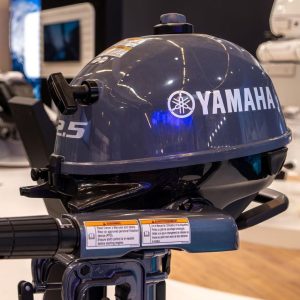
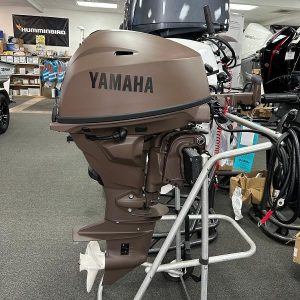
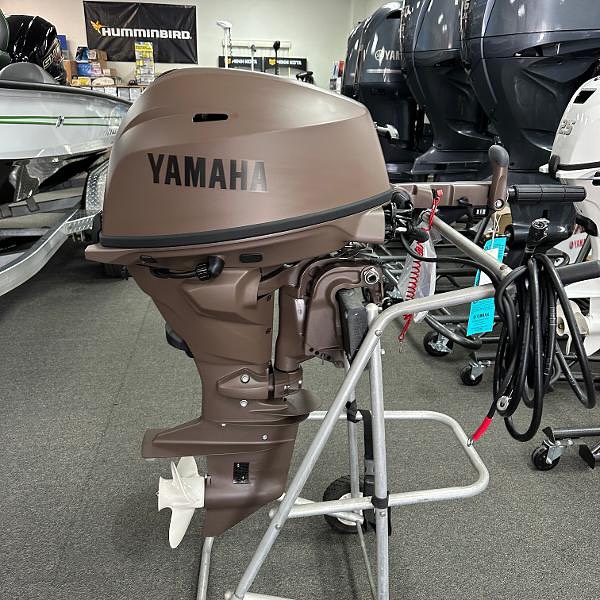
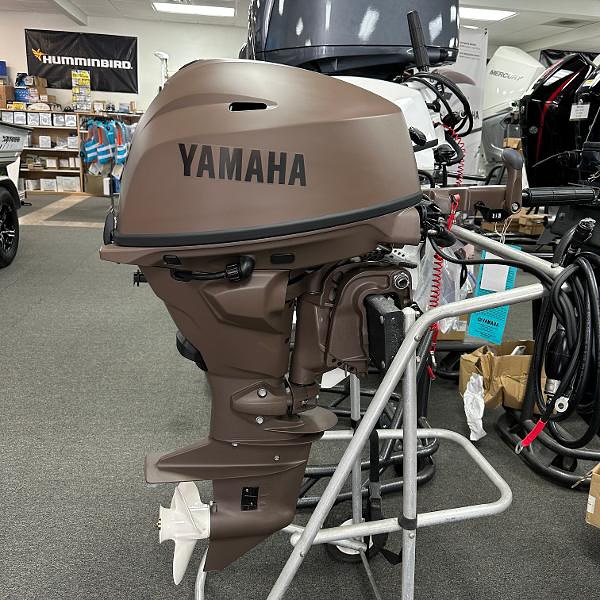
The 2024 Yamaha F25SWHC3 is a 25HP four-stroke portable outboard designed for small fishing boats, skiffs, utility boats, jon boats and other vessels that benefit from a compact engine with strong power-to-weight performance. This listing is specifically for the 15-inch short-shaft, tiller-handle configuration with both electric and manual starting.
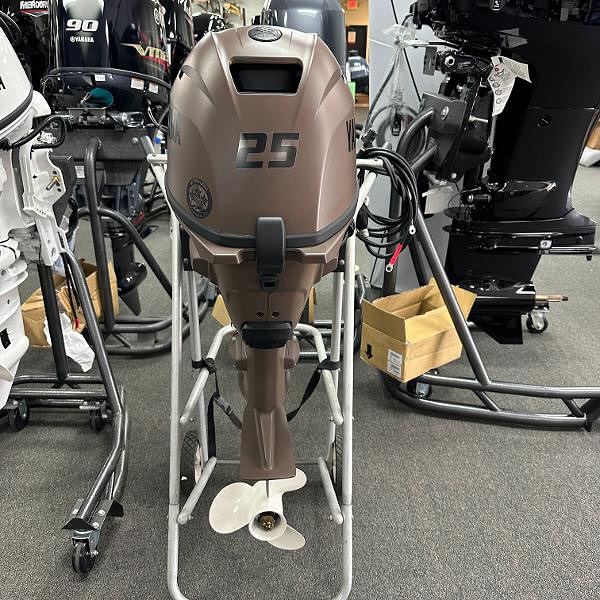
The listing identifies this engine as a 2024 Yamaha F25SWHC3, with a 15-inch shaft, brown upgraded finish, tiller steering, electric and manual start, and a new-motor condition. The advertised price is for the motor only; rigging labor is not included. These listing-specific details should be considered separately from the manufacturer’s technical specifications.
| Specification | Details |
|---|---|
| Make | Yamaha |
| Model | F25SWHC3 |
| Model Year | 2024 |
| Horsepower | 25 HP |
| Engine Type | 4-stroke, SOHC, 2-cylinder |
| Displacement | 432 cc |
| Bore x Stroke | 65.0 x 65.1 mm |
| Fuel System | Electronic fuel injection (EFI) |
| Ignition | Microcomputer-controlled ignition |
| Starting | Electric and manual |
| Control | Tiller handle |
| Shaft Length | 15 inches / short shaft |
| Full-Throttle RPM | 5,000–6,000 RPM |
| Rated Power Speed | 5,500 RPM |
| Alternator Output | 16 amps |
| Gear Ratio | Approximately 2.00:1 |
| Gear Shift | Forward, Neutral, Reverse |
| Trim/Tilt | Manual tilt |
| Recommended Fuel | Regular unleaded, 87 octane minimum |
| Listed Finish | Brown / matte brown upgrade |
The F25 uses a 432cc two-cylinder four-stroke powerhead with a single overhead camshaft. Yamaha’s F25 platform is designed to deliver 25 horsepower from a compact portable package rather than relying on a larger displacement engine. The two-cylinder layout also helps keep the engine compact and suitable for boats where transom weight and available space matter.
The documented bore and stroke are approximately 65.0 x 65.1 mm. The engine produces its rated 25 horsepower at approximately 5,500 RPM and has a full-throttle operating range of 5,000–6,000 RPM. This operating range gives the F25 useful flexibility when propeller selection, boat loading and hull design are taken into account.
One of the important features of the F25SWHC3 is its electronic fuel injection system. The F25 portable platform uses battery-less EFI technology, allowing the engine to manage fuel delivery electronically without requiring a conventional starting battery simply to operate the fuel-injection system.
For a small boat owner, this can be useful because the engine retains the convenience of electric starting while also providing a manual starting option. It is especially practical for fishing and utility applications where simplicity and dependable starting are important.
The F25SWHC3 combines electric start and manual pull start. Electric starting provides convenience when the engine is installed and rigged for regular use, while the manual starting system provides a secondary starting method.
The model’s automatic decompression system is designed to reduce the effort required when using the manual starter. Yamaha’s documentation and current model information also identify the F25 platform as having a 16-amp charging/alternator system, providing useful electrical capacity for appropriate onboard equipment.
The S in F25SWHC3 identifies the short-shaft configuration. This engine is intended for a boat transom designed around a 15-inch outboard shaft. Correct shaft length is important because the anti-ventilation plate and propeller need to sit at the correct depth relative to the hull.
Before purchasing or installing the motor, measure the boat’s transom rather than assuming that every small boat uses a short shaft. A boat designed for a 20-inch engine normally requires a long-shaft outboard. Installing the wrong shaft length can affect propeller performance, handling, cooling-water pickup and overall engine operation.
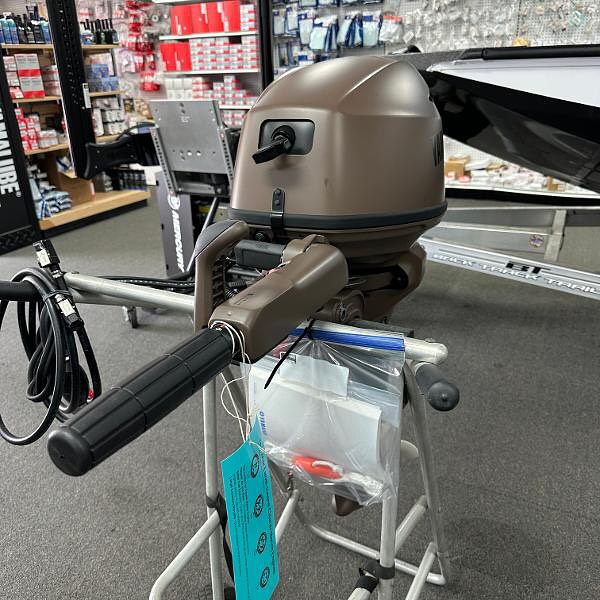
The F25SWHC3 is a tiller-steer outboard. The operator controls steering, throttle and engine functions from the tiller rather than using a remote steering wheel and separate throttle control. This configuration works particularly well on compact fishing boats, jon boats, utility boats and other vessels where direct control at the stern is preferred.
The F25 tiller system also supports Yamaha’s variable trolling functionality on applicable configurations. This allows the operator to make fine adjustments to low-speed engine operation, which can be useful for anglers who need controlled trolling speeds.
This F25SWHC3 configuration uses manual tilt. Manual tilt allows the operator to raise the outboard when approaching shallow water, launching or transporting the boat, subject to the vessel and operating instructions.
The F25 platform was developed around portability and a strong power-to-weight ratio. Yamaha documentation lists the 432cc F25 at approximately 60 kg in the short-shaft configuration, although actual shipping or configured weight can vary with equipment and specification. Buyers should use the exact engine configuration and manufacturer’s identification label when confirming final weight.
A 25HP outboard is a useful size for owners who need more performance than a small portable 9.9HP or 15HP engine but do not need the additional weight and installation requirements of a larger remote-control outboard.
The F25 can be appropriate for applications such as:
Actual speed and acceleration depend on hull design, boat weight, passenger load, propeller pitch, water conditions and the manufacturer’s maximum horsepower rating for the boat. A 25HP engine should not be installed on a vessel that is not rated for that power.
The F25 is a water-cooled four-stroke engine with wet-sump lubrication. Yamaha documentation for this engine family specifies regular unleaded fuel with an appropriate minimum octane rating and recommends using Yamaha-approved marine engine oil or an equivalent specification identified in the owner’s manual.
Fuel quality matters on EFI outboards. When a boat is stored for extended periods, fuel should be handled according to Yamaha’s storage recommendations. A clean fuel supply and appropriate fuel/water separation help protect the injectors and fuel system from contamination.
The F25SWHC3 uses a lower-unit gear reduction of approximately 2.00:1 and provides forward, neutral and reverse. The correct propeller depends on the boat, load, intended use and the RPM achieved at wide-open throttle.
Propeller selection should not be based only on diameter or pitch from another boat. The objective is to select a propeller that allows the engine to operate within Yamaha’s recommended full-throttle RPM range under the normal operating load. An incorrectly pitched propeller can cause the engine to run outside its intended operating range.
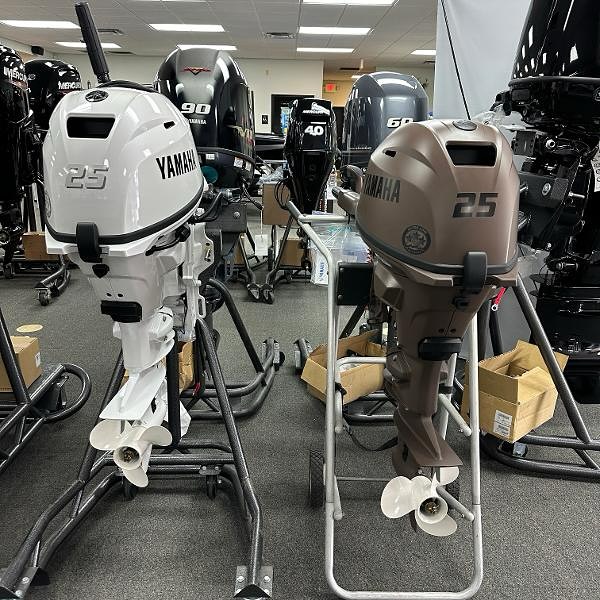
This listing identifies the engine as the 2024 Yamaha F25SWHC3 with a brown upgraded finish. The F25SWHC3 designation is associated with the brown version of the 15-inch tiller configuration. Yamaha also offered F25 models in other finishes and shaft/control configurations, so the model identification on the engine’s serial/model label should be used when ordering parts or confirming compatibility.
The listing describes this F25SWHC3 as brand new. It also states that the advertised price includes the motor only and that labor for rigging is not included. Customers should therefore distinguish the engine purchase from installation services, controls, wiring, fuel-system work and other rigging requirements that may be needed for a particular boat.
Manufacturer rebates or incentives stated in the original listing may change over time. For the current transaction price, included equipment and any applicable promotional terms, confirm the details with Performance Engines before ordering.
Before installing this Yamaha 25HP outboard, verify the boat’s maximum horsepower rating, transom height, transom condition, mounting requirements and steering arrangement. Because this particular listing is the tiller version, it is not simply a drop-in replacement for every remotely controlled outboard.
For a repower, also confirm fuel-line compatibility, battery and charging requirements, propeller selection, engine mounting height and the location of the tiller handle relative to the boat’s seating and transom layout. The engine should be installed and tested according to Yamaha’s installation and owner’s documentation.
The F25SWHC3 combines 25HP output with a compact 432cc two-cylinder four-stroke design, EFI, dual starting capability and tiller control. Its 15-inch shaft makes it suitable for boats designed around short-shaft outboards, while the portable design can be useful when engine weight and physical size are important considerations.
For customers comparing portable outboards, the F25 also provides a useful step up in power from smaller Yamaha engines. You can compare it with the Yamaha F2.5 4-stroke or consider a larger engine such as the Yamaha 50HP 4-stroke EFI when the boat is rated for additional horsepower.
Performance Engines also carries Yamaha outboard listings across different horsepower ranges and engine configurations. If you are comparing portable and larger four-stroke options, review the Yamaha 9.9HP 4-stroke, Yamaha 9.9HP 2-stroke, Yamaha 30DMHS 30HP 2-stroke and Yamaha F250 4-stroke V6 listings for different boat and repower requirements.
The Yamaha F25SWHC3 is rated at 25 horsepower.
The listing identifies this particular engine as a 2024 model.
Yes. The F25SWHC3 is a four-stroke, two-cylinder Yamaha outboard using a single overhead camshaft design.
The F25 uses a 432cc powerhead.
Yes. The F25SWHC3 uses electronic fuel injection, including Yamaha’s battery-less EFI system on this portable platform.
Yes. This model has both electric start and manual pull start.
The SWHC3 configuration in this listing uses a 15-inch short shaft.
Yes. The F25SWHC3 is a tiller-controlled model, with the operator controlling the engine directly from the tiller handle.
This specific F25SWHC3 listing is the manual-tilt configuration. Other F25 configurations can be equipped differently, so the exact model code matters.
The documented full-throttle operating range is approximately 5,000–6,000 RPM, with rated 25HP output around 5,500 RPM.
Yamaha documentation lists the short-shaft F25 platform at approximately 60 kg / 132 lb. Actual configured or shipping weight can vary, so confirm the exact specification from the engine identification label when weight is critical.
The F25SWHC3 can be suitable for compatible small fishing boats, skiffs, jon boats, aluminum boats and utility vessels that are rated for 25HP and use a 15-inch transom configuration. Boat capacity and manufacturer’s horsepower rating should always be checked before installation.
It can be a practical repower choice when the boat is rated for 25HP, has the correct 15-inch transom, and is set up for tiller control. Installation should be checked for mounting, fuel, electrical, steering and propeller requirements.
Yes. The F25 platform includes a 16-amp alternator/charging system, subject to the exact Yamaha specification for the model and market.
Use the fuel grade specified by Yamaha for the engine. Published F25 specifications identify regular unleaded gasoline with an 87-octane minimum as the recommended fuel.
Yes. The listing specifically identifies this engine as the brown version of the F25SWHC3. Yamaha offered the F25 in multiple finishes and configurations, so the model/serial label remains the best way to confirm the exact unit.
Looking for a 2024 Yamaha 25HP outboard? The F25SWHC3 provides 25HP, 432cc displacement, battery-less EFI, electric and manual starting, tiller control and a 15-inch short shaft in this configuration. Confirm your boat’s horsepower rating and transom height before ordering, and contact Performance Engines for current availability, pricing, shipping and rigging information.
Explore more outboard engines at Performance Engines.