$1,500.00 Original price was: $1,500.00.$1,000.00Current price is: $1,000.00.
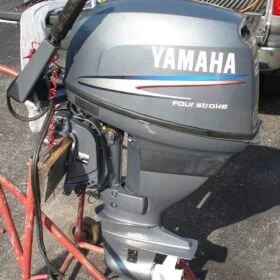
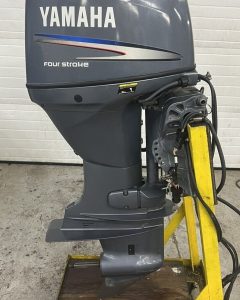
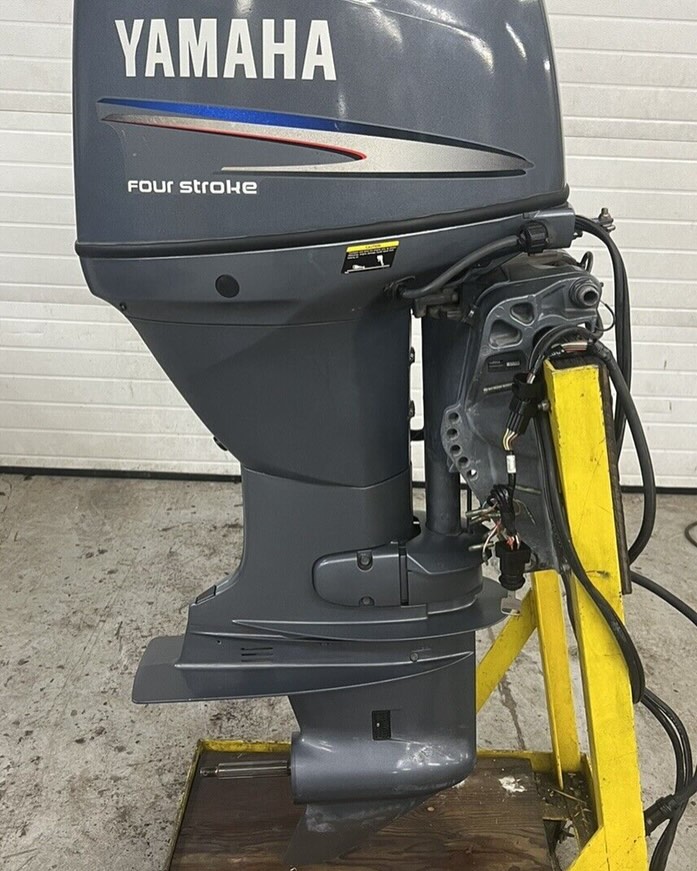
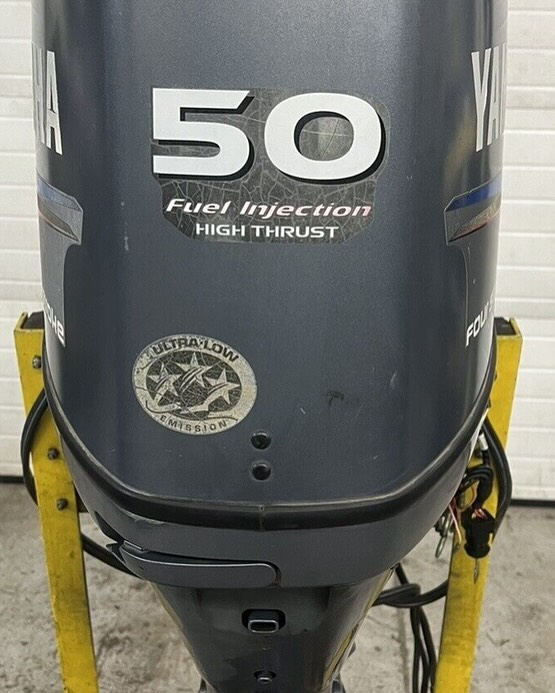
The 2005 Yamaha F50 is a 50HP four-stroke EFI outboard built around a 996cc inline-four-cylinder engine. This generation of Yamaha F50 uses electronic fuel injection, a SOHC 8-valve cylinder head, electric starting and remote controls, making it a practical midrange outboard for fishing boats, aluminium boats and other craft rated for 50HP.
The product listing identifies this engine as a 2005 Yamaha 50HP four-stroke EFI. Yamaha’s parts and service references confirm the F50TLR as a 2005 model, while period specifications identify the 996cc four-cylinder powerhead, 5,000–6,000 RPM full-throttle range and 50HP output.
The original product description contained several specifications that belong to a later Yamaha midrange/F70-style design, including the 16-valve description and 253-pound weight. Those figures should not be treated as specifications for this 2005 F50. The 2005 F50 documentation identifies an inline-four, 4-stroke SOHC engine with 8 valves and 996cc displacement.
| Model | Yamaha F50 / F50TLR family |
| Model year | 2005 |
| Power | 50HP / 36.8kW |
| Engine type | 4-stroke SOHC inline 4-cylinder |
| Valve configuration | 8 valves |
| Displacement | 996cc / 60.8 cu in |
| Bore x stroke | 65.0 x 75.0mm |
| Full-throttle operating range | 5,000–6,000 RPM |
| Fuel system | Electronic fuel injection |
| Ignition | TCI |
| Starting | Electric starter |
| Control | Remote control on F50TLR configuration |
| Steering | Remote steering |
| Lubrication | Wet sump |
| Cooling | Water cooled |
| Transom height | Approximately 508mm / 20 inches for the F50TLR configuration |
| Gear ratio | Approximately 1.85:1 for the F50F/FT50 family specification |
| Alternator | Period documentation identifies a 12V charging system; output varies by exact configuration |
| Fuel | Regular unleaded gasoline; use the fuel grade specified for the engine’s market and manual |
Yamaha documentation for this F50 generation lists 50HP at 5,500 RPM and a 5,000–6,000 RPM full-throttle operating range. The same documentation identifies 996cc displacement, 65 x 75mm bore and stroke, four cylinders, EFI, electric starting and remote steering/control configurations.
The 996cc inline-four powerhead is the defining feature of this generation of Yamaha F50. It uses a 65mm bore and 75mm stroke and develops its rated 50HP at approximately 5,500 RPM. The 5,000–6,000 RPM operating range is important when selecting the propeller because the engine should be able to reach the manufacturer’s recommended range under the boat’s normal loaded condition.
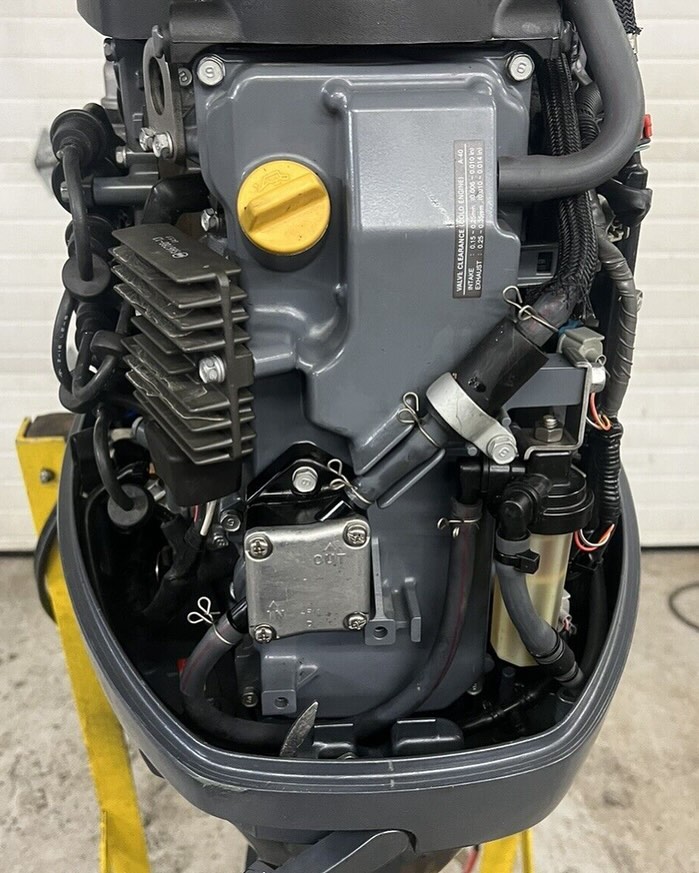
The four-stroke design uses a wet-sump lubrication system and water cooling. EFI replaces a conventional carburetor, providing electronically controlled fuel delivery. This makes the F50 a substantially different engine from older carbureted Yamaha 50HP two-stroke models.
The 2005 F50 uses electronic fuel injection. Period Yamaha documentation identifies fuel injection as the starting carburetion/fuel-delivery system and TCI as the ignition system.
For a used engine, EFI makes inspection of the fuel system particularly important. Check the fuel filter, fuel lines, injectors, electrical connections and battery voltage, and confirm that the engine starts and runs correctly across the full operating range.
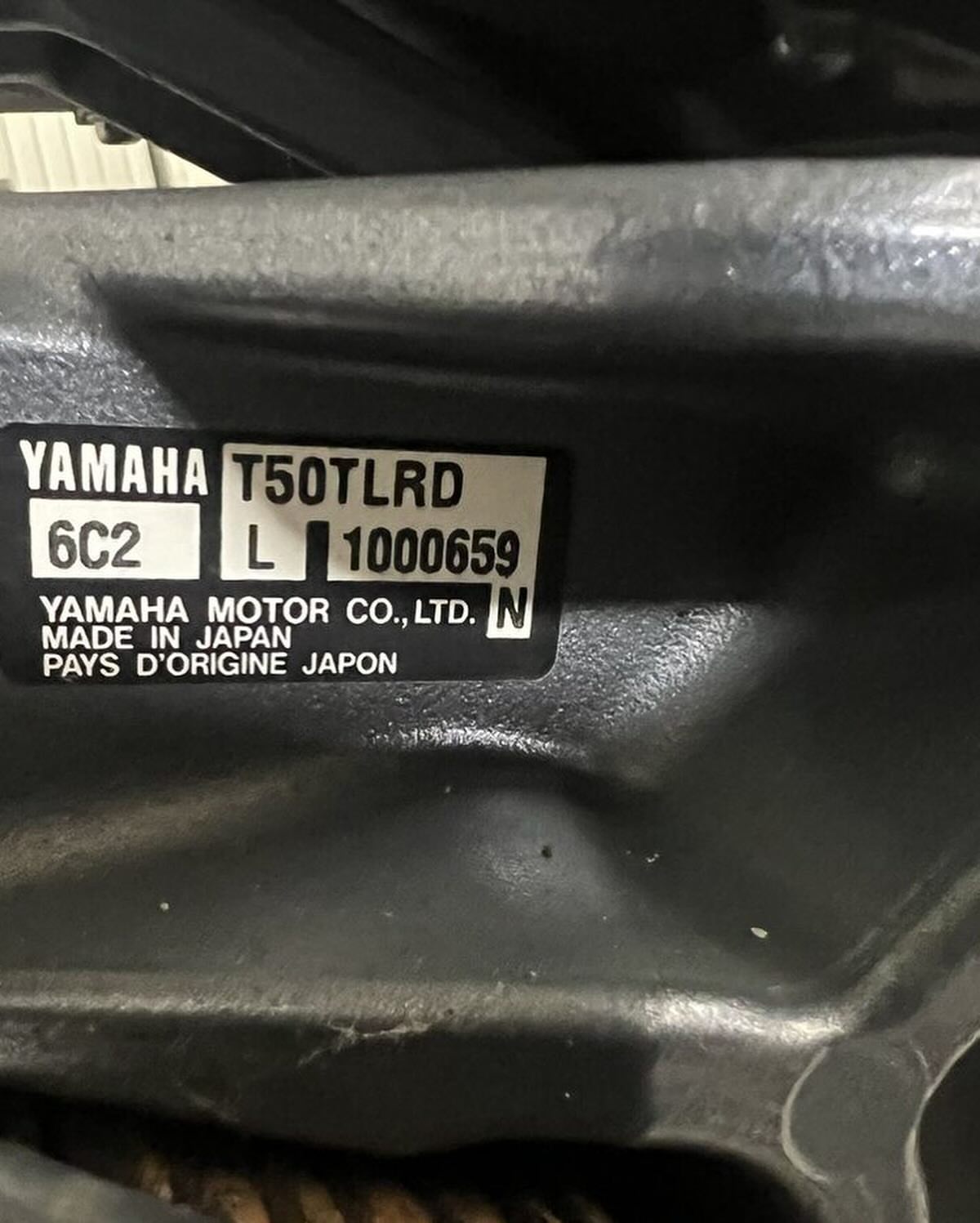
The F50TLR configuration is associated with a 508mm (20-inch) boat transom height. Yamaha parts references specifically identify the F50TLR as a 2005 50HP model.
Before fitting the engine, measure the boat’s actual transom and confirm the shaft length from the engine identification plate. Correct shaft height is important for propeller depth, cooling-water pickup, steering and overall boat handling.
The F50TLR is an electric-start, remote-control configuration. This makes it appropriate for center-console, tiller-to-console conversion and other boats where the engine is operated through remote throttle and steering controls.
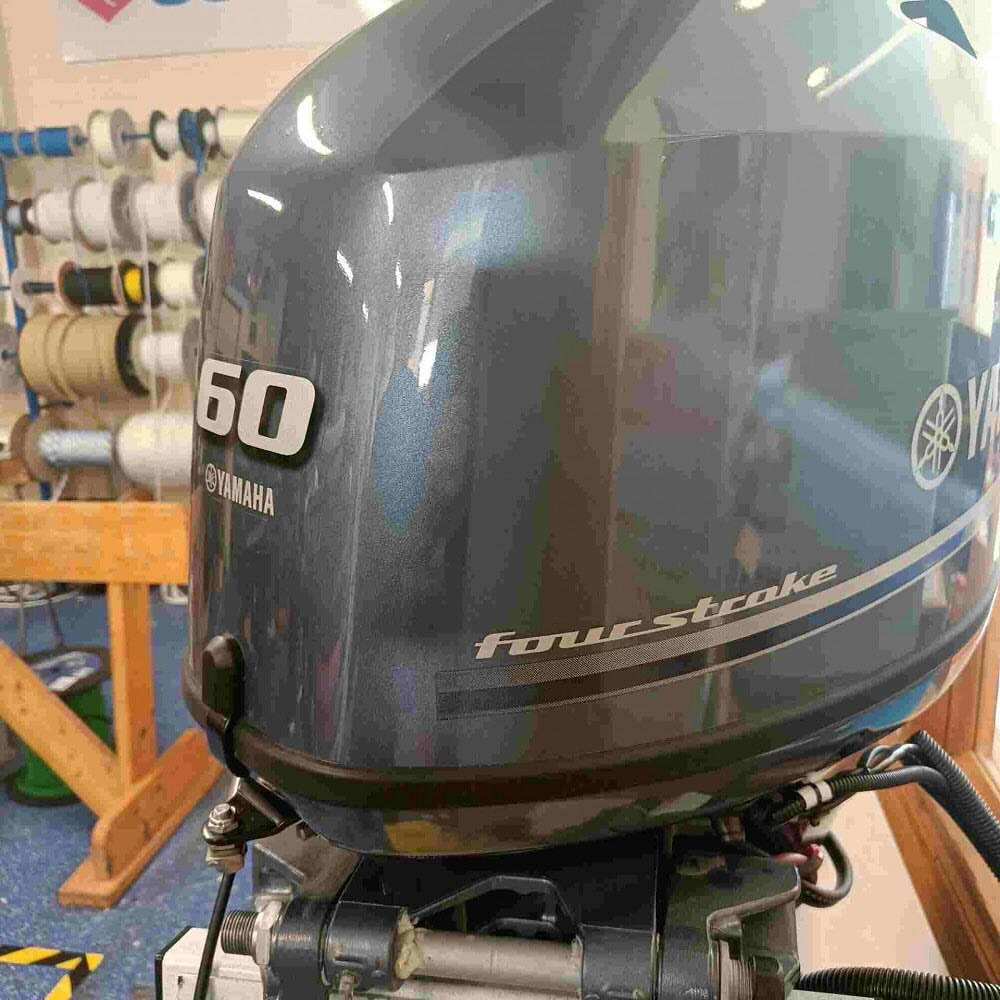
When purchasing a used motor, confirm what rigging is included. A bare engine may require separate controls, wiring harnesses, gauges, steering components, battery cables and other installation hardware. Do not assume that all remote-control equipment shown in a photograph is included unless it is confirmed with the seller.
Weight varies with shaft length and exact F50 configuration. Period service documentation for the F50 family lists approximately 107–114kg depending on the specific model and configuration, rather than the 253-pound figure shown in the original product copy.
For a repower, compare the engine’s actual weight with the boat manufacturer’s maximum transom weight and horsepower ratings. Also consider the battery, rigging, fuel system and any additional equipment being installed at the stern.
A used 2005 F50 should be evaluated according to its actual service history and condition rather than its age alone. Important checks include engine oil and filter, gearcase lubricant, spark plugs, fuel system, cooling system, water pump, thermostat, anodes, propeller and lower unit.
Yamaha service references specifically list 100-hour and 300-hour maintenance schedules for the 2005 F50TLR. If service records are unavailable, a complete inspection and baseline service can help establish a known maintenance starting point.
Correct propeller selection is important on a 50HP outboard. Yamaha specifies a 5,000–6,000 RPM full-throttle operating range for this F50 generation. A propeller that is too heavily loaded can prevent the engine from reaching the recommended range, while an unsuitable propeller can allow excessive RPM. The correct propeller depends on hull design, boat weight, load, intended use and actual engine configuration.
If you are comparing Yamaha four-stroke outboards, the Yamaha 9.9HP 4-Stroke is a smaller option for lighter boats and kicker applications. The 2010 Yamaha F250 V6 provides substantially more power for larger boats, while the 2021 Yamaha F200 sits in the larger midrange/high-output class.
The 2005 Yamaha F50 produces 50HP, equivalent to 36.8kW, with the rated output specified at approximately 5,500 RPM.
The 2005 F50 uses a 996cc (60.8 cu in) four-cylinder powerhead with a 65 x 75mm bore and stroke.
Yes. The F50TLR generation uses electronic fuel injection rather than a conventional carburetor.
The 2005 F50 uses an inline four-cylinder engine with a SOHC 8-valve configuration.
The specified full-throttle operating range is 5,000–6,000 RPM, with maximum rated output at approximately 5,500 RPM. citeturn0search3turn0search24
The F50TLR configuration uses a 508mm (20-inch) transom height. Confirm the actual engine identification plate before installation. citeturn0search3turn2search1
Weight depends on the exact F50 configuration. Period service documentation lists approximately 107–114kg for the F50 family. The actual engine should be weighed or identified by its exact model suffix before a repower.
Yes. The 2005 F50 documentation identifies an electric starting system.
The F50TLR is a remote-control configuration. Yamaha also produced other F50 variants, so the exact model suffix should be confirmed when purchasing a used engine.
The engine uses regular unleaded gasoline. The exact minimum octane specification should be confirmed from the manual applicable to the engine’s market and serial number.
The F50 can be considered for a repower when the boat is rated for 50HP and can accommodate the engine’s actual weight, shaft length and rigging. Verify the boat manufacturer’s horsepower and transom-weight limits before installation.
Check engine oil, oil filter, gearcase lubricant, spark plugs, fuel system, water pump, thermostat, cooling passages, anodes, propeller and lower unit. Yamaha service references identify scheduled maintenance intervals for the F50TLR.
The 2005 Yamaha F50 is a 50HP, 996cc inline-four four-stroke EFI outboard with electric starting and remote-control capability. Its 5,000–6,000 RPM operating range and 20-inch F50TLR configuration make it a practical midrange repower candidate when matched correctly to the boat. For a used engine, confirm the exact model suffix, shaft length, equipment included and service condition before purchase.
Explore more outboard engines at Performance Engines.