$3,000.00 Original price was: $3,000.00.$2,500.00Current price is: $2,500.00.
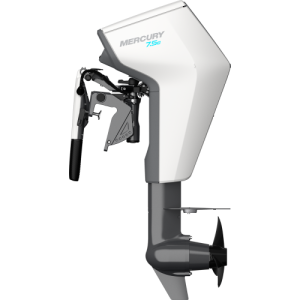
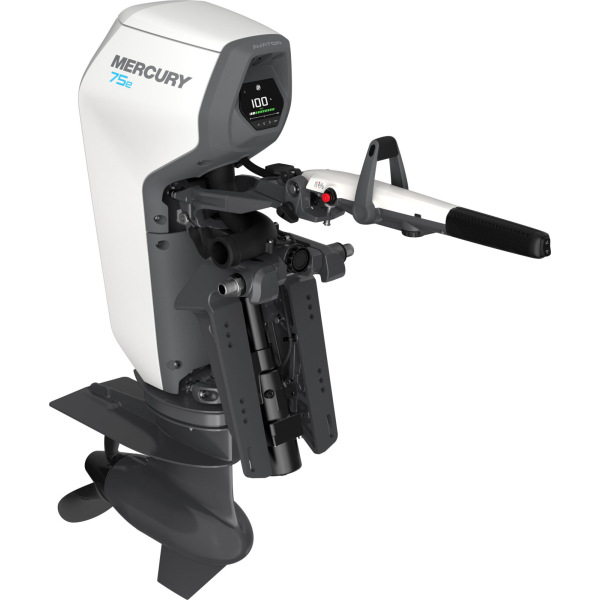
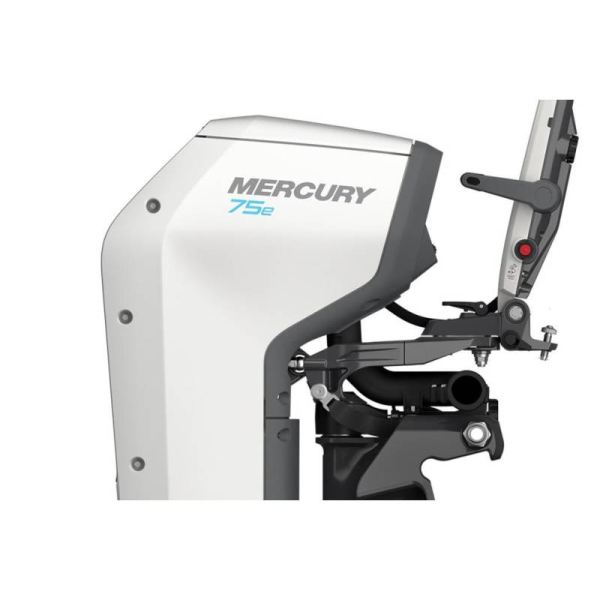
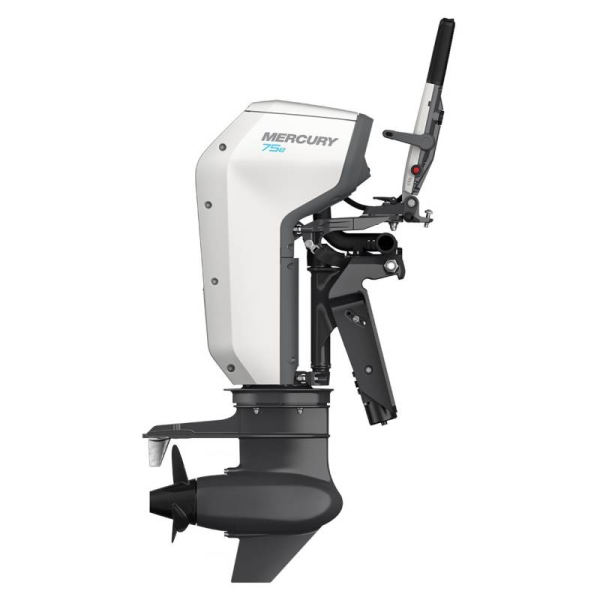
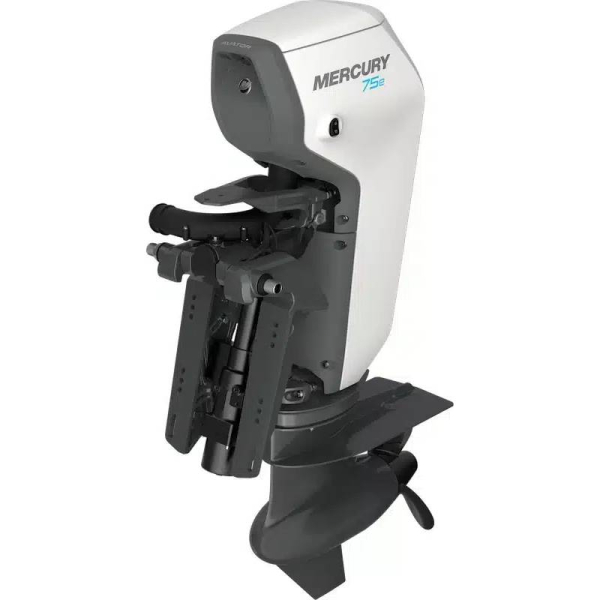
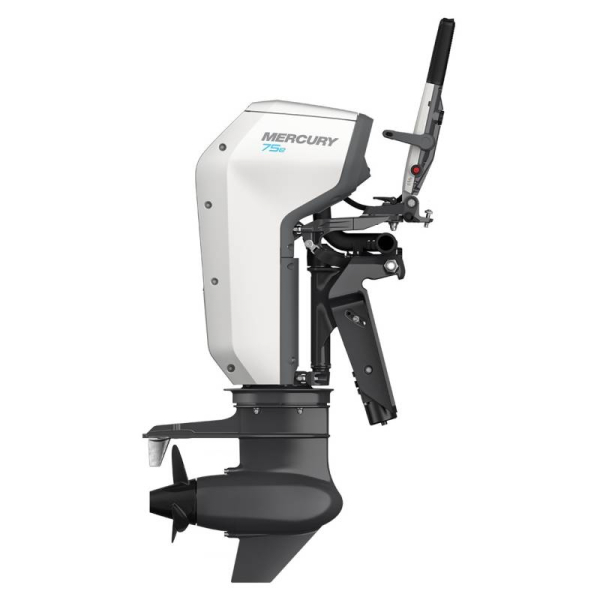
The Mercury Avator 75e is a high-output electric outboard designed for larger and heavier boats than Mercury’s compact Avator models. It delivers 8.6 kW of input power and 7,500 W of rated prop-shaft power from a 48 V system. Mercury positions the 75e for applications including medium-sized aluminum fishing boats and pontoons, with tiller and remote-steering configurations available.
The Avator 75e uses a 5,376 Wh LiFePO4 battery system connected through Mercury’s 5400 Power Center. Up to four 5,400 Wh batteries can be configured in the system, giving boat owners flexibility when sizing available energy for longer operating periods.
The Avator 75e produces 8.6 kW of input power and 7,500 W of rated prop-shaft power. Mercury uses a transverse flux motor design that is intended to provide immediate torque and efficient electric propulsion.
The 75e is a substantially higher-power system than Mercury’s smaller Avator models, making it relevant to boats where a portable electric outboard does not provide the required propulsion capacity. Mercury specifically identifies medium-sized aluminum fishing boats and pontoons among suitable applications.
The Avator 75e uses a 5,376 Wh lithium iron phosphate (LiFePO4) battery. Mercury lists the battery at approximately 42.2 kg (93 lb) and gives it an IP67 rating.
The battery is part of a modular Avator architecture. Mercury states that the 75e and 110e can be configured with up to four 5,400 Wh batteries connected through the 5400 Power Center. This allows the available battery capacity to be increased for applications requiring more operating time.
Battery capacity should be selected around the boat’s normal cruising speed, total load and expected trip length. Higher propulsion power consumes stored energy more quickly, while reducing power demand can substantially extend operating time.
Mercury’s published specifications identify the battery capacity and charging options, but range is application-specific. Hull design, displacement, wind, current, propeller selection, throttle setting and the number of connected batteries all influence actual range.
The 5400 Power Center provides the connection point for Mercury’s 5,400 Wh Avator batteries. Mercury describes the system as supporting up to four batteries for the 75e and 110e. The architecture is intended to simplify integration of multiple battery modules into a higher-power electric propulsion installation.
Battery quantity and electrical installation should follow Mercury’s current system requirements. Do not combine incompatible batteries, chargers or wiring components.
Mercury lists 520 W and 1 kW charger options for the Avator 75e. The 1 kW option can reduce charging time compared with the portable 520 W charger, while the appropriate charging arrangement depends on the installed battery capacity and available electrical supply.
Mercury’s published regional material states that a 520 W portable charger can recharge two 5,400 Wh batteries in approximately 20 hours, while the 1 kW onboard charger can reduce charging time by more than 50 percent. Actual charging time varies with battery state of charge and configuration.
The Avator 75e is available with tiller or remote steering. Tiller control provides a direct operating arrangement for compatible boats, while remote steering is suited to console-equipped boats where the outboard is controlled from the helm.
Choose the steering configuration according to the boat’s layout and installation requirements. Confirm the required controls, wiring and compatible display equipment before ordering.
Mercury lists 8P, 9P and 10.5P propeller options for the Avator 75e. The 75e uses a high-thrust three-blade aluminum propeller designed to work with the transverse flux motor and optimize battery use.
Propeller pitch influences acceleration, cruising performance, load carrying and efficiency. The appropriate propeller should be selected using Mercury’s compatibility guidance for the exact boat and operating conditions.
The Avator 75e is available with 15-inch, 20-inch and 25-inch shafts, equivalent to 381 mm, 508 mm and 635 mm. Selecting the correct shaft length helps place the propeller at the correct depth beneath the boat and supports efficient propulsion.
| Shaft | Length |
|---|---|
| Short | 15 in / 381 mm |
| Long | 20 in / 508 mm |
| Extra-long | 25 in / 635 mm |
Mercury’s current specifications list the Avator 75e total drive weight at approximately 54.4 kg (120 lb), while the 5,376 Wh battery weighs approximately 42.2 kg (93 lb). The precise published drive-weight basis can vary by regional specification, so confirm the exact configuration when planning transport and installation.
Mercury’s Avator 75e system supports connected-device features through SmartCraft Connect Mobile. Mercury states that the module comes pre-installed, allowing wireless connection to the Mercury Marine app.
Depending on the system configuration, digital displays can provide propulsion information and help monitor the electric power system. Confirm the required display and connected accessories for the intended helm arrangement.
The Avator 75e is designed for smooth and quiet electric propulsion. Mercury highlights vibration-isolating components and states that Avator outboards produce no exhaust fumes and zero direct emissions during operation.
This can be useful on fishing boats, pontoons and recreational vessels where reduced engine noise and the absence of exhaust at the point of use are important considerations.
Mercury states that Avator outboards use corrosion-preventive materials and coatings for operation in both freshwater and saltwater. Proper rinsing, inspection and maintenance remain important after saltwater use.
| Specification | Avator 75e |
|---|---|
| Input power | 8.6 kW |
| Rated prop-shaft power | 7,500 W |
| Rated voltage | 48 V |
| Battery | 5,376 Wh LiFePO4 |
| Battery weight | Approximately 42.2 kg / 93 lb |
| Battery IP rating | IP67 |
| Charger options | 520 W; 1 kW |
| Steering | Remote control or tiller |
| Propeller options | 8P; 9P; 10.5P |
| Shaft lengths | 15 in / 381 mm; 20 in / 508 mm; 25 in / 635 mm |
| Total drive weight | Approximately 54.4 kg / 120 lb |
| Maximum battery configuration | Up to four 5,400 Wh batteries |
Mercury positions the Avator 75e for larger and heavier vessels, including medium-sized aluminum fishing boats and pontoons. Its higher power output and modular 5,400 Wh battery system make it suitable for applications that require more sustained electric propulsion than smaller Avator models.
Before installation, verify the boat manufacturer’s maximum outboard rating, transom requirements, shaft length and total system weight. Performance depends on the vessel and should be evaluated using the complete boat-and-battery configuration.
Planning an Avator 75e installation should include the motor, 5400 Power Center, compatible batteries, charger, steering controls, propeller and required electrical connections. Battery placement should account for weight distribution, service access and cable routing.
The 48 V electrical system should be installed according to Mercury’s current documentation. Use compatible Mercury components and follow the specified charging, battery and protection requirements.
If you are comparing the Avator 75e with other electric outboard motors, compare prop-shaft power, battery capacity, system voltage, shaft length, steering configuration, propeller options and total system weight.
For availability, compatibility or installation questions, contact the Performance Engines team before ordering.
The Avator 75e has 8.6 kW of input power and 7,500 W of rated prop-shaft power on a 48 V electrical system.
The Avator 75e uses a 5,376 Wh LiFePO4 battery rated IP67. Mercury lists the battery weight at approximately 42.2 kg (93 lb).
Mercury states that the Avator 75e and 110e can be configured with up to four 5,400 Wh batteries through the 5400 Power Center.
The Avator 75e is available in 15-inch, 20-inch and 25-inch shaft lengths, equivalent to 381 mm, 508 mm and 635 mm.
Yes. Mercury lists both remote-control and tiller steering for the Avator 75e.
Mercury lists 8P, 9P and 10.5P propeller options for the Avator 75e. The correct pitch should be matched to the boat and intended operating conditions.