$8,000.00 Original price was: $8,000.00.$5,000.00Current price is: $5,000.00.
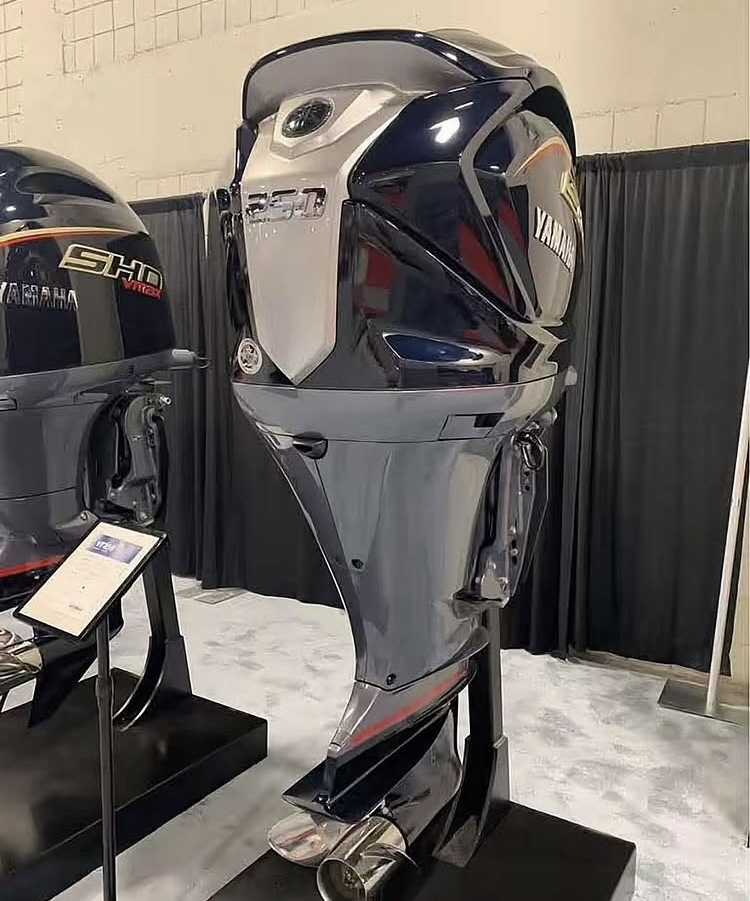
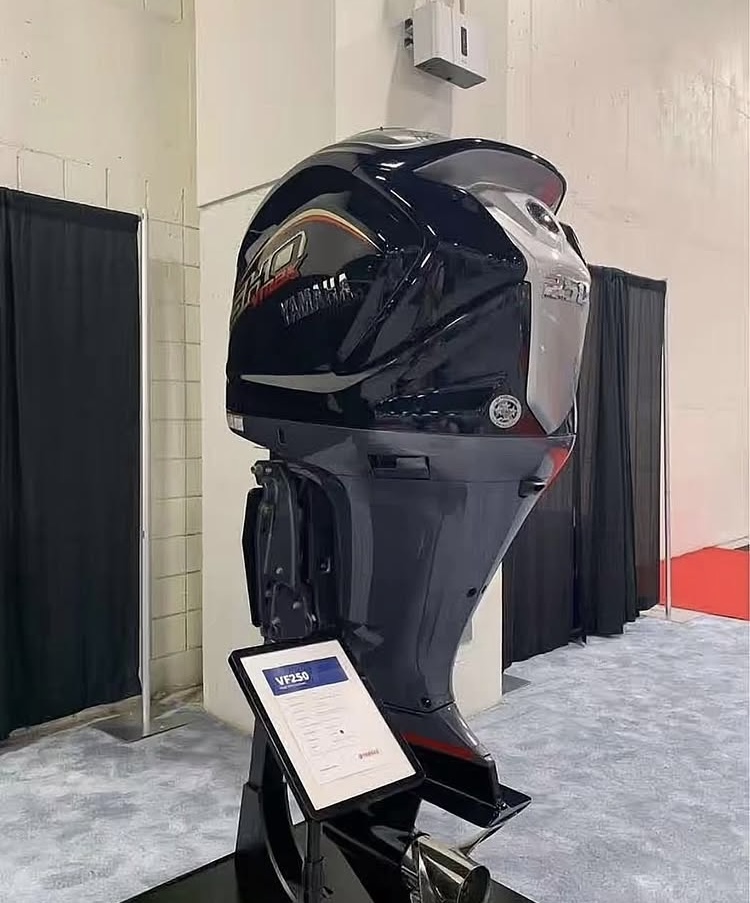
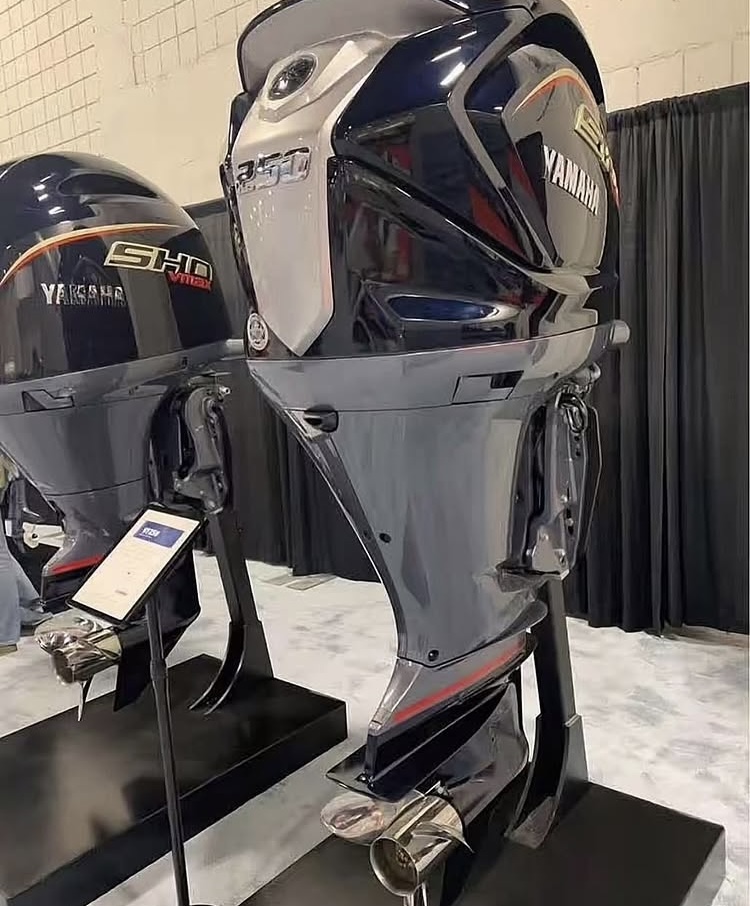
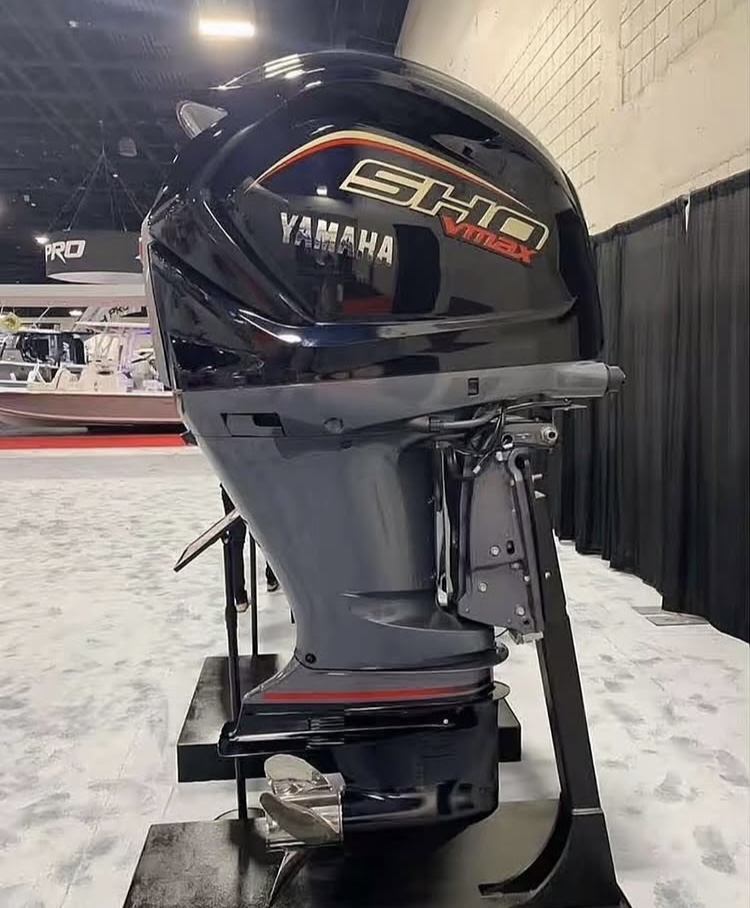
The 2025 Yamaha 250HP V MAX SHO is a high-output four-stroke V6 outboard designed for performance-oriented fishing boats and other hulls that need 250 horsepower with strong acceleration and a compact powerhead. The VF250 uses Yamaha’s 4.2-liter, 60-degree V6 architecture, electronic fuel injection, a 5,000–6,000 RPM full-throttle range and a 1.75:1 gear ratio.
Yamaha’s 2025 V MAX SHO 250 combines a 4.2L V6 powerhead with plasma-fused sleeveless cylinders, variable camshaft timing, 70-amp alternator output and Power Trim & Tilt. Yamaha also introduced TotalTilt™ functionality for the V MAX SHO range, allowing a double tap of the trim button to command full tilt up or down.
| Specification | 2025 Yamaha V MAX SHO 250 |
|---|---|
| Model | VF250 |
| Rated prop-shaft horsepower | 250 HP at 5,500 RPM |
| Engine type | 60-degree V6, 4-stroke, DOHC |
| Displacement | 4,169 cc / 4.2 L |
| Bore × stroke | 96 × 96 mm / 3.78 × 3.78 in |
| Fuel induction | EFI with VCT |
| Valvetrain | 24-valve DOHC |
| Compression ratio | 10.3:1 |
| Full-throttle operating range | 5,000–6,000 RPM |
| Alternator output | 70 A at WOT |
| Gear ratio | 1.75:1 |
| Shaft lengths | 20 in and 25 in |
| Steering | Mechanical remote |
| Starting system | Electric |
| Lubrication | Wet sump |
| Engine oil capacity | 6.7 L / 6.4 L with or without filter replacement |
| Recommended fuel | 89 octane unleaded |
| Maximum ethanol blend | 10% |
| Exhaust | Through propeller |
| Trim range | -4° through +16° |
| Maximum steering angle | 35° from center in either direction |
| Lightest listed weight | 529 lb / 240 kg, 20-inch configuration |
Yamaha’s official V MAX SHO specifications list 250HP at 5,500 RPM, 4.2L displacement, 5,000–6,000 RPM, 70 amps at WOT, 1.75:1 gearing, 89-octane fuel, 20- and 25-inch shaft options, EFI, electric starting and wet-sump lubrication. The published 20-inch configuration weighs 529 lb, while the 25-inch configuration is listed at 567 lb.
The VF250 is built around Yamaha’s 4.2-liter 60-degree V6 powerhead. With 96 mm bore and 96 mm stroke, the engine combines large displacement with a compact V6 package intended to deliver strong torque and acceleration without requiring a larger engine footprint.
Yamaha describes the V MAX SHO as a Super High Output platform developed primarily for performance-minded fishing applications. The 4.2L design is shared across the V6 V MAX SHO family, with the 250HP model at the top of the 2025 VF lineup.
The Yamaha VF250 uses Electronic Fuel Injection and Variable Camshaft Timing. EFI meters fuel electronically while the VCT system adjusts cam timing to support the engine across its operating range.
The result is a modern four-stroke powerhead with electronic engine management, electric starting and a 5,000–6,000 RPM full-throttle range. Correct fuel filtration and regular maintenance remain important for reliable operation.
One of the important technologies in Yamaha’s 4.2L V6 is its plasma-fused sleeveless cylinder construction. Yamaha states that the technology reduces weight while increasing durability and performance, and its official material describes the cylinder surface as substantially harder than conventional steel cylinder liners.
The sleeveless design also contributes to the compact dimensions of the powerhead. For a 250HP outboard, keeping engine weight and packaging under control is especially important on high-performance fishing hulls.
The VF250 produces its rated 250 horsepower at 5,500 RPM and has a published full-throttle operating range of 5,000–6,000 RPM. Propeller selection should be made so the installed engine reaches the appropriate operating range with the boat normally loaded.
Do not select propeller pitch from horsepower alone. Hull weight, bottom design, engine mounting height, propeller diameter, blade design, elevation, water conditions and passenger or fuel load all influence actual RPM and speed.
The 2025 VF250 provides up to 70 amps of alternator output at wide-open throttle. Yamaha describes the increased charging capacity as a 40-percent increase over previous V MAX SHO designs, intended to provide more electrical power for modern marine electronics.
This capacity can support a boat equipped with chartplotters, sonar, communications equipment, pumps, lighting and other electrical accessories. Battery condition, cable sizing, grounding and circuit protection should still be matched to the complete installation.
The VF250 includes Power Trim & Tilt, allowing the operator to adjust engine angle while underway or raise the outboard for shallow water, storage and trailering.
Yamaha’s TotalTilt™ function adds a convenient full-tilt command: a double tap of the trim button initiates full tilt up or down until the trim rams are reached. This can make trailering and storage faster and simplify shallow-water positioning.
The Yamaha VF250 uses a 1.75:1 gear ratio. The reduction gear allows the engine to operate within its intended RPM range while driving a propeller at a lower rotational speed suitable for a high-output outboard.
When repowering, verify the propeller and gearcase configuration rather than transferring the previous engine’s propeller without testing. The correct setup should allow the engine to reach the recommended WOT range under the boat’s normal operating load.
The 2025 V MAX SHO 250 is available with 20-inch and 25-inch shaft configurations. Yamaha lists the 20-inch version at approximately 529 lb and the 25-inch version at approximately 567 lb.
Shaft length should be matched to the boat’s transom height. An incorrect shaft can place the propeller too high or too low in the water, affecting thrust, cooling-water pickup, handling and efficiency.
Yamaha specifies 89-octane unleaded fuel for the VF250 and lists a maximum ethanol blend of 10 percent. The official specifications identify Yamalube 4M as the recommended engine oil, subject to the owner’s manual. Yamaha also recommends a 10-micron external fuel/water-separating filter.
Fuel should be clean and properly stored. The fuel system should be inspected during installation and routine service, particularly when the engine has been stored for an extended period.
The VF250 is compatible with Yamaha’s Command Link® system and Y-COP® immobilizer technology. These systems can integrate engine information and security functions into a properly equipped boat.
Before purchasing a standalone engine for repowering, verify exactly which controls, gauges, harnesses and rigging components are included. A modern outboard installation is more than mounting the engine and connecting a throttle cable.
The V MAX SHO family was developed primarily around performance fishing and tournament-style bass boating. Yamaha’s global VMAX material describes the series as being developed mainly for U.S. tournament anglers, while the 2025 catalog continues to position the V6 V MAX SHO around high-performance fishing applications.
The VF250 can also be considered for other boats rated for 250HP, provided the hull, transom and rigging are designed for the engine’s weight and power. Always follow the boat manufacturer’s maximum horsepower and weight specifications.
The 4.2L V6 is a modern four-stroke engine with wet-sump lubrication and thermostatically controlled cooling. Routine maintenance should follow Yamaha’s service schedule for the specific model and serial number.
Important service areas include engine oil and filter, gearcase lubricant, spark plugs, fuel filtration, cooling system, water pump, thermostats, anodes, propeller shaft, battery connections and steering components.
For an engine that has been stored or transported for an extended period, inspect the fuel and cooling systems before operating at high RPM. A complete pre-purchase inspection is especially important when buying a used VF250.
Begin with the model and serial number. Confirm that the engine is the 4.2L V6 VF250 configuration and determine the shaft length, steering arrangement, controls and included rigging.
Inspect the cowling, mounting bracket, midsection and lower unit for impact damage or corrosion. Check the propeller and propeller shaft, and look for signs of gearcase repair or water intrusion.
If diagnostic equipment is available, review engine hours and stored fault information. A water test should evaluate cold starting, idle quality, acceleration, steering, trim, charging output, cooling and WOT RPM.
The V MAX SHO 250 should not be confused with older Yamaha F250 four-stroke models simply because both are 250HP engines. The 2025 VF250 uses Yamaha’s 4.2L V6 architecture, VCT and the V MAX SHO performance package.
The engine’s displacement, shaft length, weight, rigging requirements and propeller setup should therefore be checked against the existing motor before planning a repower. Yamaha’s published specifications should be used for the exact model rather than assuming that all Yamaha 250HP engines share identical components.
The Yamaha VF250 produces 250 horsepower at 5,500 RPM at the prop shaft.
The 2025 VF250 uses a 4.2-liter, 60-degree V6 four-stroke powerhead with DOHC architecture, EFI and VCT.
The published full-throttle operating range is 5,000–6,000 RPM.
Yamaha lists the 20-inch VF250 configuration at approximately 529 lb (240 kg) and the 25-inch configuration at approximately 567 lb (257 kg).
Yamaha specifies 89-octane unleaded fuel and a maximum ethanol blend of 10 percent for the VF250.
The VF250 uses a 1.75:1 gear ratio.
Yes. The VF250 includes Power Trim & Tilt and supports Yamaha’s TotalTilt™ full-tilt function.
Yes, the V6 V MAX SHO platform was developed with performance fishing and tournament-style applications in mind. The actual engine choice must still match the boat’s horsepower and weight ratings.
The 2025 Yamaha 250HP V MAX SHO combines a 4.2L 60-degree V6, EFI, VCT, plasma-fused sleeveless cylinders, 70-amp charging capacity, 1.75:1 gearing and Power Trim & Tilt in a performance-focused 250HP package.
Before purchasing or repowering, confirm the exact VF250 configuration, shaft length, weight, steering system, controls, rigging and propeller requirements. For additional marine propulsion options, browse our outboard engines category.