$2,500.00
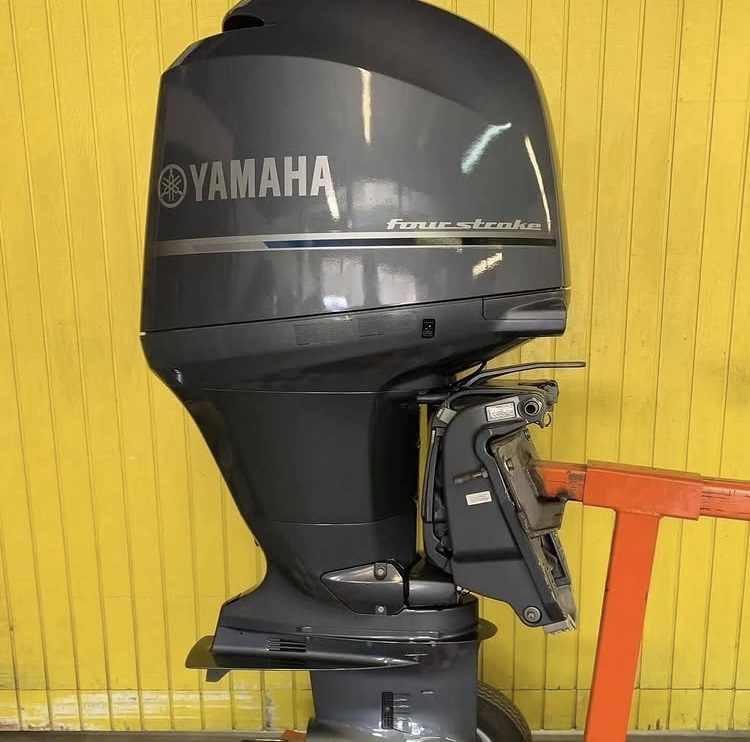
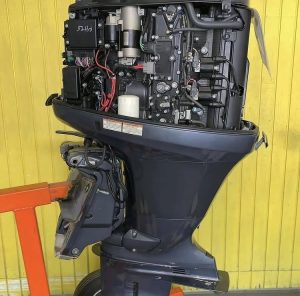
The 2019 Yamaha F150 4-Stroke Outboard is a 150 HP inline-four Yamaha marine engine designed for dependable propulsion on fishing boats, center consoles, family boats and other vessels requiring a full-size 150 horsepower outboard. The 2019 Yamaha specification identifies a 2,670 cc four-stroke engine with electronic fuel injection, electric starting, remote controls and power trim and tilt.
This generation of Yamaha F150 combines a compact inline-four layout with a 5,000–6,000 RPM full-throttle operating range. Yamaha’s 2019 owner’s documentation specifies 150 HP at 5,500 RPM, 2.67-liter displacement and a 2.00:1 gear ratio. Exact weight and dimensions depend on the shaft configuration, so the engine identification and L/X designation should be confirmed before installation.
| Specification | 2019 Yamaha F150 |
|---|---|
| Manufacturer | Yamaha Motor Corporation |
| Model year | 2019 |
| Rated output | 150 HP / 110.3 kW at 5,500 RPM |
| Engine type | 4-stroke inline 4-cylinder |
| Valve configuration | 16-valve DOHC |
| Displacement | 2,670 cc |
| Bore × stroke | 94.0 × 96.2 mm |
| Fuel system | Electronic fuel injection |
| Ignition | TCI |
| Full-throttle operating range | 5,000–6,000 RPM |
| Rated power speed | 5,500 RPM |
| Starting | Electric |
| Controls | Remote control |
| Gear positions | Forward / Neutral / Reverse |
| Gear ratio | 2.00:1 (28/14) |
| Trim and tilt | Power trim and tilt |
| Maximum generator output | 35 A |
| Overall width | 511 mm / 20.1 in |
| Overall length | 862 mm / 33.9 in |
| Overall height, L | 1,714 mm / 67.5 in |
| Overall height, X | 1,842 mm / 72.5 in |
| Transom height, L | 516 mm / 20.3 in |
| Transom height, X | 643 mm / 25.3 in |
| Weight without propeller, L | 219 kg / 483 lb |
| Weight without propeller, X | 224 kg / 494 lb |
These specifications are based on Yamaha’s 2019 F150/LF150 owner’s documentation. Yamaha lists 110.3 kW/150 HP at 5,500 RPM, 2,670 cc displacement, 94.0 × 96.2 mm bore and stroke, a 5,000–6,000 RPM full-throttle range, 35 A maximum generator output, 2.00:1 gearing and separate L/X dimensions and weights.
The 2019 F150 uses a 2,670 cc inline-four four-stroke engine. Its 94.0 mm bore and 96.2 mm stroke give the engine a balanced displacement for a 150 HP marine application, while the DOHC valvetrain provides four valves per cylinder.
The inline-four layout also keeps the engine architecture relatively straightforward compared with larger V6 outboards. Yamaha’s published specifications identify the engine as a 16-valve DOHC inline-four with electronic fuel injection.
The Yamaha F150 uses electronic fuel injection rather than a carbureted fuel system. Electronic fuel injection allows the engine management system to meter fuel according to operating conditions and supports consistent starting and throttle response.
The 2019 specification identifies TCI ignition. For a used engine, inspect the fuel system, wiring, connectors, battery and ignition components as part of a complete pre-purchase inspection rather than evaluating the engine solely by appearance.
Yamaha specifies a 5,000–6,000 RPM full-throttle operating range for this 2019 F150, with maximum output of 150 HP at 5,500 RPM. Propeller selection should therefore be based on the actual boat, load, mounting height and engine condition.
An engine that cannot reach its correct operating range under normal load can indicate an unsuitable propeller, excessive boat load, incorrect mounting height or an engine-performance issue. Conversely, excessive RPM can also indicate an incorrect propeller or installation problem.
The documented 2019 F150 uses a 2.00:1 gear ratio, meaning the propeller shaft turns at approximately half crankshaft speed. Propeller pitch and diameter should be selected for the specific hull and target operating RPM rather than simply choosing a propeller marketed for “150 HP.”
When repowering, compare the existing propeller with Yamaha’s recommended propeller range for the actual model and shaft configuration. After installation, verify RPM at wide-open throttle with the normal operating load.
Yamaha’s 2019 documentation lists both L and X transom configurations. The L version has a documented 516 mm/20.3-inch transom height, while the X version is 643 mm/25.3 inches.
Choosing the correct shaft length is essential. The engine mounting position should place the gearcase and propeller at the correct depth relative to the hull. Always confirm the boat’s transom measurement and the exact Yamaha model designation before purchasing or installing an outboard.
The 2019 owner’s manual lists the L configuration at approximately 219 kg/483 lb without the propeller and the X configuration at approximately 224 kg/494 lb without the propeller. Overall width is 511 mm/20.1 inches.
Transom capacity should be checked before installation, particularly when replacing a smaller outboard with an F150. The boat manufacturer’s maximum horsepower and maximum transom weight should always be respected.
The 2019 Yamaha F150 uses an electric starting system and has a documented maximum generator output of 35 amps. Battery capacity, cable sizing and electrical connections should be matched to the installation.
On an older used F150, inspect battery terminals, engine grounds, starter connections, charging output and harness connectors. Corrosion or high resistance in these connections can create starting and charging problems that may not be obvious during a brief visual inspection.
Power trim and tilt allows the operator to adjust engine trim while underway and raise the outboard for shallow-water operation, trailering or maintenance. Proper trim can influence acceleration, boat attitude, steering feel and fuel economy.
During inspection, check the trim and tilt system through its complete range and look for hydraulic leaks or abnormal motor noise. A used engine should also be checked for secure mounting hardware and transom condition.
A Yamaha F150 is suitable for many boats designed around 150 horsepower, including center consoles, fishing boats, family runabouts and other recreational craft. The correct application depends on the hull manufacturer’s horsepower rating, transom design, boat weight and intended load.
For offshore or saltwater use, installation should also account for corrosion protection, flushing access, battery condition, fuel filtration and regular inspection of the lower unit and steering components.
The 2019 F150 can be considered for repowering when the boat is correctly rated for 150 HP and the transom can support the engine’s weight. Before replacing an existing outboard, compare the old and new engine’s shaft length, mounting-hole arrangement, control system, steering, electrical connections and propeller requirements.
Routine maintenance on a four-stroke F150 includes engine oil and filter service, gearcase lubricant inspection, spark-plug inspection, fuel-system maintenance, cooling-system checks, propeller inspection and corrosion protection. Yamaha’s maintenance schedule for the exact model should be followed rather than relying on a generic service interval.
For a used 2019 engine, a pre-purchase inspection should include diagnostic checks, compression evaluation where appropriate, cooling-water flow, charging output, trim and tilt operation, gearcase condition and a review of service history.
Before buying a used 2019 Yamaha F150, record the model designation and serial number. Confirm whether the engine is an L or X configuration and verify that the weight, shaft length and controls match the intended boat.
Inspect the lower unit for impact damage, corrosion and lubricant contamination. Check the propeller for bends or repaired damage, and inspect the transom-mounting area for cracks, corrosion or evidence of previous installation problems.
A diagnostic scan and water test can provide additional information about engine operation. Ask for service records when available and compare engine hours, maintenance history and physical condition.
| Feature | 2019 F150 Inline-Four | Large Yamaha V6 Family |
|---|---|---|
| Architecture | Inline 4-cylinder | 60-degree V6 on applicable models |
| Displacement | 2,670 cc | Model dependent; substantially larger on V6 models |
| Rated output | 150 HP | Model dependent |
| Fuel system | Electronic fuel injection | Electronic fuel injection |
| Gear ratio | 2.00:1 | Model dependent |
The 2019 F150 should not be confused with Yamaha’s larger V6 outboards. Yamaha’s F150 is an inline-four platform; Yamaha’s V6 family begins with larger-displacement engines such as the 4.2-liter F200/F250/F300 series.
The 2019 Yamaha F150 is rated at 150 HP at 5,500 RPM, equivalent to 110.3 kW in Yamaha’s documentation. For another Yamaha F150 configuration, compare the Yamaha F150 Outboard Motor.
The documented 2019 F150 has a 2,670 cc displacement and an inline-four cylinder layout.
Yes. The 2019 F150 uses electronic fuel injection.
Yamaha specifies a full-throttle operating range of 5,000–6,000 RPM, with maximum rated output at 5,500 RPM.
The 2019 Yamaha F150 specification lists a 2.00:1 gear ratio.
Yamaha’s 2019 documentation lists approximately 219 kg/483 lb for the L configuration and 224 kg/494 lb for the X configuration, both without the propeller.
The 2019 documentation identifies L and X configurations. The listed transom heights are approximately 20.3 inches for L and 25.3 inches for X.
No. The 2019 F150 covered here is a four-cylinder inline engine with 2,670 cc displacement. It should not be confused with Yamaha’s larger V6 outboard families.
The 2019 Yamaha F150 4-Stroke Outboard combines 150 HP output with a 2.67-liter inline-four powerhead, electronic fuel injection, electric starting, power trim and tilt and a 2.00:1 gear ratio. Its documented L and X configurations make correct shaft-length selection an important part of repowering or new installation planning.
Before purchasing, verify the exact model and serial number, shaft length, engine weight, control configuration and service history. For more marine propulsion options, browse our outboard engines category and compare Yamaha and other outboard models available from Performance Engines.