$21,000.00 Original price was: $21,000.00.$19,500.00Current price is: $19,500.00.
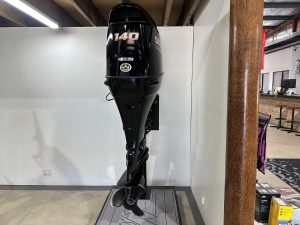
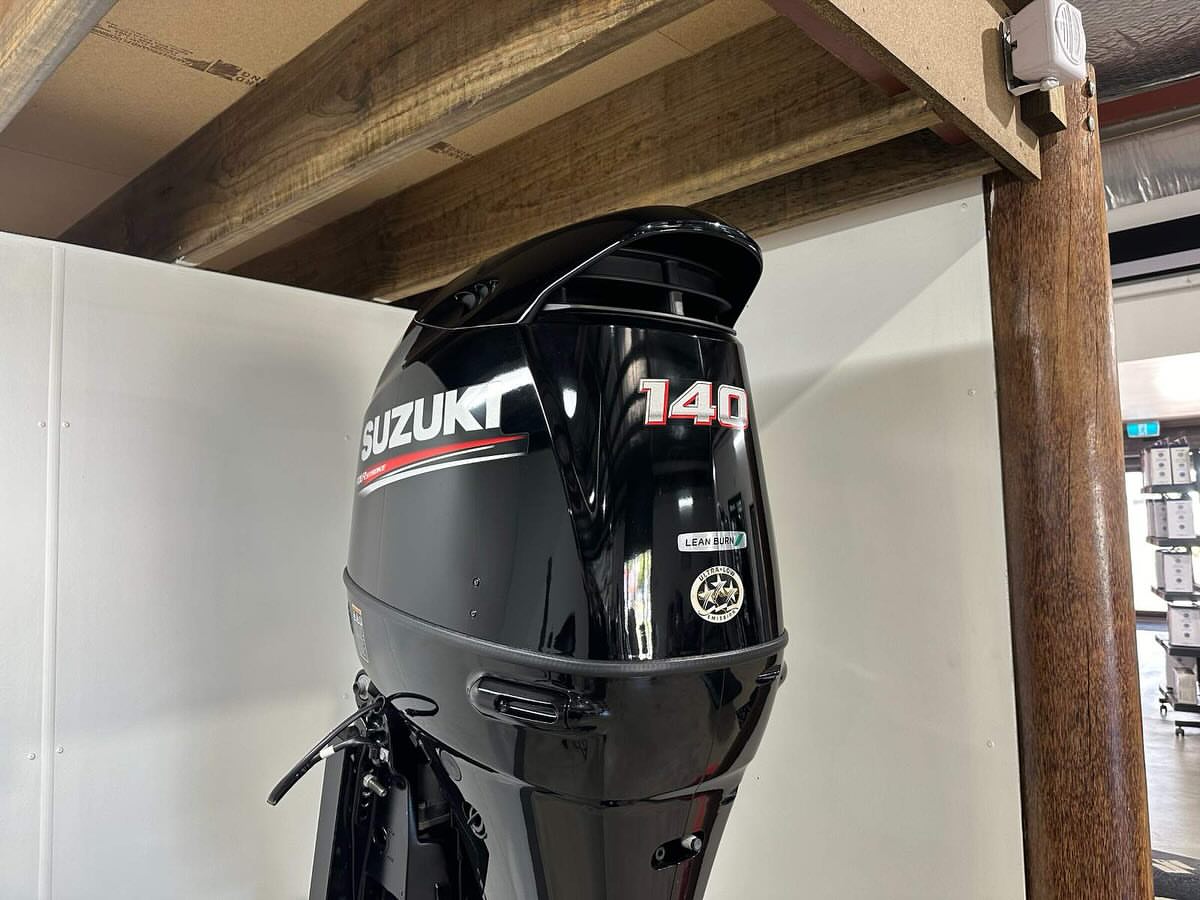
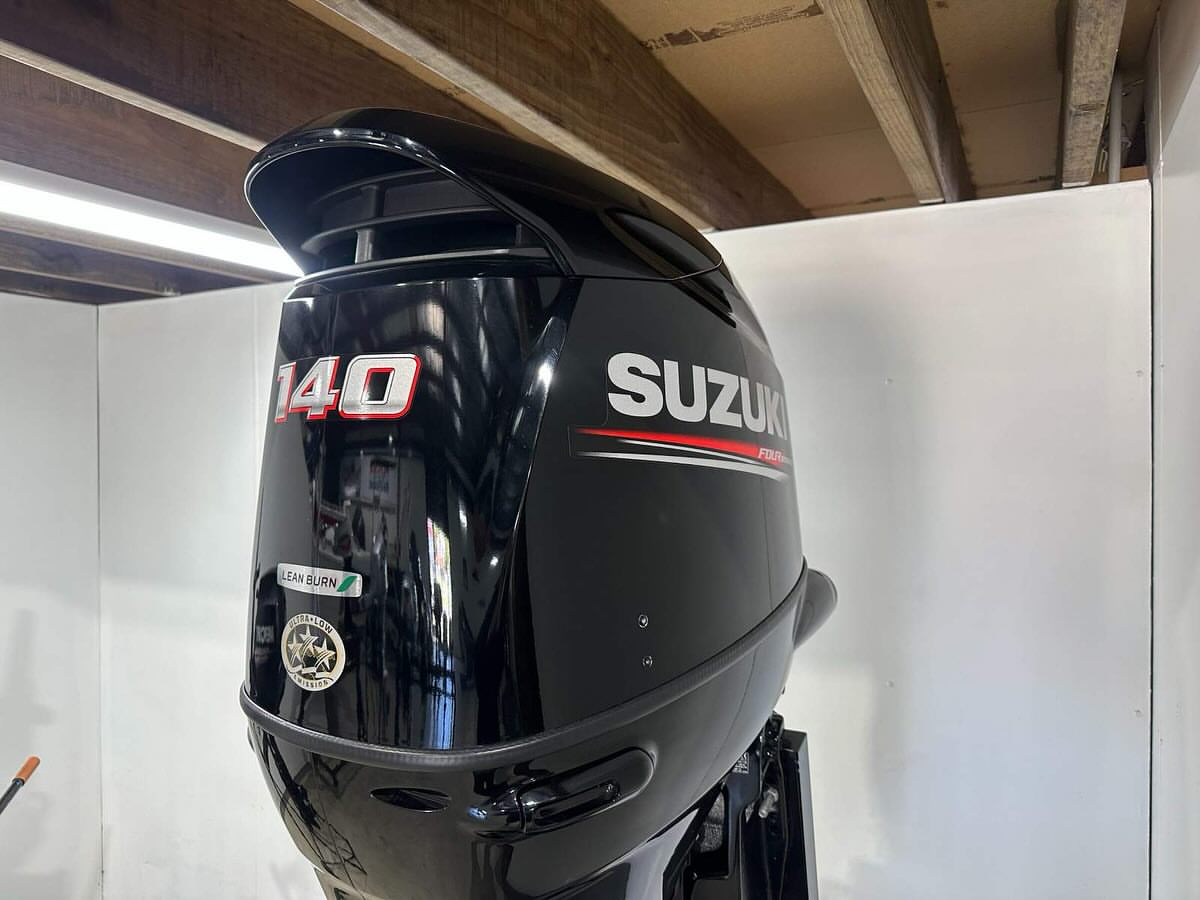
The Suzuki 140HP 4-stroke outboard is a four-cylinder marine engine designed for mid-size fishing boats, center consoles, aluminum boats, family runabouts and other vessels requiring 140 horsepower. The specification set associated with the features in this listing includes Suzuki’s 2.0-liter inline-four engine, Lean Burn fuel management, offset driveshaft, water-detecting fuel system and 2.59:1 gear ratio.
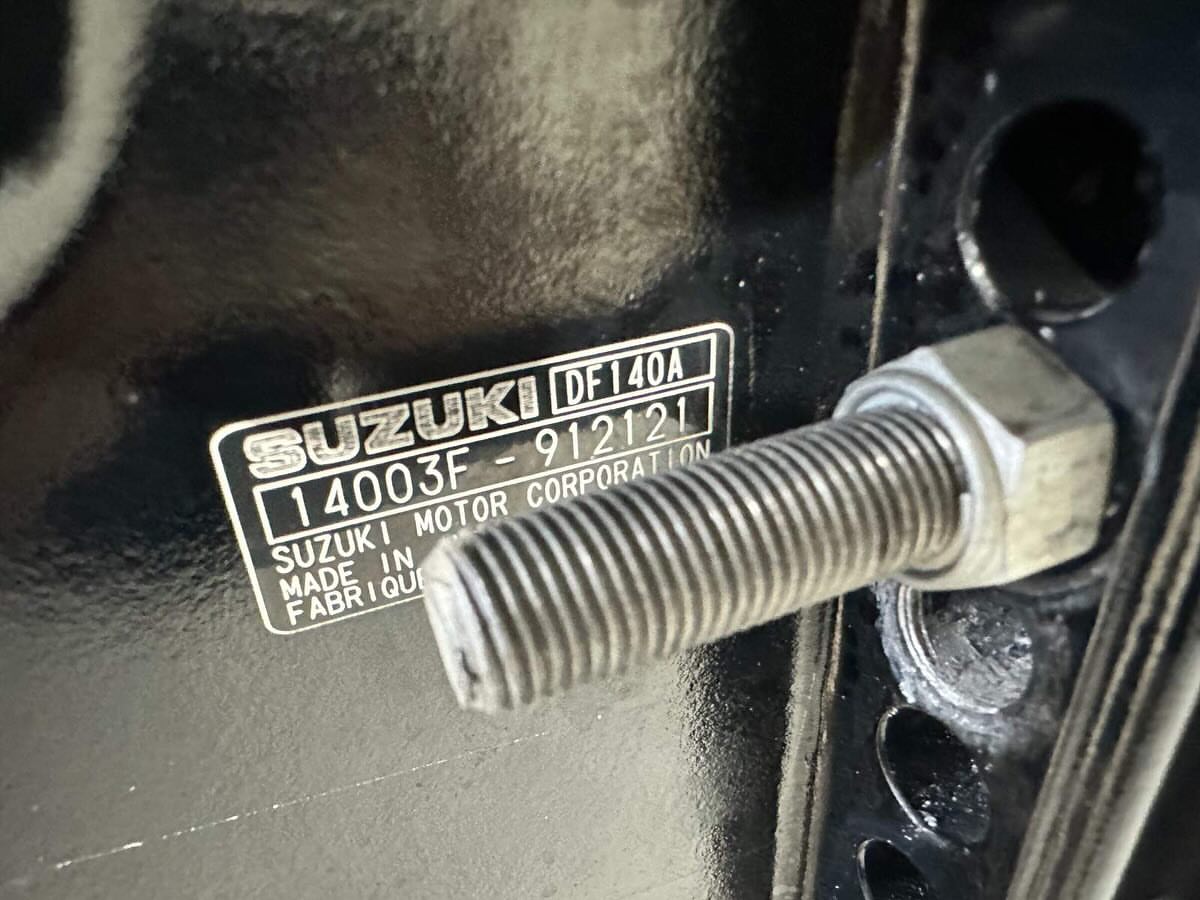
Model-year clarification: the listing title does not provide a specific model year or exact DF140 suffix. Because Suzuki has produced several generations of 140HP four-stroke outboards, this description does not assign an unsupported year. The technical specifications below are based primarily on Suzuki’s DF140B documentation, which matches the listed 2.59:1 gear ratio and feature set. Earlier DF140 models used different gear ratios, so buyers should confirm the identification plate and model code before ordering parts or rigging equipment.
| Specification | DF140B specification basis |
|---|---|
| Rated power | 140HP |
| Engine type | 4-stroke DOHC inline 4-cylinder |
| Displacement | 2,044cc / 124.7 cu in |
| Bore x stroke | 86 x 88mm |
| Fuel delivery | Multi-point sequential electronic fuel injection |
| Valve train | DOHC, 16 valves |
| Operating range | 5,600–6,200 rpm |
| Starting system | Electric |
| Steering | Remote |
| Gear ratio | 2.59:1 |
| Trim and tilt | Power trim and tilt |
| Charging system | 12V, 40A |
| Recommended transom heights | 20-inch L / 25-inch X |
| Controls | Mechanical or digital, depending configuration |
| Recommended fuel | 87 AKI minimum for DF140B documentation |
| Oil capacity | 5.5L |
Suzuki’s official DF140B specifications identify a 2,044cc DOHC 16-valve inline-four, multi-point sequential EFI, 140HP output, 5,600–6,200 rpm operating range, 2.59:1 gear ratio, electric start, remote steering, power trim and tilt, 12V 40A charging output and 20-inch or 25-inch transom configurations.
The Suzuki 140HP platform uses a 2.0-liter inline-four-cylinder powerhead. The 86mm bore and 88mm stroke produce approximately 2,044cc of displacement. Four cylinders and a DOHC 16-valve cylinder head provide the breathing capacity required for a 140HP outboard while maintaining the compact packaging expected from an inline-four design.
The exact engine specification should always be confirmed from the model identification plate. Suzuki’s older DF140 models also used a 2.0-liter inline-four architecture, but some important specifications changed between generations, including the lower-unit gear ratio.
One of the key features associated with the DF140B specification is Lean Burn Control. Suzuki’s Lean Burn system monitors operating conditions and adjusts the fuel mixture to provide a leaner mixture when conditions allow. This is intended to improve fuel economy during appropriate operating conditions rather than simply delivering a fixed fuel mixture at all times.
Because fuel consumption depends heavily on hull weight, speed, propeller selection, sea conditions and throttle position, the presence of Lean Burn technology should not be interpreted as a fixed fuel-economy figure for every boat.
The Suzuki DF140B uses an offset driveshaft. Suzuki positions the crankshaft forward of the driveshaft to move the engine’s center of gravity forward and make the overall outboard more compact. Suzuki also states that this arrangement reduces vibration by positioning the engine’s axis of inertia closer to the upper engine mount.
For a boat owner, the important practical point is that the engine’s architecture is designed around a compact powerhead and forward-weighted layout. Installation still needs to follow Suzuki’s mounting-height and rigging requirements for the exact model.
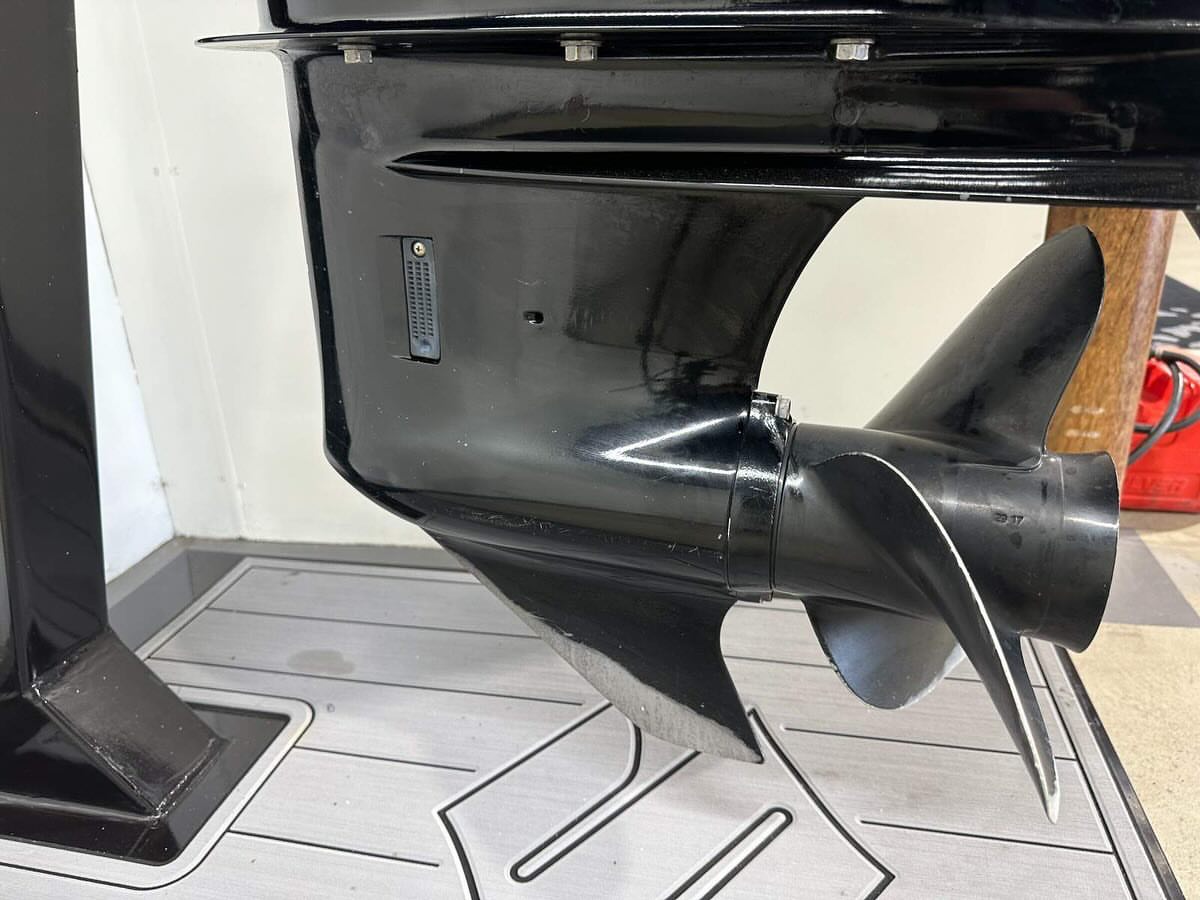
The 2.59:1 gear ratio is one of the clearest clues that the specifications in the original listing correspond to the later DF140B-generation 140HP platform. Suzuki’s official DF140B specification lists a 2.59:1 reduction ratio.
This should not be confused with early DF140 models. A 2002 Suzuki DF140, for example, used a 2.38:1 gear ratio. Suzuki changed the DF140 lower-unit ratio during the model’s evolution.
Propeller selection should therefore be based on the exact engine model, lower-unit ratio, boat, load and operating RPM. The objective is to keep the engine within its recommended operating range at wide-open throttle under the normal loaded condition.
The DF140B specification uses multi-point sequential electronic fuel injection. EFI provides electronically controlled fuel delivery rather than relying on carburetors, making the fuel system substantially different from older carbureted outboards.
On a used engine, inspect the fuel system carefully. Check fuel filters, fuel lines, injectors, electrical connections and any warning or diagnostic information before placing the engine into service.
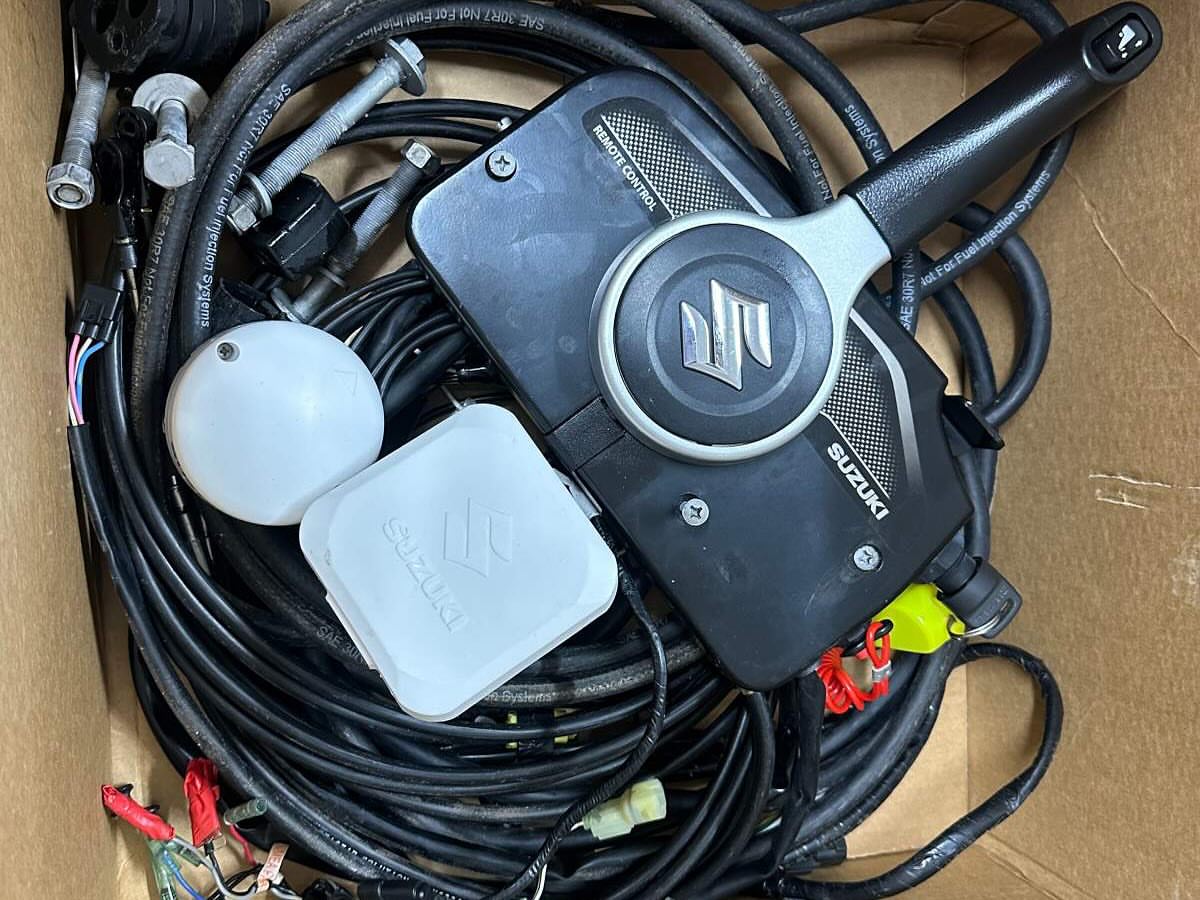
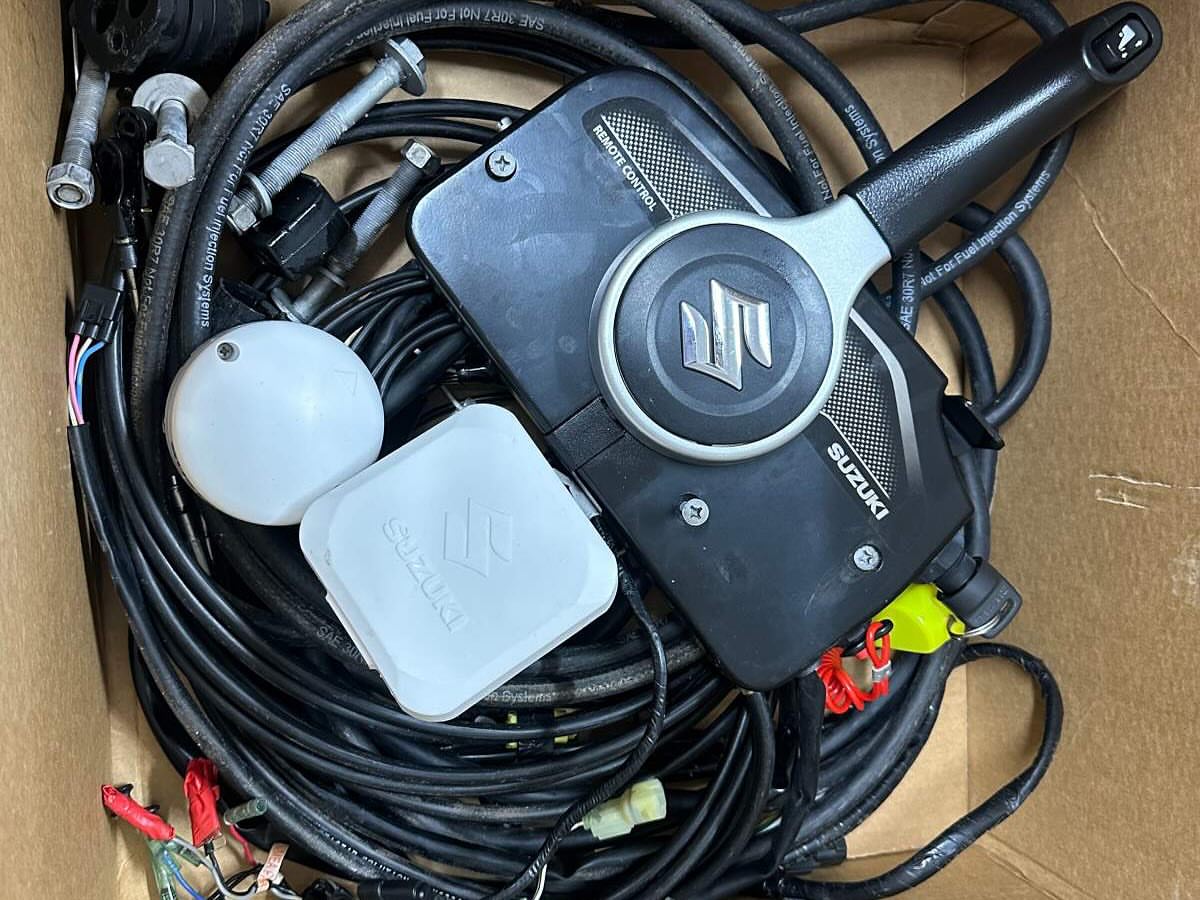
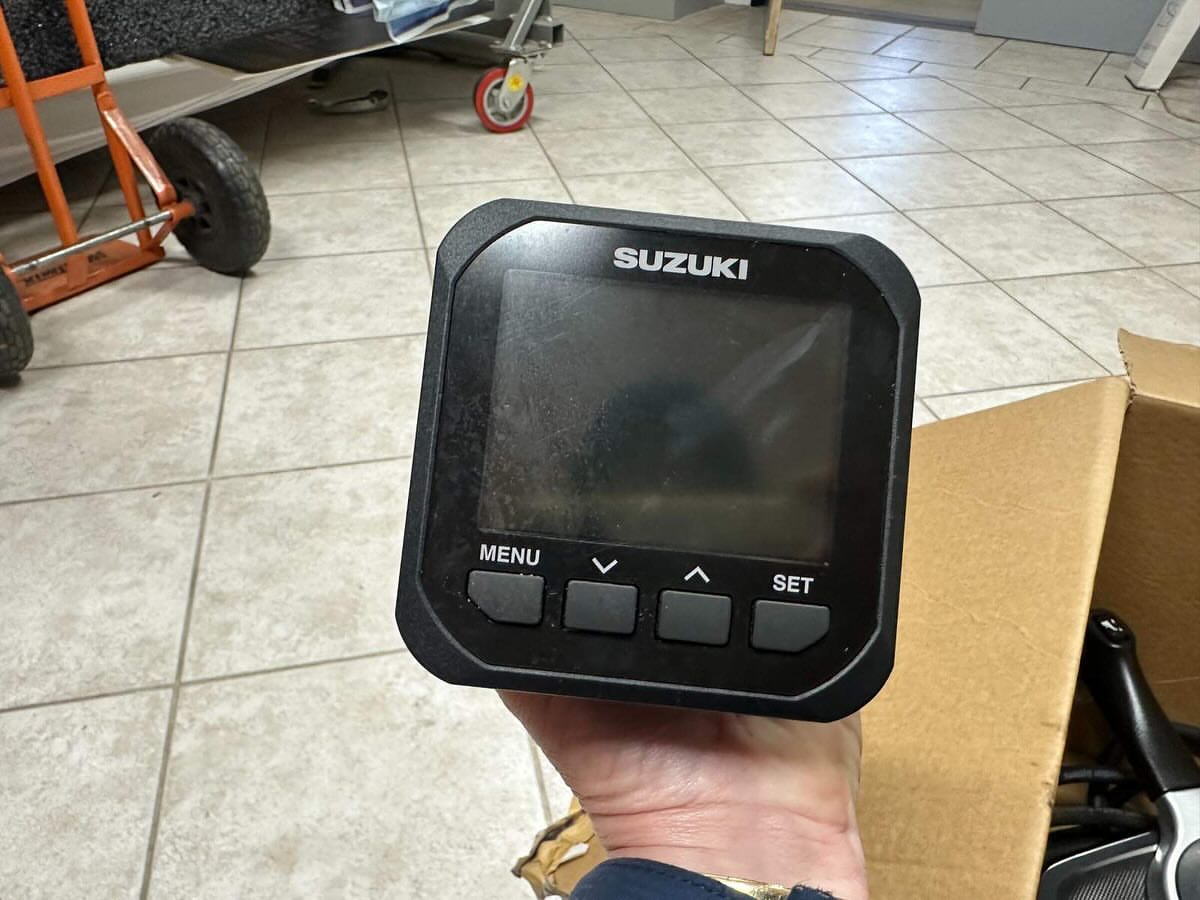
The original listing specifically references Suzuki Precision Control and describes electronic throttle and shift with a mechanical option. Suzuki’s later DF140B platform is available with mechanical or digital control configurations depending on the version.
Control compatibility matters during repowering. Confirm whether the engine is equipped for mechanical controls or digital controls before purchasing a control box, wiring harness or gauge package.
The listing identifies a water-detecting fuel filter/system. Suzuki describes its water-detecting system as a feature that alerts the operator when water is present in the fuel, helping prevent poor combustion, reduced power and corrosion-related problems.
Water contamination should still be treated as a fuel-system problem requiring inspection rather than relying only on an alert. Fuel quality, tank condition, separator/filter condition and fuel-line integrity all matter.
The original listing identifies a self-adjusting timing chain. A timing-chain system is used to synchronize the camshafts with the crankshaft, and the self-adjusting arrangement reduces the need for routine manual adjustment of timing-chain tension compared with a system requiring periodic manual tension setting.
It does not eliminate maintenance. Oil condition, lubrication and abnormal chain or tensioner noise should still be evaluated during a used-engine inspection.
Suzuki’s DF140B specification supports 20-inch L and 25-inch X transom configurations. Selecting the correct shaft length is essential because the wrong engine height can affect propeller depth, water pickup, handling and performance.
Measure the boat’s actual transom configuration and verify the exact engine model before installation. Do not rely solely on photographs or the general “140HP” designation.
The DF140B specification uses power trim and tilt. Power trim allows the operator to adjust the engine’s running angle from the helm, while tilt allows the outboard to be raised for shallow water, launching, trailering and storage.
On a used engine, test the complete trim and tilt system through its operating range. Listen for abnormal hydraulic-pump noise and check for fluid leaks, damaged hydraulic lines or a motor that fails to hold position.
Suzuki lists a 12V 40A alternator for the DF140B. This provides charging capacity for the boat’s electrical system and accessories, subject to the actual electrical configuration and engine operating conditions.
If this product is being sold as a used Suzuki 140HP outboard, a pre-purchase inspection should go beyond appearance. The exact model code and serial number should be recorded first, particularly because Suzuki’s 140HP specifications changed between generations.
A 140HP outboard can be a suitable repower for boats designed to accept that horsepower, but compatibility must be checked before installation. Confirm the boat manufacturer’s maximum horsepower rating, transom height, steering system, control system, battery requirements, fuel system, engine weight and mounting-hole configuration.
For a DF140B-style installation, Suzuki specifies approximately 410lb for a mechanical-control 20-inch version and approximately 419lb for the 25-inch version. Actual weight varies by configuration, so the identification plate and complete engine configuration should be used when evaluating an existing transom.
The phrase “Suzuki 140HP” covers more than one generation. An early DF140 from 2002 used a 2.38:1 gear ratio and a 5,600–6,200 rpm operating range, while the later DF140B specification uses a 2.59:1 ratio.
This distinction matters for propeller selection, parts identification and rigging. If a buyer is replacing an older Suzuki DF140, the model code and serial number should be checked rather than assuming that every 140HP Suzuki uses identical lower-unit components.
If you are comparing this Suzuki 140HP with other engines in the Performance Engines catalog, review the 2020 Suzuki 9.9HP 4-stroke EFI for a smaller Suzuki platform, the 2017 Suzuki 6HP 4-stroke for a lightweight portable option, or the 2021 Yamaha F200 4-stroke for a larger Yamaha four-stroke.
The DF140 platform produces 140HP. The DF140B specification is rated at 140HP.
The DF140B uses a 2,044cc inline-four-cylinder powerhead.
The DF140B is an inline four-cylinder engine with a DOHC 16-valve cylinder head.
Yes. The DF140B uses multi-point sequential electronic fuel injection.
The DF140B specification uses a 2.59:1 gear ratio. Earlier DF140 generations used different ratios, including 2.38:1 on the 2002 model, so the exact model code should be confirmed.
The lower-unit ratio affects propeller speed and therefore propeller selection. It is one reason the exact Suzuki model and generation should be identified before selecting a replacement propeller.
The DF140B platform includes Suzuki Lean Burn Control, which adjusts the fuel mixture according to operating conditions to improve fuel economy when appropriate.
The offset driveshaft places the crankshaft forward of the driveshaft. Suzuki says this moves the center of gravity forward, makes the outboard more compact and reduces vibration.
Yes. Suzuki’s DF140B specification lists power trim and tilt.
The DF140B is specified for 20-inch L and 25-inch X transom configurations.
The DF140B specification lists a 12V 40A charging system.
Suzuki lists 87 AKI as the recommended minimum fuel rating for the DF140B specification. Always follow the fuel requirements for the exact model and market shown on the engine documentation.
No specific model year is provided in the current product title or description. Because Suzuki produced multiple DF140 generations, the identification plate should be checked before treating any generation-specific specification as definitive.
Confirm the model code and serial number, compression, EFI operation, fuel system, cooling, oil condition, charging output, trim and tilt, gearcase oil, propeller, controls and service history. The lower-unit gear ratio should also be verified if propeller selection or repowering is involved.
Explore more outboard engines at Performance Engines.