$18,000.00 Original price was: $18,000.00.$14,000.00Current price is: $14,000.00.
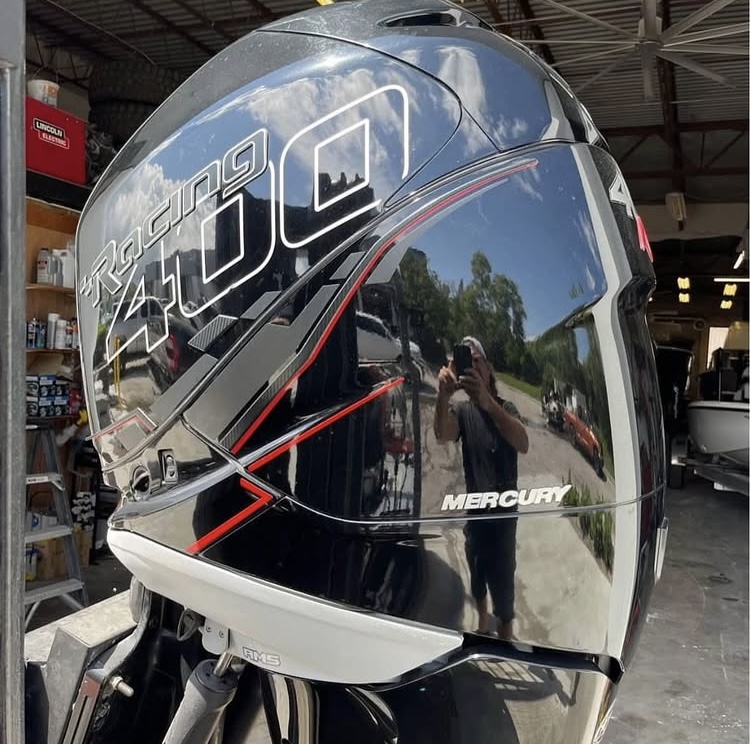
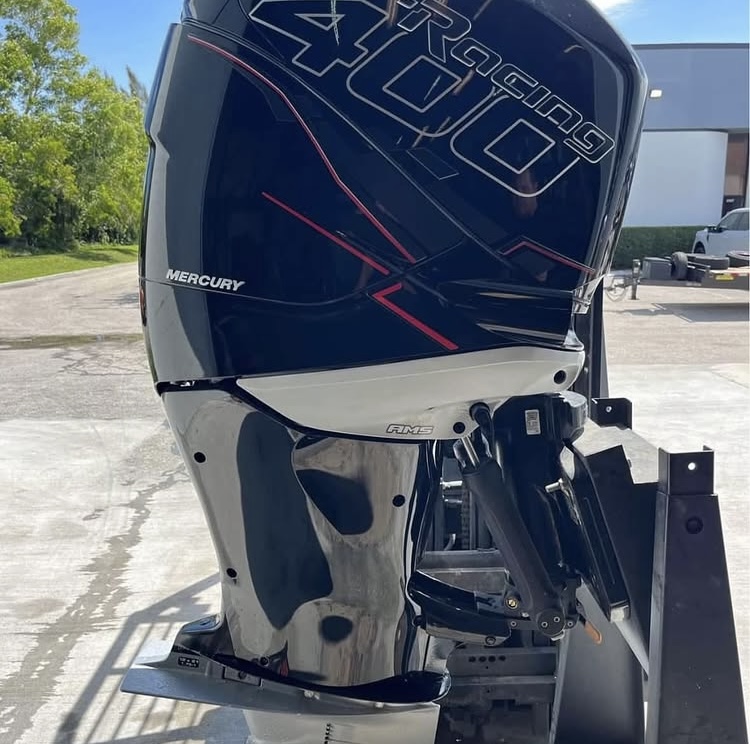
The Mercury Racing 400R is a high-performance four-stroke racing outboard developed around Mercury Racing’s 2.6-liter supercharged inline-six platform. It was engineered specifically for lightweight high-performance hulls where acceleration, power-to-weight ratio and high-speed operation are central to the installation.
This 400R generation is distinct from the newer 5.7-liter V10 400R. Mercury’s earlier 400R specification identifies a 2.6L inline-six, 24-valve DOHC engine with supercharged induction, charge-air cooling, electronic boost control, Digital Throttle & Shift, Mercury Racing Advanced MidSection and a 1.75:1 gear ratio. Mercury’s catalogue also describes the 400R as a 400 HP racing outboard with a 7,000 RPM rev limit.
| Specification | 2.6L Mercury Racing 400R |
|---|---|
| Rated horsepower | 400 HP |
| Engine type | Inline 6-cylinder, four-stroke |
| Displacement | 2.6 L / 158 CID |
| Valve train | 24-valve DOHC |
| Induction | Supercharged with charge-air cooling and electronic boost control |
| Fuel requirement | Recommended 91 octane; minimum 89 octane according to the published 2.6L specification |
| Maximum WOT range | 6,400–7,000 RPM |
| Charging output | 70 A / 882 W |
| Throttle and shift | Digital Throttle & Shift |
| Midsection | Mercury Racing Advanced MidSection |
| Gearcase | Sport Master or 5.44 HD |
| Gear ratio | 1.75:1 |
| Dry weight | Approx. 668 lb / 303 kg, lightest model |
| Shaft options | 20, 25 and 30 inches |
| Warranty | 3-year limited; published materials also reference additional product-protection availability |
Mercury Racing’s published 2.6L 400R material gives the specifications above. Because Mercury later introduced a completely different V10 400R, buyers should match the specification sheet to the exact engine serial/model identification rather than mixing specifications between generations.
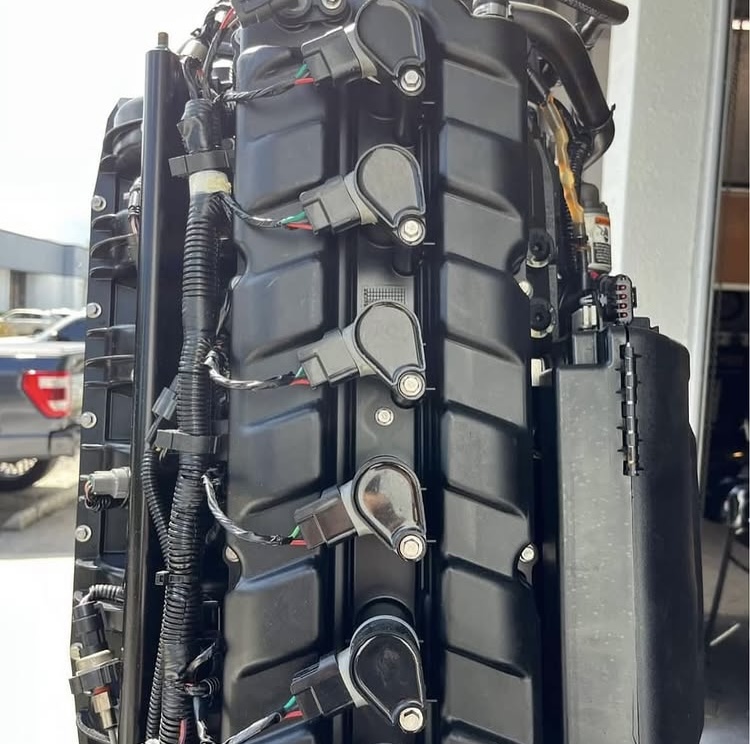
The 2.6L 400R uses an inline-six four-stroke powerhead with a 24-valve DOHC cylinder head. The six-cylinder architecture provides the foundation for the engine’s high-output racing calibration while keeping the package substantially different from the later V10 400R.
Mercury Racing describes the 400R as a performance engine developed around its proven 2.6L supercharged DOHC platform. The calibration and intake system were configured specifically for high-performance applications rather than ordinary recreational outboard duty.
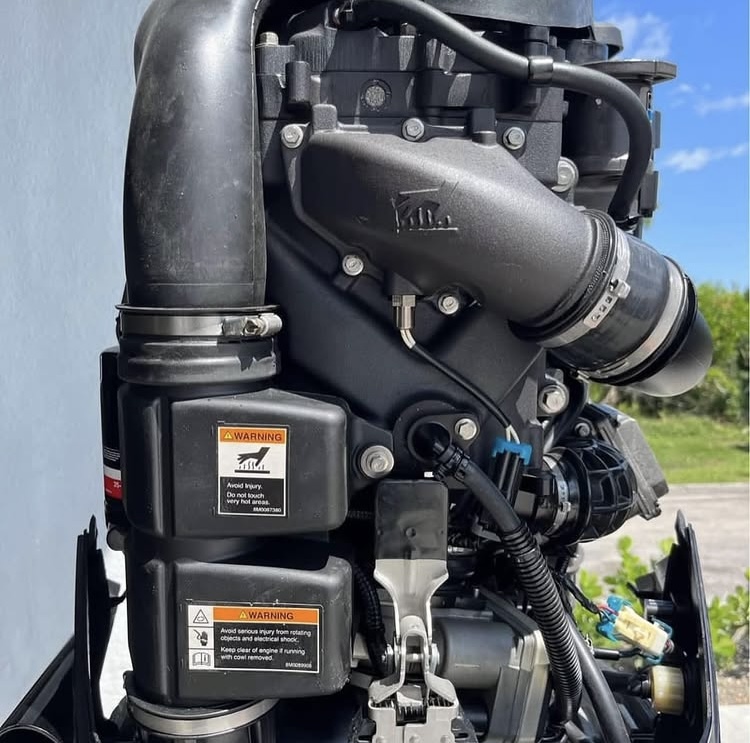
The 400R’s forced-induction system uses a screw-type supercharger. Mercury Racing’s technical material describes a short-run air snorkel feeding cool ambient air to the supercharger, water cooling for the supercharger and a charge-air cooler positioned downstream to increase charge-air density.
Electronic boost-pressure control helps maintain the intended performance as operating conditions change. This system is a major reason the 400R should be treated as a specialized high-performance powerplant when planning fuel, cooling, electrical and rigging systems.
The published 2.6L 400R specification lists a 6,400–7,000 RPM wide-open-throttle range. This gives the engine a relatively broad propeller-selection window for performance hulls.
Propeller selection should be made from the exact boat, engine height, gearcase, hull characteristics and intended load. A 400R should not simply be fitted with a propeller chosen for a conventional 400 HP recreational outboard.
The 2.6L 400R can be configured with Mercury Racing’s Sport Master or 5.44 HD gearcase. The Sport Master is a surface-piercing performance gearcase intended for high-speed boats, while the 5.44 HD is designed for heavier performance boats and multi-engine center-console applications.
Mercury Racing describes the Sport Master as a race-proven surface-piercing design with low water pickups and a crescent leading edge. The 5.44 HD provides a more submerged gearcase arrangement for applications where additional load-carrying capability and stern lift are required.
The Mercury Racing Advanced MidSection is designed to support the 400R’s high-performance operating environment. Mercury Racing describes dedicated engine mounts and guide plates intended to stabilize the engine and improve handling and durability at speed.
For very high-speed or multi-engine installations, an optional rear tie-bar mounting arrangement can provide a dedicated steering attachment point. The exact steering configuration should be matched to the hull and engine arrangement.
The 400R uses Digital Throttle & Shift rather than a conventional mechanical throttle-and-shift setup. Digital controls allow the engine to integrate with compatible Mercury control and instrumentation systems.
When buying a used 400R, confirm that the control harnesses, throttle/shift components, gauges and other SmartCraft-related equipment included with the engine are compatible with the exact model and intended boat installation.
The published 2.6L 400R specification lists a 70-amp / 882-watt charging output. This is useful for performance boats carrying navigation equipment, communications equipment, pumps, audio systems and other electrical loads.
Installation should still include appropriately sized batteries, cables, grounds and protection devices. A high-output alternator does not remove the need for a correctly engineered starting and house-power system.
The 2.6L 400R was designed for lightweight high-performance hulls where speed and acceleration are major design requirements. Applications can include performance center consoles, lightweight offshore boats, high-speed catamarans and other boats engineered around racing-oriented outboard power.
The appropriate gearcase, shaft length, engine height and propeller depend on the hull. A Sport Master installation intended for a high-speed surface-piercing application should not automatically be substituted for a 5.44 HD setup on a heavier boat.
The 400R can be used in single or multi-engine performance configurations when the boat is designed for the combined power and weight. Multi-engine installations require careful attention to engine spacing, steering, engine height, propeller selection and rigging.
For a twin 400R setup, the combined rated output is 800 HP before considering the specific boat, propellers and installation. The transom must be designed for the complete engine and rigging load.
Mercury Racing’s 2.6L 400R material recommends 91-octane fuel and identifies 89 octane as the minimum. Fuel quality matters on a high-output supercharged engine, so the fuel system should be kept clean and supplied with fuel meeting the specification for the exact engine calibration.
Do not apply the fuel specification of the later V10 400R to the older 2.6L engine without checking the correct model documentation.
Routine maintenance should follow the Mercury Racing service schedule for the exact 400R model. Important areas include engine oil and filter service, spark plugs, fuel system, cooling system, supercharger-related components, belts, gearcase lubricant, propeller, steering system and electrical connections.
Because the 400R is a high-performance engine, service history is especially valuable when buying a used example. Ask for documentation showing scheduled maintenance and investigate any signs of overheating, over-revving, impact damage or performance modifications.
Start by recording the engine’s serial number and model designation. This is particularly important with the 400R because Mercury Racing has produced more than one 400R generation, including the later 5.7L V10 model.
Inspect the gearcase, propeller shaft, skeg, mounting hardware and midsection for impact or corrosion. Check the powerhead for leaks and abnormal noises, and review diagnostic information where available.
A water test should verify starting, idle quality, throttle response, cooling-water flow, charging output, steering, trim and wide-open-throttle RPM. For a performance installation, the boat should also be evaluated for engine height and propeller suitability.
The name 400R now covers different Mercury Racing generations. The engine described on this product page is the earlier 2.6L supercharged inline-six platform. Mercury’s newer 400R is a naturally aspirated 5.7L V10 with different specifications, including a 6,000–6,600 RPM operating range, 1.60:1 gear ratio and approximately 695 lb/315 kg dry weight.
| Feature | 2.6L 400R | Newer V10 400R |
|---|---|---|
| Engine layout | Inline 6 | 64-degree V10 |
| Displacement | 2.6 L | 5.7 L |
| Induction | Supercharged with charge-air cooling | Naturally aspirated |
| WOT range | 6,400–7,000 RPM | 6,000–6,600 RPM |
| Gear ratio | 1.75:1 | 1.60:1 |
| Lightest published dry weight | Approx. 668 lb / 303 kg | Approx. 695 lb / 315 kg |
These are different engine platforms. When ordering replacement parts, controls, gearcases, rigging or service components, use the exact engine model and serial information.
The 2.6L Mercury Racing 400R is rated at 400 HP.
Yes. The 2.6L 400R uses a supercharger with charge-air cooling and electronic boost-pressure control.
The earlier 400R uses an inline-six four-stroke powerhead with a 24-valve DOHC cylinder head.
Mercury Racing’s published 2.6L specification lists a 6,400–7,000 RPM wide-open-throttle range.
The published 2.6L 400R specification lists a 1.75:1 gear ratio.
The 2.6L 400R was offered with Mercury Racing’s Sport Master and 5.44 HD gearcase options. The correct choice depends on the boat and intended operating profile.
The published 2.6L specification lists approximately 668 lb / 303 kg dry for the lightest model.
No. The newer V10 400R is a different 5.7-liter naturally aspirated engine platform. The 2.6L 400R covered here is a supercharged inline-six.
The Mercury Racing 400R 2.6L platform combines 400 HP with supercharged inline-six power, charge-air cooling, Digital Throttle & Shift, Mercury Racing’s Advanced MidSection and performance-oriented gearcase options. It is engineered for boats designed around high-speed, high-output outboard propulsion.
Before purchasing, verify the exact 400R generation, serial number, shaft length, gearcase, rigging and service history. For additional marine propulsion options, browse our outboard engines category.