$6,000.00
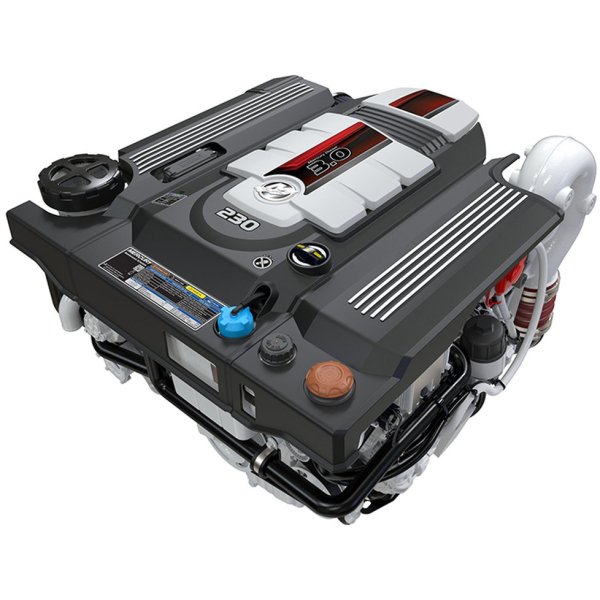
The Mercury Diesel 3.0L 230 HP V6 inboard diesel engine is a high-output marine propulsion engine designed for boats that require substantial diesel power in a compact package. Mercury’s current 3.0L family is offered in 150, 230 and 270 HP ratings and uses a V6 diesel architecture with high-pressure common-rail fuel injection, turbocharging with aftercooling, closed-loop freshwater cooling and electronic engine management.
This 230 HP version is identified by Mercury as the Mercury Diesel 3.0L 230. Mercury’s conformity documentation identifies the 3.0L 230 as engine family code 69D – MR506SS3. Before ordering, confirm the exact engine identification, inboard configuration, controls, transmission or drive package and installation requirements for the vessel.
The Mercury Diesel 3.0L 230 is the middle power rating in Mercury’s current 3.0L V6 diesel range. The 3.0L family covers 150 to 270 HP, while the 230 HP model provides the power level identified in this product listing.
Published specifications for the 230 HP configuration list 503 Nm of peak torque at 2,200 rpm. Actual boat acceleration, cruising speed, fuel consumption and planing performance depend on hull design, vessel weight, propeller or drive selection, gearing, loading and operating conditions.
The engine uses a 3.0-liter V6 diesel configuration. Mercury’s technical information identifies six cylinders and a bore and stroke of approximately 83 × 92 mm.
The high-pressure common-rail fuel system is managed electronically and is designed to deliver fuel accurately across the engine’s operating range. Mercury pairs the fuel system with an advanced ECU that manages engine systems and contributes to emissions and performance control.
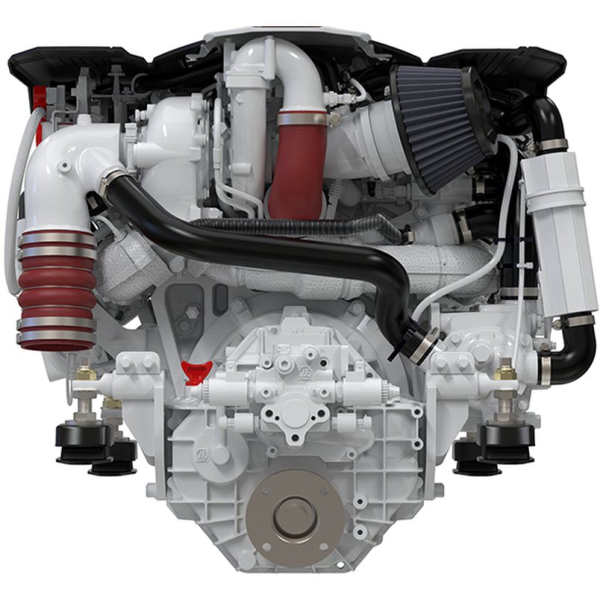
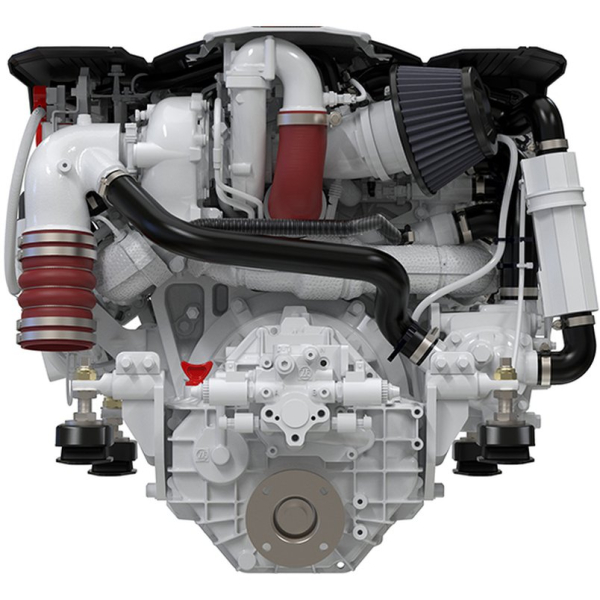
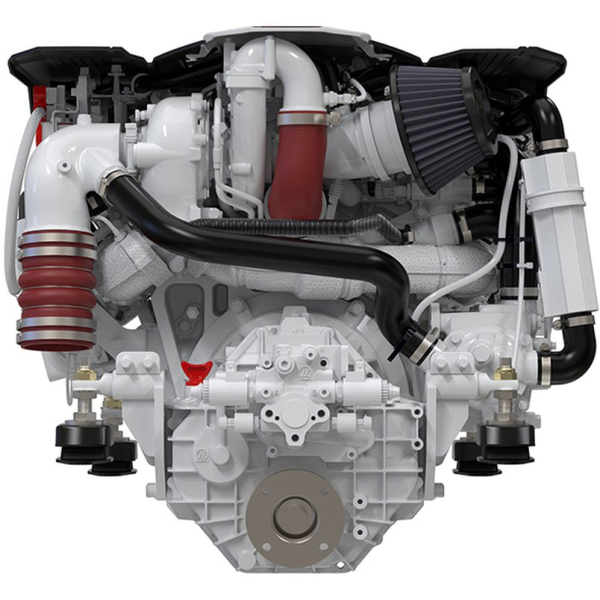
The Mercury Diesel 3.0L uses a water-cooled variable geometry turbocharger (VGT). Mercury states that the VGT automatically optimizes power and torque according to operating demand, including acceleration, cruising and wide-open-throttle operation.
The engine also uses an aftercooled air-handling system. Turbocharging and aftercooling are important parts of the 3.0L’s diesel architecture and should be considered when planning engine-room ventilation, service access and cooling-system installation.
Mercury specifies a thermostatically controlled closed-loop freshwater cooling system for the 3.0L diesel. The system protects the engine and turbocharger while allowing the engine to be used in both fresh and saltwater environments.
Marine installation still requires the correct seawater circuit, strainer, hoses, heat exchangers and exhaust arrangement. Cooling components should be installed and serviced according to Mercury’s documentation for the exact engine and propulsion configuration.
The 230 HP 3.0L is designed around strong mid-range torque as part of Mercury’s high-speed diesel platform. The published 230 HP specification identifies 503 Nm at 2,200 rpm as peak torque, while the broader 3.0L range extends to higher torque output on the 270 HP variant.
Torque should be considered together with transmission ratio and propeller selection when repowering a boat. Installing an engine with the correct horsepower but an unsuitable gear or propeller can prevent the propulsion system from operating as intended.
The Mercury Diesel 3.0L uses a 12V electrical system with a listed 110A alternator at wide-open throttle. Mercury’s SmartCraft digital technology can provide engine information through compatible gauges and displays, with features depending on the engine model, controls and installed equipment.
Mercury also offers digital throttle and shift technology for compatible configurations. Control and display requirements should be confirmed for the exact 230 HP engine package before purchase, especially when replacing an older inboard engine with a different control architecture.
| Specification | Mercury Diesel 3.0L 230 |
|---|---|
| Engine type | V6 diesel inboard |
| Rated power | 230 HP |
| Displacement | 3.0 L |
| Cylinders | 6, V6 configuration |
| Bore × stroke | 83 × 92 mm / 3.27 × 3.62 in. |
| Air handling | Turbocharged and aftercooled |
| Turbocharger | Variable geometry turbocharger (VGT) |
| Fuel system | High-pressure common rail |
| Peak torque | 503 Nm at 2,200 rpm |
| Electrical system | 12V |
| Alternator | 110A at wide-open throttle |
| Cooling | Thermostatically controlled closed-loop freshwater system |
| Controls | Mercury DTS or mechanical cable depending on configuration |
| Overall length | 931 mm / 36.6 in. |
| Overall width | 851 mm / 33.5 in. |
| Overall height | 784 mm / 30.9 in. |
| Dry weight, inboard/bobtail specification | 348 kg / 767 lb |
| Fuel | Diesel |
Mercury designed the 3.0L as a relatively compact diesel package for its power class. The published dimensions are approximately 931 mm long, 851 mm wide and 784 mm high, with the inboard/bobtail dry weight listed at approximately 348 kg.
Actual installed dimensions depend on the propulsion arrangement, accessories, exhaust system, controls and mounting configuration. Measure the engine compartment and verify the manufacturer’s installation drawing before making changes to engine beds, exhaust routing, shaft alignment or access panels.
Depending on the installation, Mercury’s 3.0L diesel platform can be integrated with DTS digital controls or mechanical cable controls. SmartCraft technology can also provide compatible digital engine information through Mercury displays and gauges.
For a repower, control compatibility is particularly important. Confirm the required throttle and shift system, harnesses, gauges, key switch, engine-control components and any required SmartCraft equipment before ordering.
Mercury offers its SeaCore system for the 3.0L diesel platform. Mercury describes SeaCore as a package of corrosion-fighting technologies intended to provide additional protection in demanding marine environments.
Saltwater installations should still follow the correct flushing, inspection, anode and maintenance procedures. Corrosion protection is part of the overall installation and maintenance system rather than a substitute for regular marine-engine service.
Mercury designed the 3.0L with service points positioned toward the front of the engine. Mercury identifies accessible service areas including oil, coolant, fuse box and seawater-strainer components, while the exact arrangement depends on the propulsion configuration.
Before installation, allow sufficient engine-room clearance for routine inspection, filter replacement, fluid checks and other maintenance. A physically compatible engine can still be difficult to service if access around the installed package is inadequate.
The 230 HP Mercury Diesel 3.0L is intended for marine propulsion applications requiring a higher-output diesel engine. It is part of Mercury’s sterndrive and inboard diesel range and can be considered for appropriate repower and new-build installations.
Engine selection should be based on the vessel manufacturer’s recommended power range, displacement, hull characteristics, transmission or drive, propeller and installation requirements. Confirm that 230 HP is suitable for the particular vessel before purchase.
When replacing an existing inboard engine, compare more than horsepower. Important checks include engine-bed dimensions, mount locations, shaft centerline, transmission ratio, propeller size, exhaust routing, fuel system, seawater intake, electrical connections and control systems.
The Mercury 3.0L also uses electronic engine management, common-rail fuel injection and turbocharger controls, so a repower may require more than simply physically mounting the engine. Confirm the complete engine, transmission, controls, gauges, harnesses and ancillary equipment required for the installation.
The Mercury Diesel 3.0L 230 combines a 230 HP V6 diesel with common-rail injection, VGT turbocharging, aftercooling, closed-loop freshwater cooling and electronic engine management. Its published dimensions and weight provide a reference point for evaluating installation space and vessel balance.
For buyers comparing marine diesel engines, the important specifications include rated power, torque, engine dimensions, weight, transmission compatibility, electrical output, cooling architecture and control requirements. These factors should be evaluated together rather than selecting an engine by horsepower alone.
The specific engine in this listing is the 230 HP version of Mercury’s 3.0L V6 diesel family. Mercury also offers 150 HP and 270 HP ratings within the 3.0L range.
Published specifications for the 230 HP configuration list 503 Nm of peak torque at 2,200 rpm.
Yes. The engine uses a variable geometry turbocharger and an aftercooled air-handling system.
The 3.0L diesel uses a high-pressure common-rail fuel system managed by an electronic engine control unit.
Yes. Mercury specifies a thermostatically controlled closed-loop freshwater cooling system designed to protect the engine and turbocharger in both fresh and saltwater environments.
The published inboard/bobtail specification lists a dry weight of approximately 348 kg / 767 lb. The final installed package can weigh more depending on the propulsion configuration and additional equipment.
The engine uses a 12V electrical system and the published specification lists a 110A alternator at wide-open throttle.
Yes. Mercury identifies SmartCraft digital technology as part of its diesel platform, with available gauges and displays depending on the engine, controls and installed configuration.
If you need a high-output diesel propulsion system in the 230 HP class, the Mercury Diesel 3.0L combines V6 architecture, high-pressure common-rail injection, VGT turbocharging, aftercooling and closed-loop freshwater cooling in a marine-focused package.
Before ordering, confirm vessel power requirements, engine-room dimensions, shaft or drive arrangement, transmission, controls, electrical requirements and installation compatibility. For additional marine diesel options, browse our inboard marine engines category or compare this engine with the Mercury Diesel 2.0L and other engines in the Performance Engines range.