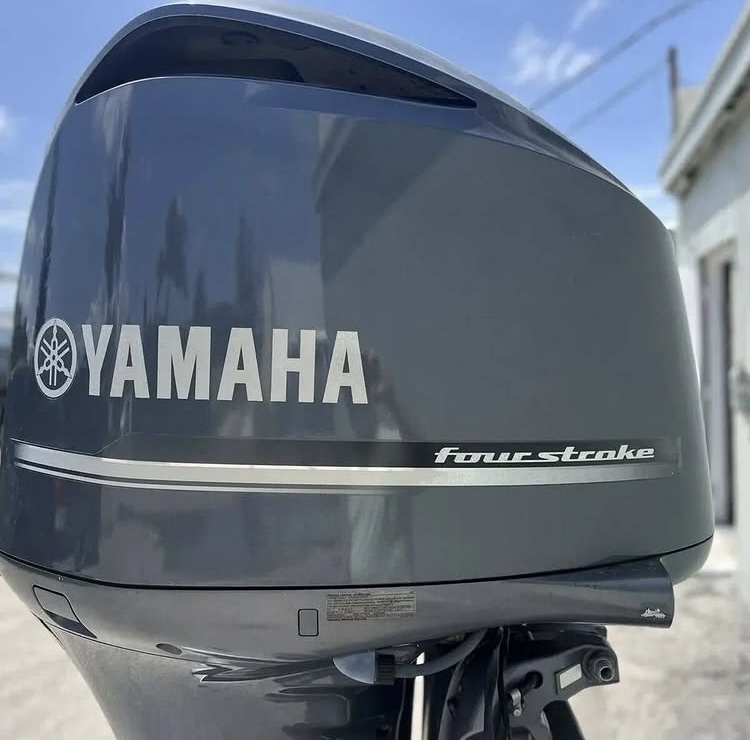
$7,000.00 Original price was: $7,000.00.$6,500.00Current price is: $6,500.00.
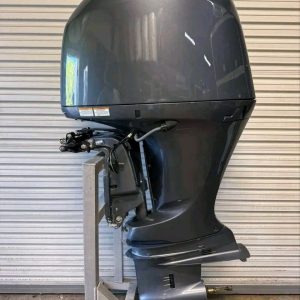
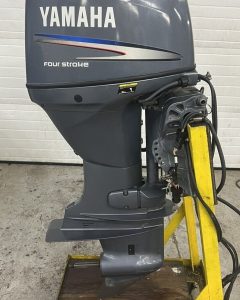
The Yamaha F350 4-Stroke V8 Outboard Motor is a high-output Yamaha marine engine designed for large offshore and performance boats that require substantial outboard power. The original F350 introduced Yamaha’s 60-degree V8 outboard platform with a 5,330 cc displacement and a rated 350 horsepower at 5,500 RPM. Yamaha introduced the F350 as its first commercially sold V8 outboard in 2007.
This F350 is the classic 5.3-liter V8 four-stroke generation. It should not be confused with later Yamaha F350B models, which use a different 4.256-liter V6 powerhead. When ordering parts, controls or replacement components, verify the exact model code and serial number.
The F350 uses a 60-degree V8 powerhead with a displacement of 5,330 cc. Yamaha’s original specifications rate the engine at 257.4 kW, or 350 horsepower, at 5,500 RPM. The DOHC 32-valve layout provides the airflow capacity required by the large-displacement V8, while variable camshaft timing is designed to increase torque through the low- and mid-range operating area.
Yamaha also developed the F350’s exhaust system around its V8 architecture. The In-Bank Dual Exhaust system uses Power Surge Chambers to manage exhaust pressure and support the engine’s power output.
| Specification | Yamaha F350 V8 |
|---|---|
| Manufacturer | Yamaha |
| Model | F350 |
| Engine type | Four-stroke 60-degree V8 |
| Displacement | 5,330 cc / 5.3 L |
| Rated output | 350 HP / 257.4 kW |
| Rated power speed | 5,500 RPM |
| Valve configuration | DOHC, 32 valves |
| Fuel system | Electronic fuel injection |
| Fuel | Unleaded premium gasoline |
| Gear ratio | Approximately 1.73:1 on documented F350 V8 configurations |
| Engine family | 5.3L V8 F350 generation |
Yamaha’s published F350 specifications identify the 5,330 cc 60-degree V8, 350 HP at 5,500 RPM, DOHC 32-valve construction and electronic fuel injection. Yamaha performance bulletins for F350 V8 models document a 1.73:1 gear ratio.
The F350 uses electronic fuel injection to meter fuel to the V8 powerhead. Electronic engine management works with the engine’s sensors and control systems to manage fuel delivery and operating parameters across the RPM range.
Yamaha also incorporated its Ionic Combustion Sensor technology into the original F350 design. The system monitors combustion-related ion activity and helps the engine management system maintain appropriate combustion operation.
Variable camshaft timing is one of the important technologies used in the F350 V8. Yamaha designed the system to improve torque at low and mid-range engine speeds, which is useful when a large offshore boat is accelerating onto plane or operating under substantial load.
This means the F350 is not simply a large-displacement engine producing peak horsepower at high RPM. Its engine-management and valve-timing systems were developed to provide useful torque across a broad operating range.
A 5.3-liter V8 operating at 350 horsepower requires substantial cooling capacity. Yamaha equipped the F350 with a large-capacity water pump, larger thermostat and dual-course coolant supply system to manage the heat generated by the engine.
The F350 was also designed specifically with saltwater use in mind. Yamaha incorporated strategically placed sacrificial anodes, electrophoretic paint and additional corrosion-protection measures. The cowling includes a dedicated drain system intended to reduce water intrusion into the engine compartment.
The F350 introduced Yamaha’s Command Link Digital Electronic Control system for electronic engine operation. The system is designed to provide lighter control operation and integration with compatible Yamaha instrumentation.
The F350 also includes variable trolling RPM control as part of its documented equipment. On multi-engine installations, the system can synchronize engine RPM, with Yamaha’s original documentation describing synchronization of up to three engines.
The F350 was designed for large boats where twin or triple outboard installations may be appropriate. Yamaha performance bulletins document the engine in twin and triple configurations, including applications using F350 and LF350 variants.
Exact engine weight varies according to model, shaft length, counter-rotation configuration and equipment. Published Yamaha performance bulletins show documented F350 V8 configurations in the approximate 763–822 lb range. Always use the exact engine’s model-specific weight when calculating transom loading.
The F350’s high output requires a propeller and gearcase combination matched to the boat. Yamaha developed Saltwater Series XL propellers specifically for the F350 platform, with larger diameter and blade area intended to handle the engine’s available power and torque.
Do not select a propeller solely from another 350 HP outboard. Hull weight, transom height, mounting position, number of engines, expected load and the specific F350 gearcase all affect the correct propeller specification.
Yamaha rates the classic F350 V8 at maximum output at 5,500 RPM. Published Yamaha performance bulletins show F350 installations tested through approximately 5,950–6,000 RPM depending on the specific boat and setup, demonstrating why propeller selection must be made for the actual hull and engine configuration rather than using a generic pitch recommendation.
Performance figures such as speed, fuel consumption and acceleration are boat-specific. Yamaha’s own performance bulletins emphasize that test results vary with boat weight, weather, water conditions, elevation, propeller selection and equipment.
| Feature | Classic F350 V8 | Later F350B |
|---|---|---|
| Engine architecture | 60-degree V8 | V6 |
| Displacement | 5,330 cc / 5.3 L | 4,256 cc / 4.256 L |
| Power | 350 HP | 350 HP |
| Valves | DOHC, 32 valves | Different generation |
| Gear ratio | Approx. 1.73:1 on documented V8 models | 1.75:1 on F350B specification |
| Parts compatibility | Specific to V8 generation | Different generation |
This distinction is particularly important for SEO and product accuracy: a search for “Yamaha F350” can return both the classic 5.3L V8 and later F350 generations. This page is specifically about the F350 4Stroke V8 product represented by the title and slug.
The Yamaha F350 V8 is suited to large center consoles, offshore fishing boats, express cruisers and other vessels designed to carry high-output outboard propulsion. Its 350 HP rating makes it appropriate only for boats whose transom, steering system and manufacturer-rated horsepower capacity are designed for the engine.
For offshore applications, the engine’s corrosion protection, high-output cooling system and dedicated propeller options are important considerations. For larger boats, twin or triple installations can provide the total propulsion capacity required by the hull.
Before installing a Yamaha F350 V8 as a repower, verify the boat’s maximum rated horsepower, transom structure, shaft length, engine mounting position, steering system and total allowable engine weight.
Electrical and control compatibility also needs to be checked. The F350’s Command Link digital control and instrumentation system belongs to a particular Yamaha generation, so a repower should be planned around the actual F350 model code rather than assuming that every modern Yamaha gauge or control component is directly interchangeable.
The F350 was designed for offshore operation, but no marine engine is immune to corrosion. Used engines should be inspected around the mounting bracket, sacrificial anodes, lower unit, electrical connections, trim and tilt components and steering hardware.
Check the cooling system for proper water flow and inspect the cowling and drain paths for signs of water intrusion. An engine used in saltwater should have a documented maintenance history and evidence of appropriate flushing and corrosion protection.
Maintenance should follow the service information for the exact F350 model and model year. Important service areas include engine oil, oil filter, spark plugs, fuel system, cooling system, thermostats, water pump, lower-unit lubricant, propeller, sacrificial anodes, battery connections and steering components.
For a used F350, a professional inspection is worthwhile before installation. Diagnostic checks can help identify electronic faults, sensor problems and stored engine information that may not be visible during a basic visual inspection.
When purchasing this Yamaha F350, obtain the complete model designation and serial number. Confirm that the engine is the 5.3L V8 generation represented by this product rather than a later F350 model.
Where possible, verify compression, engine hours or available service history, diagnostic information, cooling-water flow, charging performance, trim and tilt, steering operation and lower-unit condition. Inspect the propeller and gearcase for impact damage and confirm that the engine reaches the appropriate operating range under load.
The Yamaha F350 V8 is rated at 350 horsepower at 5,500 RPM.
The classic Yamaha F350 covered on this page uses a 60-degree V8 powerhead.
The original F350 V8 has a displacement of 5,330 cc, or approximately 5.3 liters.
Yes. The F350 V8 is a four-stroke outboard with electronic fuel injection.
Yamaha’s original F350 specifications specify unleaded premium gasoline. Always follow the fuel requirements and recommendations for the exact model year and market.
Published Yamaha performance bulletins for F350 V8 configurations document a gear ratio of approximately 1.73:1.
No. The classic F350 uses a 5.3L 60-degree V8, while the later F350B is a different-generation V6 engine. Parts and specifications should therefore be matched to the exact model code.
Yes. Yamaha published performance data for twin and triple F350 installations. The suitability of a multi-engine setup depends on the boat’s maximum horsepower rating, transom capacity, steering system and overall design.
The Yamaha F350 4Stroke V8 Outboard Motor is a distinctive high-output Yamaha platform built around a 5.3L 60-degree V8, electronic fuel injection and 350 HP of propeller-shaft power. Its combination of V8 torque, offshore-oriented corrosion protection, advanced engine management and Command Link controls makes it a specialized outboard for large boats.
If you are replacing an existing engine or planning a repower, verify the exact Yamaha model code, shaft length, weight, controls and rigging requirements before ordering. You can also browse our outboard engines category to compare additional marine propulsion options.