$6,200.00 Original price was: $6,200.00.$5,900.00Current price is: $5,900.00.
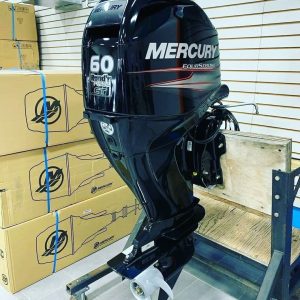
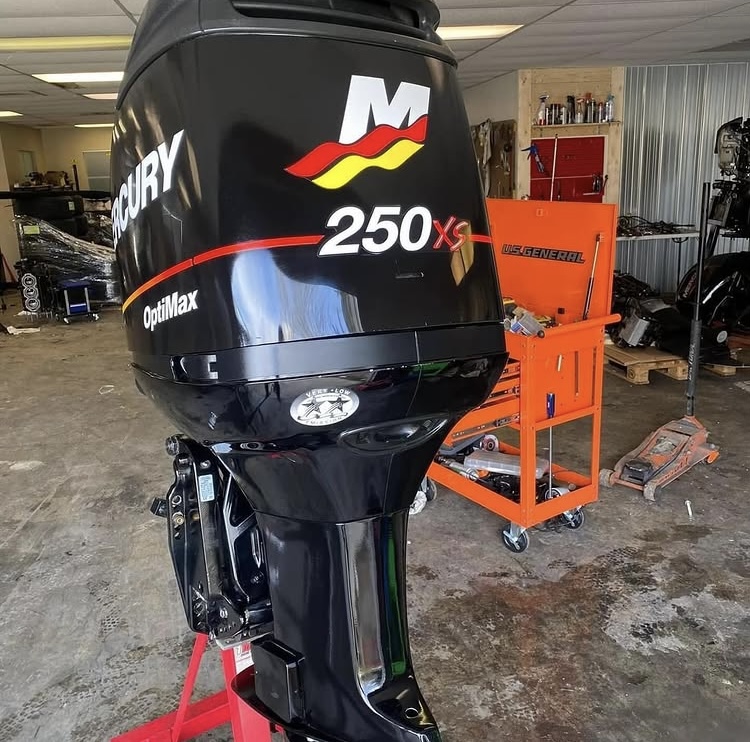
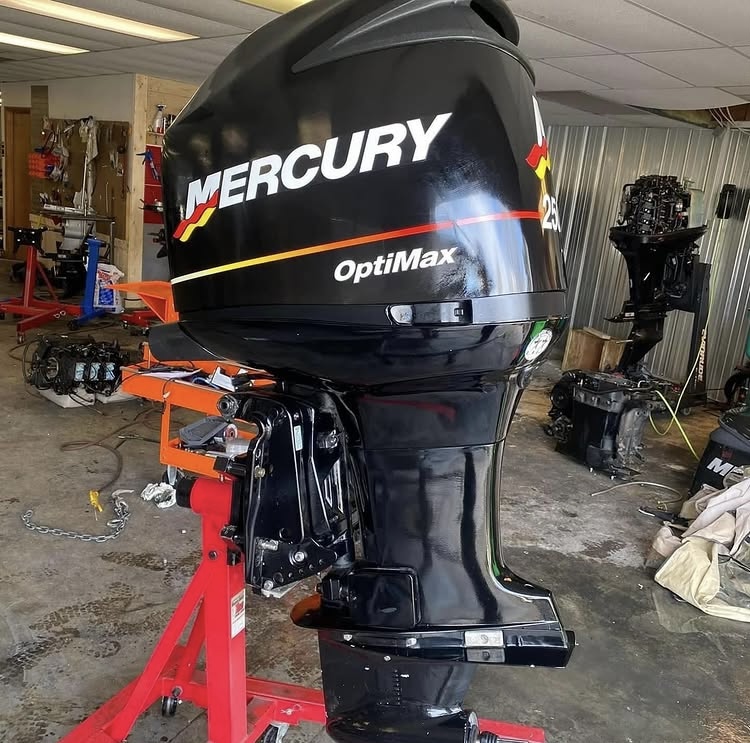
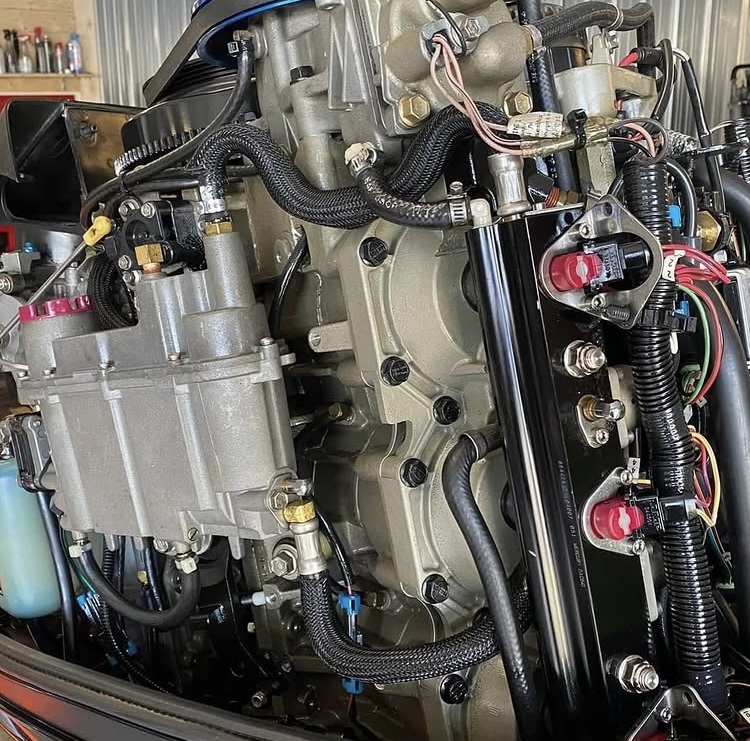
The Mercury 250 XS Gold Block is a high-performance Mercury Racing 250 XS outboard built around the 3.0-liter V6 OptiMax direct-injection platform. The 250 XS was developed as a performance-oriented racing outboard rather than a conventional recreational 250 HP motor, with Mercury documentation listing 250 HP at the propshaft, a 60-degree V6 configuration and a 3.0-liter-class displacement.
The phrase “Gold Block” is commonly used in the performance-outboard market to identify the finish or generation of these Mercury Racing blocks. It should not be confused with the later 4-stroke Mercury Pro XS 250. This listing is best understood as a Mercury Racing 250 XS 3.0L DFI/OptiMax-era outboard, with the exact model year, serial number, shaft length and gearcase configuration to be confirmed from the engine identification label before installation or parts ordering.
Mercury service documentation identifies the 250 XS as a 3.0L DFI racing outboard. The 250 XS uses a 60-degree V6, with documented displacement around 3,032–3,044 cc depending on the particular documentation and production configuration. Mercury’s technical material identifies 250 HP / 186 kW at the propshaft.
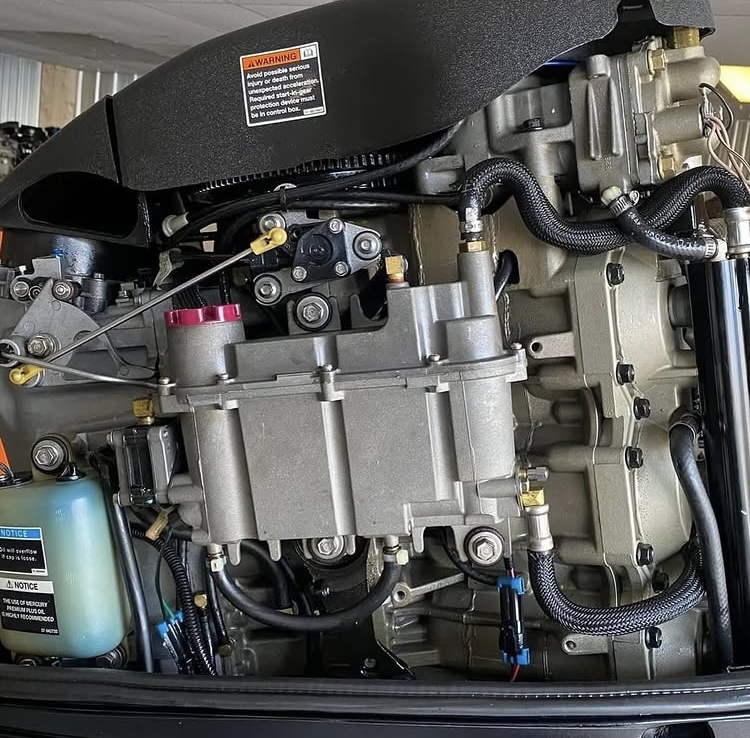
The engine uses OptiMax two-stage direct fuel injection. Rather than relying on a conventional carburetor, the fuel system and engine-management system control fuel and air delivery electronically. This is one of the defining technical differences between the 250 XS and older carbureted Mercury Racing engines.
| Specification | Mercury 250 XS |
|---|---|
| Manufacturer | Mercury Racing / Mercury Marine |
| Model | 250 XS |
| Power | 250 HP / approximately 186 kW |
| Engine type | Two-stroke direct-injection outboard |
| Cylinder configuration | 60-degree V6 |
| Displacement | Approximately 3.0 L / 185 cu in |
| Bore | Approximately 92.1 mm / 3.625 in |
| Stroke | 76.2 mm / 3.00 in |
| Fuel system | OptiMax two-stage direct fuel injection |
| Full-throttle range | Approximately 5,500–6,300 RPM depending on gearcase/model configuration |
| Starting | Electric |
| Steering | Remote |
| Trim | Power trim and tilt |
| Gearcase | Torque Master, Sport Master or Fleet Master depending on configuration |
| Typical shaft options | 20, 25 and 30 inch configurations were offered across documented 250 XS configurations |
Mercury documentation for the 250 XS lists a 60-degree V6, 185 cu in/3,032 cc displacement, 250 propshaft horsepower, electric starting, remote controls, power trim and a 60-amp charging system. Published specifications also vary by gearcase and shaft configuration, so the identification plate should be used to establish the exact specification of an individual engine.
“Gold Block” is a term used in the high-performance Mercury outboard market rather than a separate horsepower class. Older Mercury Racing 250 XS engines are frequently described this way because of the gold-colored finish associated with certain blocks or production/replacement-block configurations.
Because the term is not sufficient to identify a precise serial-number configuration, buyers should not use “Gold Block” alone when ordering internal engine parts, ignition components, fuel-system parts or gearcase components. The model number and serial number are the authoritative identifiers.
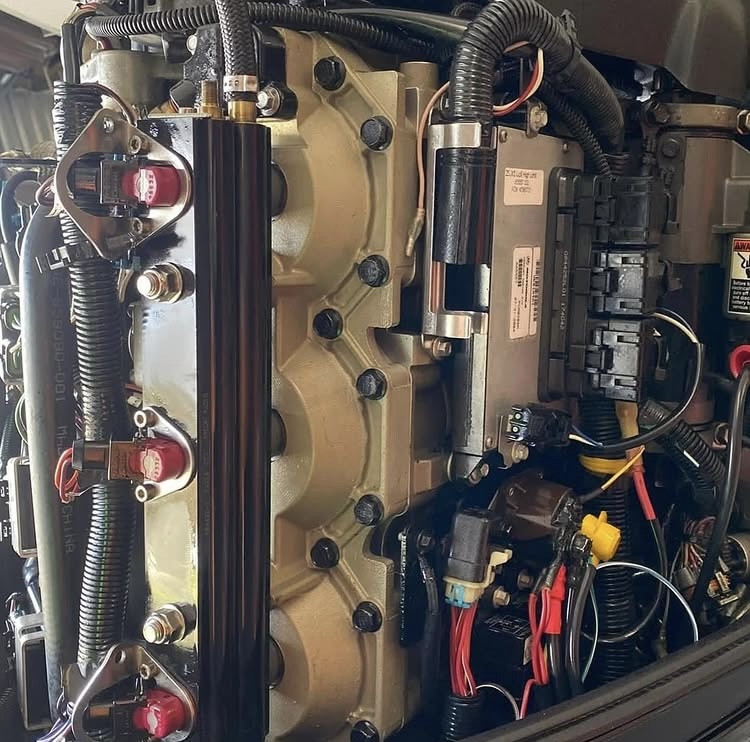
The 250 XS uses Mercury OptiMax direct fuel injection. Mercury’s technical documentation describes the 250 XS as a DFI engine, and service documentation identifies a two-stage direct-injection system.
For a used 250 XS, the condition of the air and fuel systems is particularly important. Inspect the fuel rails, injectors, air compressor system, fuel-pressure system, electrical connections and engine-management diagnostics before putting the engine into high-load operation.
The 250 XS was offered with different performance-oriented gearcase configurations. Mercury documentation identifies Torque Master, Sport Master and Fleet Master configurations, with gear ratios and shaft lengths varying according to the selected configuration.
A Sport Master setup is associated with high-speed applications where the boat and propeller are configured for elevated engine mounting. A Torque Master configuration can suit applications where the hull requires a different balance of acceleration, handling and gearcase setup. The correct gearcase depends on the hull rather than simply the horsepower rating.
Published Mercury specifications show different full-throttle RPM ranges depending on the specific 250 XS configuration. Earlier 250 XS OptiMax documentation lists approximately 5,500–5,800 RPM, while later published Mercury Racing material lists approximately 5,500–6,300 RPM for certain Torque Master and Sport Master configurations.
For that reason, do not select a propeller from horsepower alone. Confirm the exact engine serial number, gearcase, shaft length and Mercury specification for the individual motor. The objective is to allow the engine to operate within the correct full-throttle range under the intended boat load.
Documented 250 XS OptiMax specifications call for premium unleaded gasoline with a minimum of 87 AKI / 92 RON and specify a TC-W3 two-stroke oil such as Mercury Premium Plus for the applicable configuration.
On an older performance outboard, fuel quality is especially important. Before running a stored engine, inspect the fuel system, replace deteriorated filters and hoses as required, and verify that the lubrication system is operating correctly.
Published 250 XS specifications identify a 60-amp / 756-watt charging system. The exact electrical configuration should still be confirmed from the individual engine because wiring, instrumentation and rigging can vary by production generation.
Inspect battery cables, grounds, engine harnesses, charging connections and the starter system before installation. High-performance engines should not be put into service with questionable electrical connections because voltage problems can affect engine-management and fuel-system operation.
The 250 XS is not simply a standard recreational 250 HP outboard with different decals. Its performance-oriented design means that installation should be matched to the hull, gearcase and intended operating conditions.
The 250 XS was designed for applications where high output, acceleration and top-end performance are important. Its 3.0L V6 powerhead and racing-oriented gearcase options make it particularly relevant to performance boats and high-speed hulls.
It can also be considered for repowering an older performance hull, but the installation should be evaluated as a complete system. Hull condition, transom strength, steering, fuel supply, setback, engine height and propeller selection all influence the final result.
A used Mercury 250 XS should receive a detailed mechanical and diagnostic inspection before demanding operation. Important areas include compression, spark plugs, fuel pressure, air pressure, injectors, air compressor operation, cooling-water flow, thermostats, water-pump condition, gearcase lubricant and propeller condition.
Inspect the engine for corrosion, particularly around the cooling system, fasteners, electrical connections, steering components and gearcase. A compression test alone does not establish the condition of an OptiMax performance engine; fuel, air, electrical and diagnostic systems should also be evaluated.
If you are considering this Mercury 250 XS Gold Block for a performance-boat project, obtain the engine’s serial number and model designation before purchasing parts or rigging. The serial number can distinguish production generations and gearcase configurations that may look similar externally.
Ask for service records where available and establish whether the powerhead, compressor, injectors, lower unit or other major components have been replaced. On an older racing outboard, documented maintenance history can be particularly useful when evaluating the condition of a complete engine.
| Feature | Mercury 250 XS Gold Block / 250 XS | Modern 250 Pro XS |
|---|---|---|
| Engine generation | Older Mercury Racing platform | Modern Mercury performance outboard |
| Basic architecture | 3.0L-class 60° V6 two-stroke | Modern 4-stroke platform |
| Fuel technology | OptiMax direct injection | Modern electronic fuel injection |
| Primary use | Performance/high-speed applications | Modern recreational and performance applications |
| Parts identification | Model and serial number critical | Model and serial number critical |
These engines should not be treated as interchangeable simply because both carry a 250 HP rating. The 250 XS belongs to an older 3.0L two-stroke OptiMax/Racing platform, while modern 250 Pro XS models use a different engine architecture.
The Mercury 250 XS is rated at 250 HP at the propshaft, equivalent to approximately 186 kW.
Yes. The 250 XS is a two-stroke V6 using Mercury OptiMax direct fuel injection.
The 250 XS uses a 3.0L-class V6 powerhead, with documented displacement around 3,032–3,044 cc depending on the production documentation.
“Gold Block” is a market term associated with the appearance or production/replacement configuration of certain older Mercury Racing blocks. It is not enough information by itself to identify an exact engine specification.
The correct full-throttle range depends on the specific 250 XS generation and gearcase. Published Mercury documentation shows ranges around 5,500–5,800 RPM for some configurations and up to approximately 6,300 RPM for certain later configurations.
Documented 250 XS configurations include Torque Master, Sport Master and Fleet Master gearcases. The correct gearcase depends on the engine’s serial-number configuration and the boat’s intended use.
No. The 250 XS is an older 3.0L two-stroke OptiMax-based Mercury Racing platform. A modern 250 Pro XS is a different engine generation and architecture.
Verify the model and serial number, compression, fuel and air pressures, injectors, air compressor, cooling system, charging system, gearcase, propeller, steering components and diagnostic history. Also confirm that the boat is correctly rated for the engine.
The Mercury 250 XS Gold Block represents an older Mercury Racing performance platform built around a 3.0L-class 60-degree V6 OptiMax powerhead. Its 250 HP output, direct fuel injection and performance-oriented gearcase options make it relevant to specialist performance-boat and repower applications.
Because production configurations differ, confirm the engine’s serial number, gearcase, shaft length and exact model designation before ordering parts or planning installation. For more marine propulsion options, browse our outboard engines category or compare other high-output marine engines available from Performance Engines.